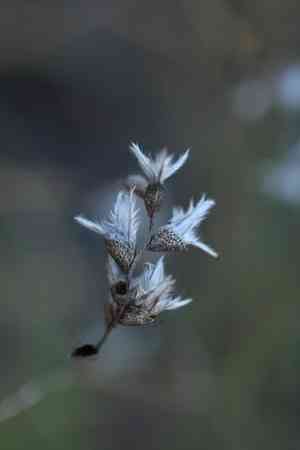
Nine-anther prairie clover (Dalea enneandra)
Also known as: Slender Dalea, Nine-awn Dalea
The nine-anther prairie clover (Dalea enneandra) is a perennial herb known for its unique growth habit, often spreading across the ground. It features stems adorned with fine hairs, giving them a soft texture. The plant produces vibrant purple flowers arranged in rounded clusters, which bloom prominently in full sunlight.
Adapted to arid environments, the nine-anther prairie clover possesses a deep root system that enables it to access water from deeper soil layers, allowing it to flourish in nutrient-poor, sandy soils. This characteristic makes it a resilient and integral part of its native ecosystems.
In This Article
Attributes of Nine-anther prairie clover
Lifespan
Perennial
Plant Type
Shrub
Plant Height
60-90 cm
Spread
20-30 cm
Leaf Color
Green
Flower Size
1-1.5 cm
Flower Color
Purple
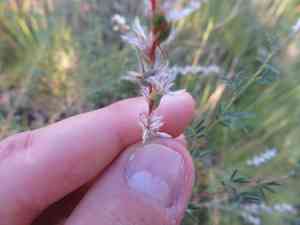
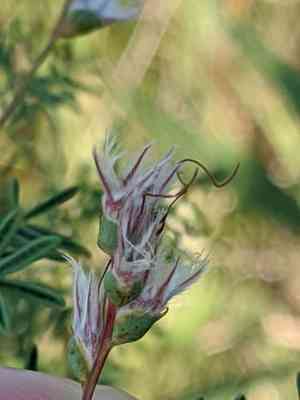
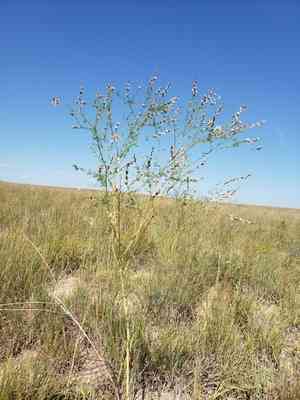
Images of Nine-anther prairie clover
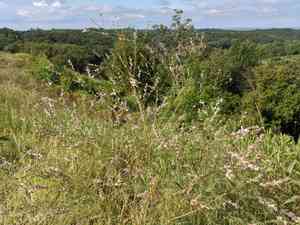
Quickly Identify Nine-anther prairie clover
1
Dalea enneandra can be identified by its slender stature, pinnate leaves, and distinctive purple flowers which are clustered in spikes. The plant’s narrow, elongated seed pods also help in identification.
Scientific Classification of Nine-anther prairie clover
Phylum
Vascular plants
Class
Dicotyledons
Order
Fabales
Family
Legume
Genus
Prairie clover
Species
Nine-anther prairie clover
Planting and Growing of Nine-anther prairie clover
Care Difficulty
Moderate
Watering Schedule
Every 2 days
Sunlight Requirements
Full sun
Sunshine Duration
4-6 hours
Ideal Temperature
65-75℉
Soil Type
Potting Mix, Peat Mix
Soil pH
6.5-7.5
Fertilizer Type
Balanced
Pruning Season
Spring, Summer
Pruning Area
Branches, Leaves
Pruning Frequency
2 times a year
Repotting Season
Spring
Pot Type
Plastic, Ceramic
 How to Water Nine-anther prairie clover?
For Dalea enneandra, apply approximately 500 milliliters of water each time. Watering should ensure that the soil is moist but not waterlogged. Aim to wet the top few inches of the soil while allowing the lower levels to remain moderately dry, encouraging deep root growth.
What are the symptoms of an underwatered Nine-anther prairie clover?
›
What should I do if my Nine-anther prairie clover is not getting enough water?
›
What are the symptoms of an overwatered Nine-anther prairie clover?
›
How to save an overwatered Nine-anther prairie clover?
›
 What Are the Sunlight Requirements for Nine-anther prairie clover?
Dalea enneandra ideally receives full sun exposure for vibrant growth and flowering. This light stimulation improves its strength and visual appeal.
What is the ideal light condition for Dalea enneandra?
›
How can you ensure Dalea enneandra gets optimal light?
›
What benefits does optimal lighting provide for Dalea enneandra?
›
 What Is the Ideal Temperature Range for Nine-anther prairie clover?
The ideal temperature range for Dalea enneandra is between 65°F and 75°F. This range ensures optimal growth and photosynthesis, providing the best conditions for development. Within this range, the plant maintains its physiological functions without undue stress.
 What Soil is Best for Nine-anther prairie clover?
Dalea enneandra thrives in well-drained soils that prevent waterlogging, essential for avoiding root rot and promoting healthy root development. While adaptable, this plant benefits from a nutrient-rich soil that boosts its blooming capacity and supports robust growth. An aerated soil structure is crucial for the plant, enabling roots to access oxygen easily and enhancing nutrient uptake efficiency.
 How to Fertilize Nine-anther prairie clover?
Dalea enneandra requires a balanced approach when it comes to fertilization. Use about 1/4 teaspoon of concentrated liquid fertilizer, diluted in one gallon of water, per plant per month. This ensures that the plant receives enough nutrients without oversaturating the soil, allowing for optimal growth.
 How to Prune Nine-anther prairie clover?
Start by identifying and removing any dead or diseased branches. These branches can sap nutrients from healthy parts of the plant and even become a haven for pests and diseases. Look for branches that appear dry, brittle, or discolored. Use sharp, clean shears to trim the plant into a desirable shape. Dalea enneandra has a natural, bushy form, but pruning can enhance its aesthetic appeal and ensure uniform growth. Aim to maintain an open center to improve air circulation through the plant. Prune the plant lightly to stimulate new growth and flowering. This involves selectively removing small amounts of plant material rather than large sections. Such light pruning encourages the plant to produce more blooms and robust foliage.
More About Pruning Techniques→
 How to Propagate Nine-anther prairie clover plant?
1
Before sowing, ensure that the seeds are clean and dry. Soaking them overnight can help speed up germination, but be sure to plant them immediately afterward to prevent drying out.
2
Fill seed trays with potting mix and press seeds lightly into the soil surface. Cover them with a thin layer of soil, barely 0.5 cm, to ensure that they receive enough light to germinate.
3
Water the seeds gently to avoid dislodging them. Keep the soil consistently moist but not soggy. Cover with a plastic dome to maintain humidity, but remove it once sprouts appear.
 How to Repot Nine-anther prairie clover plant?
1
Dalea enneandra should be repotted when you notice the roots are circling the inside of the container or growing out of the drainage holes. This indicates the plant is root-bound and needs more space to thrive. Other signals include slow growth even with proper care and nutrient supplementation.
2
Select a pot that is one size larger than the current one and has adequate drainage holes. A well-chosen pot prevents overwatering by allowing excess water to escape, which is crucial as Dalea enneandra prefers drier conditions and is prone to root rot if kept too wet.
3
Opt for a well-draining soil mix, ideally a cactus or succulent mix. This type of soil ensures that excess moisture quickly drains away, mimicking the plant's natural habitat and preventing root rot, common in poorly-draining soils.



