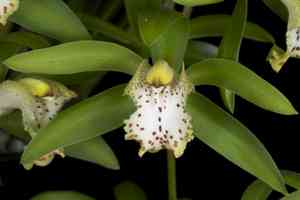
Hooker's cymbidium (Cymbidium hookerianum)
Also known as: Hooker's Cymbidium Orchid
The orchid known as Hooker's cymbidium, native to Asia, typically thrives on trees in moist, shaded forests or on steep slopes and rocks. The name "hookerianum" was bestowed in recognition of the botanist Sir Joseph Dalton Hooker.
In This Article
Attributes of Hooker's cymbidium
Lifespan
Perennial
Plant Type
Herb
Plant Height
75 cm
Spread
90 cm
Leaf Color
Green
Flower Size
11 cm to 12 cm
Flower Color
White Yellow Pink Green Purple Red
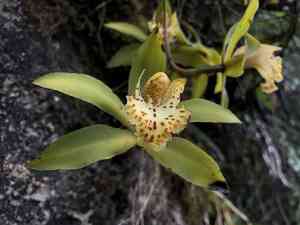
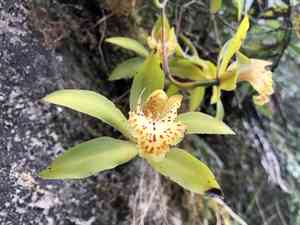
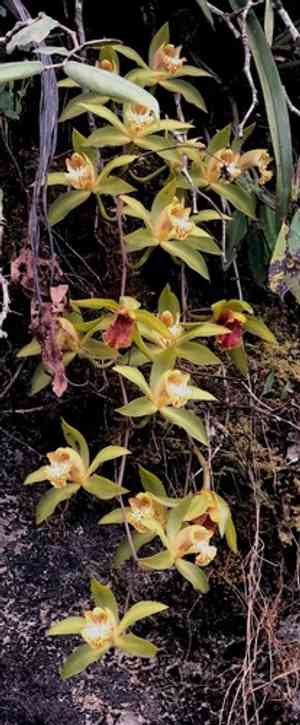
Images of Hooker's cymbidium
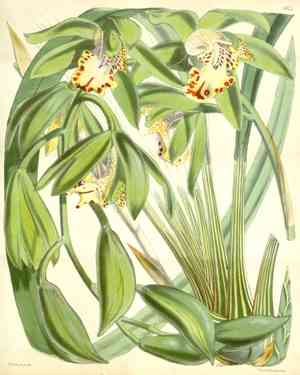
Quickly Identify Hooker's cymbidium
1
Cymbidium hookerianum can be identified by its large, arching leaves, and the presence of flower spikes that bear multiple greenish-yellow flowers with a red-marked lip. The pseudobulbs are usually oblong and the leaves can grow quite long, giving the plant a grass-like appearance.
Scientific Classification of Hooker's cymbidium
Phylum
Vascular plants
Class
Monocotyledons
Order
Asparagus and allies
Family
Orchid
Genus
Boat orchid
Species
Hooker's cymbidium
Planting and Growing of Hooker's cymbidium
Care Difficulty
Easy
Watering Schedule
Every 4 days
Sunlight Requirements
Partial sun
Sunshine Duration
4-6 hours
Ideal Temperature
60-75℉
Soil Type
Potting Mix, Peat Mix
Soil pH
6.5-7.5
Fertilizer Type
Balanced
Pruning Season
Spring, Summer
Pruning Area
Branches, Leaves
Pruning Frequency
2 times a year
Repotting Season
Spring
Pot Type
Plastic, Ceramic
 How to Water Hooker's cymbidium?
For Cymbidium hookerianum, it is crucial to water them moderately, allowing approximately 250 ml each time. The goal is to keep the medium evenly moist without letting the roots sit in water. Water until it starts to drip out from the bottom of the pot to ensure thorough coverage but avoid waterlogging.
What are the symptoms of an underwatered Hooker's cymbidium?
›
What should I do if my Hooker's cymbidium is not getting enough water?
›
What are the symptoms of an overwatered Hooker's cymbidium?
›
How to save an overwatered Hooker's cymbidium?
›
 What Are the Sunlight Requirements for Hooker's cymbidium?
Cymbidium hookerianum prefers partial sun, with an ideal light range of 4 to 6 hours of indirect sunlight per day. This condition promotes healthy leaf color and encourages vibrant, frequent flowering.
More About Sunlight Requirements Techniques→
How much sunlight does Cymbidium hookerianum need?
›
What solutions ensure ideal sunlight for this plant?
›
What are the benefits of ideal lighting for this plant?
›
 What Is the Ideal Temperature Range for Hooker's cymbidium?
The ideal temperature range for Cymbidium hookerianum is between 60°F and 75°F. At these temperatures, the plant can thrive, allowing for optimal photosynthesis and growth. Maintaining this range ensures the plant remains stress-free and can produce vibrant blooms.
 What Soil is Best for Hooker's cymbidium?
Cymbidium hookerianum thrives in well-draining soil that prevents waterlogging. Proper drainage ensures that the roots receive adequate oxygen, reducing the risk of root rot and promoting healthy growth. Using a nutrient-rich compost as part of the soil mix provides essential nutrients for robust growth. This enhances flowering and strengthens the plant’s resilience against pests and diseases. The soil should retain moderate moisture to provide a consistent water supply without becoming soggy. This balance supports the plant's growth cycle and ensures steady nourishment.
 How to Fertilize Hooker's cymbidium?
For Cymbidium hookerianum, it's important to adjust the fertilizer amount based on its growth stage. During the active growth phase, apply 1/4 to 1/2 teaspoon of water-soluble fertilizer per gallon of water. Reduce the amount during dormancy to prevent over-fertilization.
 How to Prune Hooker's cymbidium?
Prune Cymbidium hookerianum during its active growth phase in spring to maximize recovery and growth. Avoid heavy pruning during late autumn or winter when the plant is dormant, as this can stress the plant and reduce its vigor. The foliage of Cymbidium hookerianum is delicate and can bruise easily. Take care when handling the plant to avoid unnecessary damage. Gentle handling will also help in preserving the plant’s overall appearance after pruning.
More About Pruning Techniques→
 How to Propagate Hooker's cymbidium plant?
1
Carefully prepare the parent plant by ensuring it is healthy and mature. This process includes watering the plant the day before to facilitate easier division.
2
Divide the plant into sections, ensuring each has a healthy pseudobulb and roots. Plant each division into its own pot filled with the prepared potting medium.
3
For tissue culture propagation, prepare sterilized growing conditions and nutrient solutions. Use explants from a healthy parent plant to culture new growth.
 How to Repot Hooker's cymbidium plant?
1
The ideal time to repot Cymbidium hookerianum is when you notice the roots outgrowing their current pot or the potting medium is breaking down. Another signal is the plant becoming too top-heavy and unstable. These signs typically occur in spring or summer when the plant shows active growth.
2
Select a pot that is just slightly larger than the current one. Make sure it has plenty of drainage holes to prevent root rot. A suitable pot provides stability and prevents waterlogging, promoting healthy root growth and overall plant well-being.
3
Pick an orchid-specific potting mix that ensures excellent drainage and aeration. This type of soil typically contains bark, perlite, and charcoal, fostering proper root development and reducing the risk of water and fungal issues.



