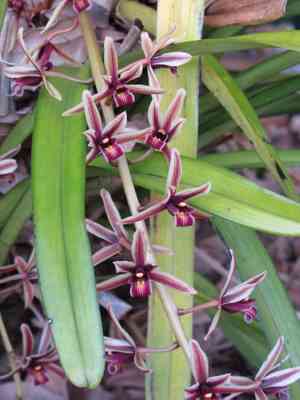
Golden-thread orchid (Cymbidium ensifolium)
Also known as: Spring orchid, Sword-leaf cymbidium
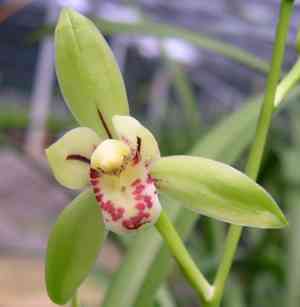
The leaves range from 30 to 60 cm long, exhibiting a smooth and flat texture when fresh, but developing numerous streaks upon drying. The flowers, with a diameter of 4 to 5 cm, bear a resemblance to those of Shunlan.
In This Article
Attributes of Golden-thread orchid
Lifespan
Perennial
Plant Type
Herb
Plant Height
30 cm
Spread
30 cm
Leaf Color
Green
Flower Size
5 cm to 7 cm
Flower Color
Yellow Green Pink Purple Red
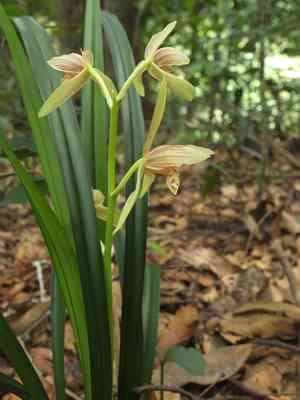
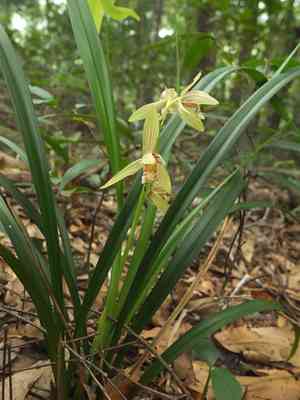
Images of Golden-thread orchid
Quickly Identify Golden-thread orchid
1
Cymbidium ensifolium can be identified by its sword-shaped leaves, which are narrower and longer compared to other Cymbidium species. The flowers are usually fragrant, with a color range from greenish-yellow to reddish-brown, often with maroon markings.
Scientific Classification of Golden-thread orchid
Phylum
Vascular plants
Class
Monocotyledons
Order
Asparagus and allies
Family
Orchid
Genus
Boat orchid
Species
Golden-thread orchid
Planting and Growing of Golden-thread orchid
Care Difficulty
Easy
Watering Schedule
Every 4 days
Sunlight Requirements
Partial sun
Sunshine Duration
6-10 hours
Ideal Temperature
68-75℉
Soil Type
Potting Mix, Peat Mix
Soil pH
6.5-7.5
Fertilizer Type
Balanced
Pruning Season
Spring, Summer
Pruning Area
Branches, Leaves
Pruning Frequency
2 times a year
Repotting Season
Spring
Pot Type
Plastic, Ceramic
 How to Water Golden-thread orchid?
When watering Cymbidium ensifolium, the goal is to keep the soil consistently moist but not waterlogged. A general rule of thumb is to water until the top 2 inches of the soil are moist but not soggy. Excessive water should be avoided to prevent root rot.
What are the symptoms of an underwatered Golden-thread orchid?
›
What should I do if my Golden-thread orchid is not getting enough water?
›
What are the symptoms of an overwatered Golden-thread orchid?
›
How to save an overwatered Golden-thread orchid?
›
 What Are the Sunlight Requirements for Golden-thread orchid?
Partial sun is ideal, balancing sun exposure with shade. It promotes robust growth and optimal flowering, maintaining the plant's health without causing stress or leaf burn.
More About Sunlight Requirements Techniques→
How much sunlight is ideal?
›
Solutions to achieve ideal lighting?
›
Benefits of ideal lighting?
›
 What Is the Ideal Temperature Range for Golden-thread orchid?
The ideal temperature range for the optimal growth of Cymbidium ensifolium is between 68°F to 75°F. This range mimics the orchid's natural habitat, allowing it to photosynthesize efficiently and maintain healthy cellular processes. Maintaining a consistent temperature in this range promotes vigorous growth and flowering.
 What Soil is Best for Golden-thread orchid?
Cymbidium ensifolium requires soil that drains well to prevent root rot. Well-drained soil ensures that excess water doesn’t accumulate, allowing roots to breathe and promoting healthy growth. This is vital for orchids as they naturally grow in environments where water drains rapidly after rainfall. The plant thrives in soil with moderate fertility. This balance provides enough nutrients without overwhelming the roots, which is crucial for orchids that are often sensitive to over-fertilization. Proper nutrient availability helps Cymbidium ensifolium produce its beautiful blooms. A good amount of organic matter in the soil enhances its structure and fertility, providing essential nutrients and moisture retention. This characteristic mimics the orchid's natural habitat, contributing to extended flowering periods and robust plant health.
 How to Fertilize Golden-thread orchid?
For Cymbidium ensifolium, a balanced approach to fertilizer is important. Typically, a diluted solution of 20-20-20 liquid fertilizer at a quarter strength is recommended every two weeks. For slow-release granules, a small handful or approximately 1 tablespoon per plant for the entire year is adequate. Over-fertilizing should be avoided to prevent root burn.
 How to Prune Golden-thread orchid?
Begin by identifying leaves and stems that are brown, yellow, or visibly damaged. These parts need to be removed to allow the plant to redirect its energy towards healthy growth. Using clean, sharp pruning shears, carefully trim away the dead or damaged leaves and stems. Make cuts at angles to prevent water accumulation on the cut surfaces, which can lead to rot. After removing the dead parts, proceed to lightly prune to shape the plant. Focus on maintaining a natural appearance while allowing good air circulation through the foliage.
More About Pruning Techniques→
 How to Propagate Golden-thread orchid plant?
1
To propagate Cymbidium ensifolium from seeds, sterilize all tools and surfaces to avoid contamination. Use controlled environment settings like nutrient-rich agar for successful germination. This method, while challenging, can produce genetically diverse plants.
2
Division is the simplest method for propagating Cymbidium ensifolium. Carefully divide the rhizomes with sterilized tools, ensuring each division has at least three to four pseudobulbs. This allows for easier establishment and reduces stress on the plant.
3
Tissue culture allows for mass propagation of Cymbidium ensifolium under laboratory conditions. This method requires precision and sterility at each step, starting from the preparation of explants to their growth in a hormone-rich medium.
 How to Repot Golden-thread orchid plant?
1
Repot Cymbidium ensifolium when its roots outgrow the pot or when the potting mix starts to decompose, usually indicated by a strong odor or moss growth. Spring and Autumn are ideal, especially after blooming or when new growth starts, to reduce plant stress.
2
Choose a pot slightly larger than the current one, with ample drainage holes; this prevents overwatering and root rot. Cymbidium orchids thrive best in breathable containers like clay or ceramic. These allow air circulation to the roots, promoting healthy growth.
3
Select a potting medium designed for orchids, like a bark-based mix that drains well. Aim for a loose, airy consistency to facilitate good airflow and moisture control. This kind of medium mimics the orchid's natural habitat and supports robust root development.



