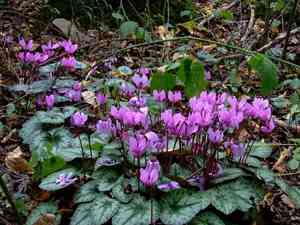
Purple cyclamen (Cyclamen purpurascens)
Also known as: European cyclamen, Cyclamen
Purple cyclamen (Cyclamen purpurascens) is native to central and eastern Europe, where it grows under the leaf litter of woodlands or in high grasslands. It can be grown in the garden in humus-rich soil but often does better as a container plant indoors.
In This Article
Attributes of Purple cyclamen
Lifespan
Perennial
Plant Type
Herb
Plant Height
8 cm to 15 cm
Spread
30 cm
Leaf Color
Green Silver Gray Variegated
Flower Size
2.5 cm to 5 cm
Flower Color
Pink Purple
Images of Purple cyclamen

Quickly Identify Purple cyclamen
1
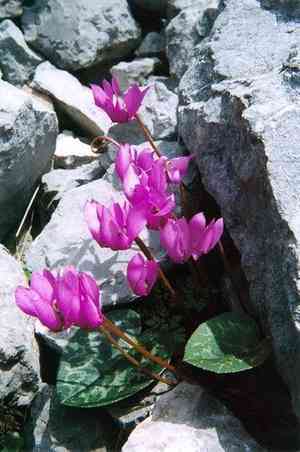
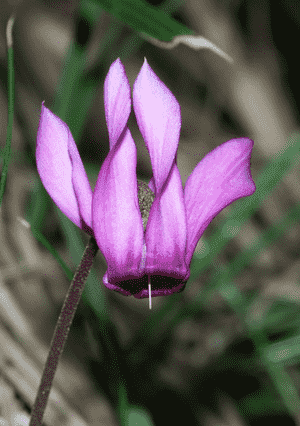
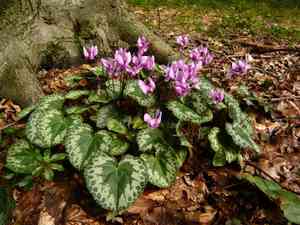
Cyclamen purpurascens can be identified by its dark green, heart-shaped leaves with silver marbling, and deep pink to purple, fragrant flowers with swept-back petals.
Scientific Classification of Purple cyclamen
Phylum
Vascular plants
Class
Dicotyledons
Order
Ericales
Family
Primrose
Genus
Alpine violet
Species
Purple cyclamen
Planting and Growing of Purple cyclamen
Care Difficulty
Hard
Watering Schedule
Every 3 days
Sunlight Requirements
Partial sun
Sunshine Duration
6-10 hours
Ideal Temperature
60-70℉
Soil Type
Potting Mix, Peat Mix
Soil pH
6.5-7.5
Fertilizer Type
Balanced
Pruning Season
Spring, Summer
Pruning Area
Branches, Leaves
Pruning Frequency
2 times a year
Repotting Season
Spring
Pot Type
Plastic, Ceramic
 How to Water Purple cyclamen?
For Cyclamen purpurascens, water gently so that the soil is evenly moist but not soggy. Use approximately 150 ml per session, ensuring that excess water drains out to prevent root rot. Perform finger tests by sticking a finger about an inch into the soil; if it feels dry, it’s time to water.
What are the symptoms of an underwatered Purple cyclamen?
›
What should I do if my Purple cyclamen is not getting enough water?
›
What are the symptoms of an overwatered Purple cyclamen?
›
How to save an overwatered Purple cyclamen?
›
 What Are the Sunlight Requirements for Purple cyclamen?
Partial sun to full shade supports Cyclamen purpurascens's vitality, maintaining lush foliage and encouraging regular flowering. Adequate light exposure enhances its aesthetic and physiological performance in various home settings.
More About Sunlight Requirements Techniques→
What is the best lighting type for Cyclamen purpurascens?
›
How can I ensure ideal lighting for it?
›
What benefits does ideal lighting provide?
›
 What Is the Ideal Temperature Range for Purple cyclamen?
Cyclamen purpurascens thrives best in an environment with consistent temperatures ranging from 60 to 70°F. This range mimics their native habitat and promotes healthy growth and flowering. Maintaining these temperatures helps ensure the plant's metabolic processes function optimally, providing the right conditions for nutrient uptake and photosynthesis.
 What Soil is Best for Purple cyclamen?
Cyclamen purpurascens thrives in well-drained soil, preventing root rot and promoting healthy root development. Ensuring good drainage can enhance the plant’s longevity and blooming period. A moderately fertile soil provides the necessary nutrients without the risk of overwhelming the plant, maintaining balanced growth and vibrant flowers. Adding organic matter improves soil fertility subtly. Though tolerant of drought, Cyclamen purpurascens prefers consistently moist soil, mimicking its natural woodland environment. This stability promotes lush foliage and abundant flowering.
 How to Fertilize Purple cyclamen?
For Cyclamen purpurascens, it is important to not over-fertilize. When applying liquid fertilizer, use a diluted solution, such as half-strength general-purpose houseplant fertilizer. Use about 5-10 ml per liter of water, and ensure excess liquid drains away. For slow-release fertilizers, 5 grams sprinkled evenly around the plant base is sufficient.
 How to Prune Purple cyclamen?
While pruning, take care not to disturb the roots, as Cyclamen purpurascens have sensitive root systems. Prune with minimal interference to the soil and ensure the plant remains stable and intact. Never remove more than one-third of the plant’s foliage at one time. Over-pruning can stress the plant, reducing its ability to photosynthesize and potentially hindering its growth and blooming cycle.
More About Pruning Techniques→
 How to Propagate Purple cyclamen plant?
1
Start by filling the seed tray with a high-quality potting mix. Sow the seeds evenly on the surface and lightly cover them with a thin layer of soil. Keep the tray in a shaded area and water gently to maintain moisture, avoiding waterlogging.
2
Carefully dig up the Cyclamen tubers during the dormant period. Use a sharp knife to divide large, healthy tubers into smaller sections, ensuring each section has at least one growth point. Replant the divided tubers in well-draining soil.
3
Once seeds have germinated and seedlings have grown a few true leaves, transplant them to individual pots. Ensure each pot has a rich, well-drained soil mix. Place the pots in a bright, indirect light location and water moderately.
 How to Repot Purple cyclamen plant?
1
Cyclamen purpurascens should be repotted when the plant becomes root-bound or shows signs of reduced growth. Look for roots growing through drainage holes or noticeably slower leaf and flower production. These signs indicate it's time to give your cyclamen a new home.
2
Choose a pot that is only slightly larger than the current one, about 1-2 inches bigger in diameter. This helps to prevent overwatering and encourages the plant to focus on flower production. Ensure the new pot has drainage holes to allow excess water to escape, protecting the roots from rot.
3
Opt for a loamy, well-draining soil mix tailored for cyclamen. An ideal mix contains compost, light peat, and perlite, which ensures good aeration and moisture retention. This soil choice provides the perfect balance of nutrients while preventing waterlogging, promoting healthier growth.
Toxicity
Ingestion
WARNING
The judgment on toxicity and danger is for reference only. We DO NOT GUARANTEE any accuracy of such judgment. Therefore, you SHALL NOT rely on such judgment. It is IMPORTANT TO SEEK PROFESSIONAL ADVICE in advance when necessary.
Learn More About Purple cyclamen Diseases
Anthracnose
Bacterial Leaf Spot
Bacterial Soft Rot
Crown Gall
Cyst Nematode
Damping-off
Downy Mildew
Drought Stress
Fusarium Wilt
Gray Mold
Leaf Spot
Mosaic
Nutrient Deficiency
Nutrient Toxicity
Powdery Mildew
Root Rot
Root-knot Nematode
Sooty Mold
Spider Mites
Temperature Stress
Thrips Damage
White Mold



