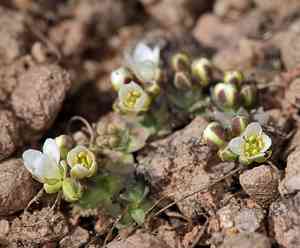
Alkali cusickiella (Cusickiella douglasii)
Also known as: Douglas' cusickiella
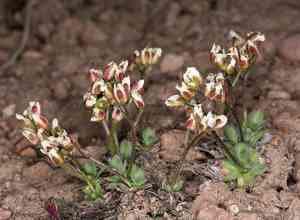
Alkali cusickiella is a perennial herb that thrives at elevations between 4,000 and 8,200 feet (approximately 1,200 to 2,500 meters). This plant is commonly found on barren hillsides and rocky cliffs. It typically blooms with attractive white flowers in late spring and early summer. Additionally, it can be affected by the lichen plant spot disease caused by Mycosphaerella pachyasca.
In This Article
Attributes of Alkali cusickiella
Lifespan
Perennial
Plant Type
Herb
Plant Height
5-15 cm
Spread
Not applicable
Leaf Color
Green
Flower Size
Less than 1 cm
Flower Color
White
Images of Alkali cusickiella
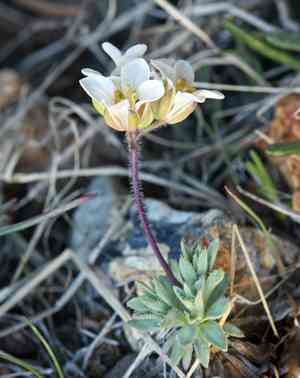
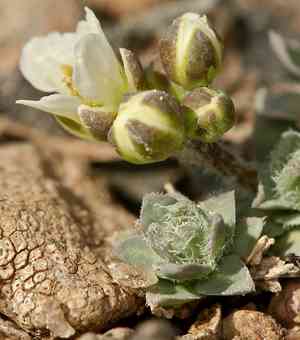
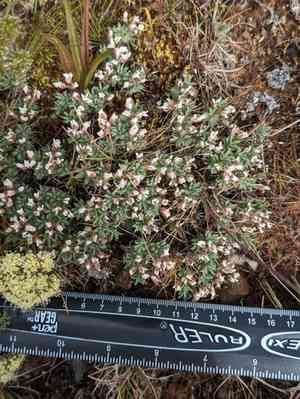
Quickly Identify Alkali cusickiella
1
Cusickiella douglasii can be identified by its small size, narrow basal leaves, and small yellow flowers. It typically grows in rocky, disturbed soils and can often be found in the crevices of rocks.
Scientific Classification of Alkali cusickiella
Phylum
Vascular plants
Class
Dicotyledons
Order
Brassicales
Family
Cruciferae
Genus
Cusickiella
Species
Alkali cusickiella
Planting and Growing of Alkali cusickiella
Care Difficulty
Hard
Watering Schedule
Every 2 days
Sunlight Requirements
Full sun
Sunshine Duration
4-8 hours
Ideal Temperature
60-75℉
Soil Type
Potting Mix, Peat Mix
Soil pH
6.5-7.5
Fertilizer Type
Balanced
Pruning Season
Spring, Summer
Pruning Area
Branches, Leaves
Pruning Frequency
2 times a year
Repotting Season
Spring
Pot Type
Plastic, Ceramic
 How to Water Alkali cusickiella?
When watering Cusickiella douglasii, it is important to simulate its natural arid environment. Ensure the soil is thoroughly moist but not soggy; aim for around 200 milliliters per session. The key is to let the topsoil dry between waterings, allowing the plant to breathe.
What are the symptoms of an underwatered Alkali cusickiella?
›
What should I do if my Alkali cusickiella is not getting enough water?
›
What are the symptoms of an overwatered Alkali cusickiella?
›
How to save an overwatered Alkali cusickiella?
›
 What Are the Sunlight Requirements for Alkali cusickiella?
Cusickiella douglasii performs well in partial to full sun, benefiting from a good balance of natural light for robust flowering and healthy growth. Ideal lighting ensures strong structural development and resilience.
Primary Light Needs
›
Problem-Solving Tips
›
Benefits of Optimal Light
›
 What Is the Ideal Temperature Range for Alkali cusickiella?
The ideal temperature range for growing Cusickiella douglasii is between 60°F and 75°F. Within this range, the plant can thrive and exhibit healthy growth, as the temperatures are neither too hot nor too cold to stress the plant. These conditions mimic the natural habitat where this plant is typically found, ensuring optimal photosynthesis and nutrient uptake.
 What Soil is Best for Alkali cusickiella?
Cusickiella douglasii flourishes in well-drained soil to prevent root rot and ensure the roots get sufficient oxygen. Ensuring this enhances robust plant growth and prevents diseases. Providing soil rich in organic matter is crucial for this plant. It supports steady nutrition uptake, leading to healthier and faster-growing plants with vibrant foliage. While Cusickiella douglasii doesn't require constant moisture, having soil with moderate moisture retention ensures the plant is not prone to drought stress, making sure it thrives even in warmer seasons.
 How to Fertilize Alkali cusickiella?
For Cusickiella douglasii, it's crucial to use a balanced fertilizer. A diluted liquid fertilizer with a ratio such as 10-10-10 should be applied. The amount should be approximately one tablespoon of liquid fertilizer mixed with one gallon of water, ensuring not to oversaturate the soil.
 How to Prune Alkali cusickiella?
Before starting, closely inspect the plant to find dead, damaged, or excessive growth. Identify branches that cross over each other or areas that look overcrowded, indicating where the pruning is needed. Use sharp and clean pruning shears to make cuts at a 45-degree angle. This angle helps in shedding water away from the cut and reduces the risk of infection. Make sure to cut just above a healthy bud or branch junction. Prune the inner branches selectively to open up the plant and improve air circulation. This helps reduce the risk of mold and fungal diseases by ensuring that sunlight and wind can penetrate the foliage.
More About Pruning Techniques→
 How to Propagate Alkali cusickiella plant?
1
Collect ripe seeds from existing Cusickiella douglasii plants. Ensure seeds are dry before storing in a cool, dry place until planting time in early spring.
2
Sow the seeds thinly in a seed tray filled with seed starting mix. Cover the seeds lightly with soil and mist the surface to keep it moist.
3
Place the tray in a warm, well-lit area. After the seeds germinate and seedlings have developed multiple leaves, they can be transplanted to individual pots or garden beds.
 How to Repot Alkali cusickiella plant?
1
Cusickiella douglasii signals the need for repotting through visible roots at the container's bottom or stunted growth. Repot ideally early in spring or summer when the plant is actively growing. This timing allows the plant to recover quickly from the transplant shock.
2
Choose a pot that is slightly larger than the current one, with ample drainage holes. A terracotta or ceramic pot can help regulate soil moisture. Well-sized pots ensure proper root expansion and reduce waterlogging issues, promoting overall plant health.
3
Opt for a well-draining sandy mix, with added perlite or pumice to enhance aeration. This type of soil prevents root rot, a common issue with inadequate drainage, and maintains the ideal moisture balance necessary for Cusickiella douglasii to thrive.
Learn More About Alkali cusickiella Diseases
Anthracnose
Bacterial Leaf Spot
Bacterial Soft Rot
Bacterial Wilt
Chemical Injury
Damping-off
Downy Mildew
Drought Stress
Fusarium Wilt
Gray Mold
Leaf Spot
Mosaic
Nutrient Deficiency
Nutrient Toxicity
Powdery Mildew
Root Rot
Root-knot Nematode
Rusts
Sooty Mold
Spider Mites
Temperature Stress
Thrips Damage
White Mold



