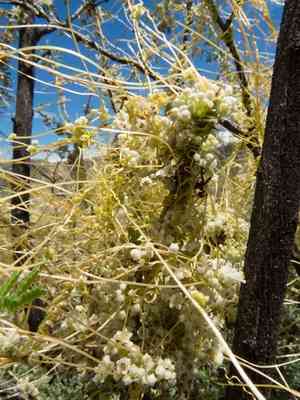
Bigseed alfalfa dodder(Cuscuta indecora)

Bigseed alfalfa dodder (Cuscuta indecora)

Also known as: Showy dodder, Large-seeded dodder

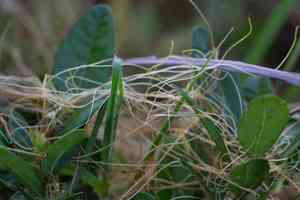
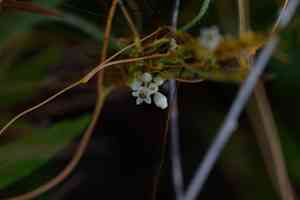
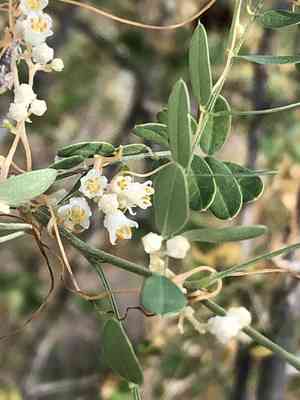
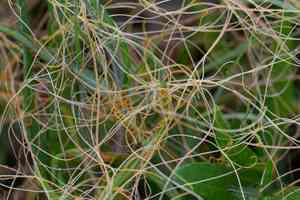
Bigseed alfalfa dodder (Cuscuta indecora) is a parasitic plant characterized by its thin, twining stems that range in color from yellow to orange and lack chlorophyll. This vine forms dense tangles over its host plants and is marked by small, clustered, white to pinkish flowers. It sustains itself by penetrating host plants with specialized structures called haustoria, which extract essential nutrients and water.

Distinctive Features:
- Thin, twining yellow/orange stems
- Small, clustered flowers
- Lack of chlorophyll

Growth Characteristics:
- Germinates near potential host plants
- Twines around and attaches to hosts using haustoria
- Forms dense mats over host vegetation

Adaptation and Sustenance:
- Completely reliant on host plants for nourishment
- Capable of infesting a wide range of ecosystems, demonstrating significant adaptability
- Seeds can remain viable in the soil for several years, ensuring long-term survival

This parasitic vine can significantly impact agricultural productivity by infesting crops like alfalfa and exploiting the resources of various host plants across different ecosystems.

Attributes of Bigseed alfalfa dodder

Lifespan
Perennial
Plant Type
Herb, Vine
Plant Height
Typically less than 1 meter, but it depends on the height of the host plant.
Spread
Not applicable, as it is a parasitic vine.
Leaf Color
Not applicable, as it lacks leaves.
Flower Size
Approximately 2-3 mm.
Flower Color
White or cream-colored.

ForwardPlant - Identify plants with a snap

Identify and diagnose plants, get toxicity alerts, and explore safety guides for all types of fungi.

Try for Free

Images of Bigseed alfalfa dodder

Bigseed alfalfa dodder(Cuscuta indecora)

Quickly Identify Bigseed alfalfa dodder

1
Identify Cuscuta indecora by its lack of chlorophyll, thread-like stems that twine around host plants, small and clustered flowers, and the production of small, globular seeds.

Scientific Classification of Bigseed alfalfa dodder

Phylum
Vascular plants
Class
Dicotyledons
Order
Solanales
Family
Morning-glory
Genus
Dodder
Species
Bigseed alfalfa dodder

Planting and Growing of Bigseed alfalfa dodder

Care Difficulty
Hard
Watering Schedule
Every day
Sunlight Requirements
Partial sun
Sunshine Duration
6-10 hours
Ideal Temperature
65-77℉
Soil Type
Potting Mix, Peat Mix
Soil pH
6.5-7.5
Fertilizer Type
Balanced
Pruning Season
Spring, Summer
Pruning Area
Branches, Leaves
Pruning Frequency
2 times a year
Repotting Season
Spring
Pot Type
Terracotta, Plastic

water icon How to Water Bigseed alfalfa dodder?

Due to its parasitic nature, Cuscuta indecora doesn't require regular heavy watering. If grown in a controlled environment, watering around 250 ml once a month suffices, just enough to mimic the moisture levels of its host plant’s root zone.
What are the symptoms of an underwatered Bigseed alfalfa dodder?
What should I do if my Bigseed alfalfa dodder is not getting enough water?
What are the symptoms of an overwatered Bigseed alfalfa dodder?
How to save an overwatered Bigseed alfalfa dodder?

sunlight icon What Are the Sunlight Requirements for Bigseed alfalfa dodder?

Sunlight Requirements: Partial sun, Full sun
Duration of light: 4 to 6 hours
Cuscuta indecora benefits from partial to full sun, which enhances its photosynthesis process. This promotes robust, healthy growth and optimal flowering conditions.
What is the best lighting condition?
How can I achieve ideal lighting for Cuscuta indecora?
What are the benefits of providing ideal lighting?

temperature icon What Is the Ideal Temperature Range for Bigseed alfalfa dodder?

Ideal Temperature: 65 ~ 77℉
Cuscuta indecora thrives best when grown within temperatures ranging from 65°F to 77°F. This range ensures the plant's physiological processes, such as photosynthesis and respiration, function optimally, leading to healthy growth and development.

soil icon What Soil is Best for Bigseed alfalfa dodder?

Soil type: Sandy soil, Loam, Clay soil
Soil PH: 6.5 ~ 7.5
Cuscuta indecora thrives in soils that can retain adequate moisture. An even moisture level helps prevent the plant from drying out and supports healthy growth. Ensuring the soil can hold water without becoming waterlogged is crucial. Although Cuscuta indecora is parasitic and derives nutrients from host plants, maintaining a nutrient-rich base soil ensures the host plants are healthy, indirectly benefiting Cuscuta indecora by providing vigorous hosts to attach to. Good soil aeration is essential for Cuscuta indecora, as it supports the host plant roots, promoting efficient nutrient uptake. Well-aerated soil prevents root diseases in hosts and enhances the overall vigor of the environment.

fertilize icon How to Fertilize Bigseed alfalfa dodder?

Fertilizer type: Balanced
Cuscuta indecora, commonly known as a type of dodder, does not require high amounts of fertilizer due to its parasitic nature. Minimal fertilizing with a liquid solution at half the recommended concentration for typical plants ensures that any symbiotic plants you wish to protect are not harmed.

prune icon How to Prune Bigseed alfalfa dodder?

Pruning Time: Spring, Summer, Autumn, Winter
Begin by identifying areas of vigorous growth. Look for tangled masses of the vine that appear golden-yellow to green. These are prime targets for pruning to control the spread and manage the plant's aggressive nature. Use sharp scissors or pruning shears to cut away the excess vine sections. Sever the extensive tendrils close to the host plant to prevent them from working their way back into the structure. Ensure your cuts are clean and precise to discourage regrowth. After pruning, collect and remove the cuttings immediately. It's vital to dispose of them properly, preferably by burning or through safe garbage disposal methods, to prevent any possibility of re-rooting or spreading.

propagate icon How to Propagate Bigseed alfalfa dodder plant?

Propagate Time: Late spring, Summer
1
Collect seeds from mature Cuscuta indecora plants at the end of their growing season. Ensure that the seeds are fully mature by examining their color and hardness. Store collected seeds in a cool, dry place until you are ready to plant them the following spring.
2
Prepare a well-draining seed-starting mix in your seed trays. A mix of peat, coarse sand, and a small amount of vermiculite will maintain moisture without becoming waterlogged, which is ideal for seed germination.
3
Sow the Cuscuta indecora seeds just below the surface of the planting medium, lightly covering them. Ensure even spacing to allow each seedling enough room to grow. Mist gently with water to settle the medium and initiate germination.
More About Propagating Techniques

repot icon How to Repot Bigseed alfalfa dodder plant?

Repotting frequency: Every two years
1
The ideal time to repot Cuscuta indecora is when you notice the plant becoming root-bound, with roots peering out from the drainage holes. Repotting in the growing seasons ensures it recovers faster.
2
Select a pot that is one size larger than the current one. This provides ample space for new root growth but prevents overwatering. A pot with good drainage is crucial to prevent root rot.
3
Opt for well-draining, sandy soil. This type of soil replicates the plant's natural environment and promotes healthy root development, preventing waterlogging.

ForwardPlant - Identify plants with a snap

Find the best spots for them to optimize their health, simply using your phone.

Try for Free

Toxicity

ingestion

Identify toxic plants for your safety

Learn which plants are harmful to you and your pets, and make informed choices for a safer home!

Try for Free
WARNING
The judgment on toxicity and danger is for reference only. We DO NOT GUARANTEE any accuracy of such judgment. Therefore, you SHALL NOT rely on such judgment. It is IMPORTANT TO SEEK PROFESSIONAL ADVICE in advance when necessary.