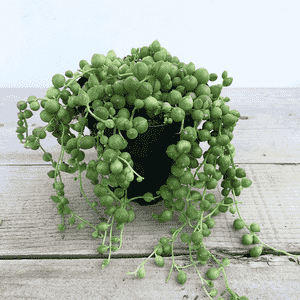
String of pearls (Curio rowleyanus)
Also known as: String of beads
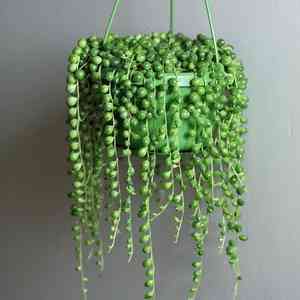
String of pearls is a succulent vine that looks like its common name, with small bubbles or pearls growing along its length. The string of pearls blooms with white flowers that have brightly colored stamens and a fragrance similar to cinnamon. With its cascading tendrils, the string of pearls makes a wonderful display in a hanging basket.
In This Article
Plant Comprehensive Care Guide: Beginner's Introduction and Key Details
Perfect for beginners starting their plant care journey
→
10 Secrets to Making String of pearls Grow Faster (A Must-Read for Beginners)
Advanced tips to accelerate your plant's growth
→
Care "Black Tech": 10 Little-Known Highly Effective Maintenance Tips
Expert-level techniques for optimal plant care
→
Attributes of String of pearls
Lifespan
Perennial
Plant Type
Succulent, Vine, Herb
Plant Height
60 cm to 90 cm
Spread
45 cm
Leaf Color
Green
Flower Size
2.5 cm
Flower Color
White
Images of String of pearls
Quickly Identify String of pearls
1
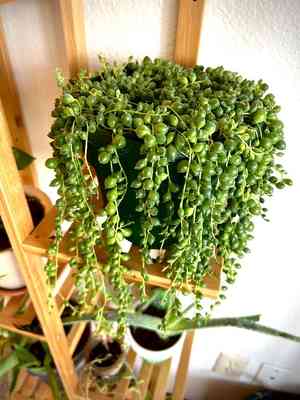
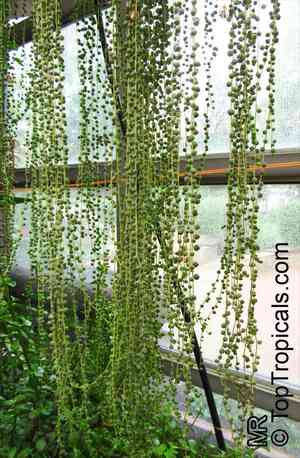
Pea-sized spherical leaves densely cover dangling stems, giving string of pearls a cascading appearance.
2
Distinctive pom-pom-like flowers with red stamens and yellow anthers emit a cinnamon fragrance.
3
Small, succulent, pea-shaped leaves with a lime green color and translucent stripe.
4
Slender, green, trailing stems with a branching pattern and resilient nature.
5
Fruit capsules contain wind-dispersed seeds topped with white cotton-like pappus.
Scientific Classification of String of pearls
Phylum
Vascular plants
Class
Dicotyledons
Order
Asterales
Family
Daisy
Genus
Curio
Species
String of pearls
Planting and Growing of String of pearls
Care Difficulty
Easy
Watering Schedule
Every 2 days
Sunlight Requirements
Partial sun
Sunshine Duration
4-8 hours
Ideal Temperature
65-75℉
Soil Type
Potting Mix, Peat Mix
Soil pH
6.5-7.5
Fertilizer Type
Balanced
Pruning Season
Spring, Summer
Pruning Area
Branches, Leaves
Pruning Frequency
Once a year
Repotting Season
Spring
Pot Type
Plastic, Ceramic
 How to Water String of pearls?
The amount of water for Curio rowleyanus should be enough to dampen the soil thoroughly but not waterlog it. We aim for approximately 50ml per session, allowing the top inch of soil to dry out between waterings. This helps prevent root rot.
More About Watering Techniques→
What are the symptoms of an underwatered String of pearls?
›
What should I do if my String of pearls is not getting enough water?
›
What are the symptoms of an overwatered String of pearls?
›
How to save an overwatered String of pearls?
›
 What Are the Sunlight Requirements for String of pearls?
Partial sunlight provides Curio rowleyanus with the necessary energy for photosynthesis without overexposure, promoting vigorous growth and maintaining the plant's unique cascading form.
More About Sunlight Requirements Techniques→
Solution for Ideal Lighting
›
Specific Measures
›
Benefits of Ideal Light
›
 What Is the Ideal Temperature Range for String of pearls?
For Curio rowleyanus, also known as String of Pearls, the optimal temperature range is between 65°F and 75°F. This range ensures that the plant can photosynthesize efficiently and maintain its delicate balance of moisture and nutrients. Maintaining this steady temperature range mimics its native South African environment, providing the warmth and consistency required for optimal growth. Thus, keeping Curio rowleyanus within this ideal temperature band allows it to thrive and exhibit healthy growth patterns.
 What Soil is Best for String of pearls?
Curio rowleyanus thrives in a well-draining medium that prevents root rot. This feature is crucial as it mimics its native arid environment and helps to maintain proper root health, reducing the likelihood of water-induced diseases. A substrate rich in nutrients enhances growth and supports vibrant foliage. By providing essential nutrients, the soil ensures the plant has sufficient resources for photosynthesis and growth, contributing to lush and healthy strings of pearls. Adequate soil aeration ensures that oxygen reaches the roots, promoting robust root health. A good soil texture prevents compactness, allowing for easy root expansion and optimal nutrient and water uptake.
More About Soil→
 How to Fertilize String of pearls?
Curio rowleyanus, commonly known as String of Pearls, requires modest fertilization due to its succulent nature. When applying liquid fertilizer, ensure the concentration is about one-fourth of what is recommended for houseplants. This prevents root burn and provides adequate nutrients without overloading.
 How to Prune String of pearls?
Inspect the plant closely to identify any stems that are dead, dying, or excessively long. These are the stems that you will be focusing on during the pruning process to ensure overall health. When pruning, always make cuts just above a node (the point where leaves attach to the stem). This encourages new growth and ensures that the cut is in an ideal place for healing and regeneration. To promote a fuller appearance, cut back stems to encourage branching. This will result in a more lush and dense look, which is highly desirable in the trailing habit of Curio rowleyanus.
 How to Propagate String of pearls plant?
1
Choose a healthy and mature stem from the plant that is free of diseases and pests. Ensure the stem has several nodes, as this increases the likelihood of successful rooting and growth.
2
Using sharp scissors, cut the stem about 3-4 inches long just below a node. This should be done carefully to maintain the integrity of the plant. A clean cut minimizes damage and encourages healthy growth.
3
Before planting, the cutting should be left to dry for a day or two, allowing the cut end to harden and callus. This helps prevent rotting when the stem is placed in soil or water for rooting.
 How to Repot String of pearls plant?
1
Curio rowleyanus, also known as String of Pearls, needs repotting when you notice roots growing out of the drainage holes or the plant is looking top-heavy. Ideally, repot during spring or summer when the plant is actively growing. These seasons offer optimal conditions for recovery as the plant can quickly establish its roots in the new soil.
2
Choose a pot with drainage holes slightly larger than the current one to allow room for growth without overwhelming the plant. A shallow pot suits String of Pearls well due to their shallow root system. Terracotta pots can be great as they allow excess moisture to evaporate, reducing the risk of root rot.
3
Opt for a well-draining cactus or succulent soil mix to prevent water retention, which could lead to root rot. Adding a bit of perlite or coarse sand enhances drainage and ensures the roots stay healthy and oxygenated, supporting robust growth.
Toxicity
Ingestion
WARNING
The judgment on toxicity and danger is for reference only. We DO NOT GUARANTEE any accuracy of such judgment. Therefore, you SHALL NOT rely on such judgment. It is IMPORTANT TO SEEK PROFESSIONAL ADVICE in advance when necessary.



