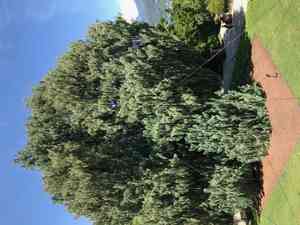
Kashmir cypress (Cupressus cashmeriana)
Also known as: Weeping cypress, Chinese arborvitae
The Kashmir cypress stands out due to its unique flaking bark and hanging blue-green foliage. Its impressive height and broad crown make it unsuitable for small gardens but perfect for expansive landscapes where it can serve as a striking specimen or shade tree. Additionally, its ability to tolerate salt makes it ideal for coastal environments.
In This Article
Attributes of Kashmir cypress
Lifespan
Perennial
Plant Type
Tree
Plant Height
12 m to 18 m
Spread
15 m
Leaf Color
Blue Silver Gray
Flower Size
Not applicable
Flower Color
Not applicable
Images of Kashmir cypress
Quickly Identify Kashmir cypress
1
Stately pyramidal shape with upright main branches.
2
Pendulous branchlets extending several feet in length, draped gracefully.
3
Calming blue-green foliage with a pleasant aroma when disturbed.
4
Typically grows 40-60 feet (12-18 meters) tall, taller in the wild.
5
Requires full sun, occasional irrigation, cold hardy down to 15-20°F (-9 to -6.6°C).
Scientific Classification of Kashmir cypress
Phylum
Vascular plants
Class
Conifers
Order
Pinales
Family
Cypress
Genus
Cypresses
Species
Kashmir cypress
Planting and Growing of Kashmir cypress
Care Difficulty
Hard
Watering Schedule
Every 2 days
Sunlight Requirements
Full sun
Sunshine Duration
4-8 hours
Ideal Temperature
50-68℉
Soil Type
Potting Mix, Peat Mix
Soil pH
6.5-7.5
Fertilizer Type
Balanced
Pruning Season
Spring, Summer
Pruning Area
Branches, Leaves
Pruning Frequency
2 times a year
Repotting Season
Spring
Pot Type
Plastic, Ceramic
 How to Water Kashmir cypress?
The ideal watering amount for Cupressus cashmeriana is around 500 milliliters per session. The soil should be moist but not soggy, allowing the water to soak deeply into the root zone. This ensures that the plant retains adequate moisture while avoiding root rot, promoting healthy growth.
What are the symptoms of an underwatered Kashmir cypress?
›
What should I do if my Kashmir cypress is not getting enough water?
›
What are the symptoms of an overwatered Kashmir cypress?
›
How to save an overwatered Kashmir cypress?
›
 What Are the Sunlight Requirements for Kashmir cypress?
Cupressus cashmeriana benefits most from full sun to partial sun, ideally 6 to 8 hours daily. This range bolsters photosynthetic energy and nutrient synthesis, fostering robust growth and vibrant foliage.
More About Sunlight Requirements Techniques→
What is the best light exposure for Cupressus cashmeriana?
›
How to ensure Cupressus cashmeriana gets optimal lighting?
›
What benefits does the right lighting offer to Cupressus cashmeriana?
›
 What Is the Ideal Temperature Range for Kashmir cypress?
The ideal temperature range for Cupressus cashmeriana cultivation lies between 50°F and 68°F. This range allows for optimal growth, minimizing stress while promoting healthy foliage. Maintaining temperatures within this range ensures that the plant's physiological processes operate efficiently, supporting robust growth and development.
 What Soil is Best for Kashmir cypress?
Cupressus cashmeriana thrives in well-draining soil, which helps prevent root rot by allowing excess water to escape. Adequate drainage is crucial for the plant's health as it ensures the roots receive enough oxygen. A nutrient-rich soil provides essential minerals and nutrients that foster robust growth. Fertile loam or sandy loam soils are ideal as they offer the perfect balance of nutrients needed for healthy foliage and sustained growth. While drainage is essential, the soil should also be able to retain moisture to keep the roots hydrated. Sandy loam maintains moisture effectively while allowing excess water to drain away, which suits Cupressus cashmeriana perfectly.
 How to Fertilize Kashmir cypress?
For Cupressus cashmeriana, use a balanced 10-10-10 liquid fertilizer. Dilute it to half-strength to avoid burning the roots and apply evenly around the plant base.
 How to Prune Kashmir cypress?
Avoid removing more than one-third of the tree's foliage at once, as over-pruning can stress the tree and affect its growth. It is essential to maintain enough foliage to ensure the tree can photosynthesize effectively. Perform pruning activities when the weather is dry to minimize the risk of disease and infection. Wet conditions can allow fungi and bacteria to enter fresh cuts. When shaping, consider the tree’s natural form. Excessive manipulation can lead to poorly distributed weight and potential instability. Emphasizing the natural growth can aid in maintaining a healthy structure.
More About Pruning Techniques→
 How to Propagate Kashmir cypress plant?
1
Cupressus cashmeriana seeds should be collected from mature cones and allowed to dry before planting. The drying process is crucial to ensure the viability of the seeds and to facilitate easier storage.
2
For cutting propagation, select healthy branches that are free of disease. Cut segments about 7-10 cm long, ensuring to make a clean cut just below a node, and remove the lower leaves to expose the stem.
3
In grafting, choose a healthy rootstock that is compatible with Cupressus cashmeriana. The scion should be cut to match the rootstock’s size and must be joined carefully to ensure successful graft formation.
 How to Repot Kashmir cypress plant?
1
Watch for signs like slowed growth, roots protruding from the drainage holes, or even the plant becoming top-heavy. These are clear indicators that it's time to give Cupressus cashmeriana a little more breathing room in a slightly larger pot.
2
Choosing the right pot for your Cupressus cashmeriana is crucial. Go for one that's just a size bigger, providing the roots space to grow without overwhelming the plant. Avoid oversized pots to prevent water retention issues.
3
Choose a soil mix that promotes excellent drainage, like a sandy loam blend. This will not only ensure that water doesn't linger around the roots but also help maintain the ideal moisture balance for your plant.



