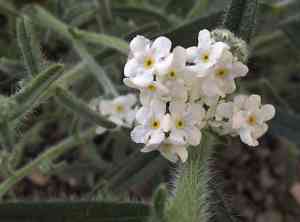
Pointed cryptantha (Cryptantha muricata)
Also known as: Showy prickly-nut cryptantha, Clokey's cryptantha, Prickly-nut cryptantha
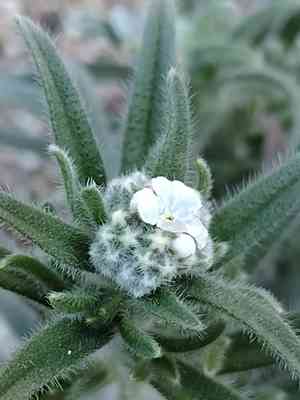
Pointed cryptantha is a resilient plant recognized for its bristly texture and clusters of small white flowers. It flourishes in dry, sandy, or gravelly soils common to its natural arid habitats. Its slender leaves and upright, hairy stems help reduce water loss, allowing it to endure harsh conditions. The plant's distinctive rough nutlets are key identifying features.
In This Article
Attributes of Pointed cryptantha
Lifespan
Annual
Plant Type
Herb
Plant Height
10-50 cm
Spread
N/A
Leaf Color
Green
Flower Size
0.5-1 cm
Flower Color
White
Images of Pointed cryptantha
Quickly Identify Pointed cryptantha
1
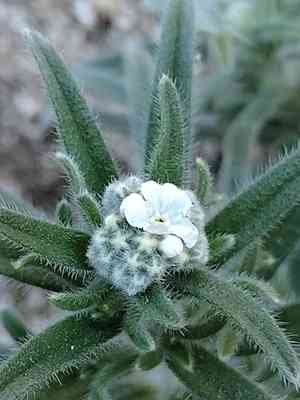
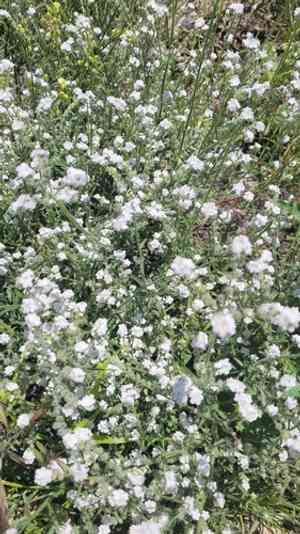
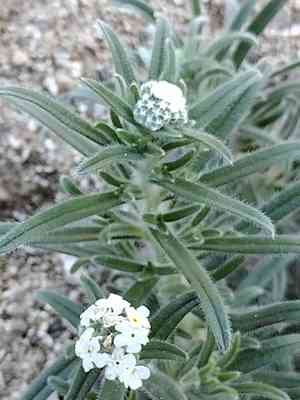
This plant can be identified by its rough-textured leaves and stems covered with bristly hairs. The flowers are small, white, and typically clustered.
Scientific Classification of Pointed cryptantha
Phylum
Vascular plants
Class
Dicotyledons
Order
Boraginales
Family
Borage
Genus
Cat's eye
Species
Pointed cryptantha
Planting and Growing of Pointed cryptantha
Care Difficulty
Moderate
Watering Schedule
Every 2 days
Sunlight Requirements
Full sun
Sunshine Duration
4-8 hours
Ideal Temperature
60-75℉
Soil Type
Potting Mix, Peat Mix
Soil pH
6.5-7.5
Fertilizer Type
Balanced
Pruning Season
Spring, Summer
Pruning Area
Branches, Leaves
Pruning Frequency
2 times a year
Repotting Season
Spring
Pot Type
Plastic, Ceramic
 How to Water Pointed cryptantha?
For Cryptantha muricata, ensure you water deeply but infrequently. Use around 500 ml per session, allowing water to penetrate the roots without oversaturating the soil. The key is to mimic desert conditions, where the plant is native, with a thorough soak and a dry spell.
What are the symptoms of an underwatered Pointed cryptantha?
›
What should I do if my Pointed cryptantha is not getting enough water?
›
What are the symptoms of an overwatered Pointed cryptantha?
›
How to save an overwatered Pointed cryptantha?
›
 What Are the Sunlight Requirements for Pointed cryptantha?
Cryptantha muricata benefits from full to partial sunlight, ideally 4-8 hours daily. Adequate light ensures robust growth, frequent blooming, and enhanced resilience against environmental stress.
What is the ideal lighting condition?
›
How can we achieve this ideal lighting condition?
›
What are the benefits of ideal lighting?
›
 What Is the Ideal Temperature Range for Pointed cryptantha?
To ensure optimal growth, Cryptantha muricata thrives best at temperatures between 60°F to 75°F. This range supports its physiological processes, promoting healthy development and vibrant foliage. Maintaining consistent temperatures in this range can help minimize stress and prevent temperature-related issues, ensuring the plant exhibits its natural beauty.
 What Soil is Best for Pointed cryptantha?
Cryptantha muricata thrives in well-drained soils. This ensures that excess water does not accumulate, which can prevent root rot and promote healthy root growth. The plant benefits from nutrient-rich conditions, which can be provided through organic matter in the soil. This enriches soil fertility, supporting vibrant growth and flowering. Adequate soil aeration is key for Cryptantha muricata. Well-aerated soil allows roots to access necessary oxygen, enhancing their health and the plant's overall vigor.
 How to Fertilize Pointed cryptantha?
Cryptantha muricata prefers a light hand when it comes to fertilization. During the growing season, use a diluted liquid fertilizer at a quarter strength every two weeks. For solid fertilizers, opt for a balanced slow-release product applied as per manufacturer's instructions, generally during early spring.
 How to Prune Pointed cryptantha?
Carefully cut away any stems that show signs of disease or damage to prevent them from affecting the healthy parts of the plant. When pruning, always make cuts just above a leaf node. This encourages new growth from that point, helping the plant to fill out.
More About Pruning Techniques→
 How to Propagate Pointed cryptantha plant?
1
Collect seeds from mature Cryptantha muricata plants once the seed heads have dried. Clean the seeds by removing any remaining chaff or plant material to prevent any fungal growth during storage.
2
Fill the seed trays with sterile potting mix and evenly scatter the seeds on the surface. Lightly cover them with a thin layer of potting mix, not exceeding twice the seed's thickness, to ensure adequate light penetration for germination.
3
Water the seeds gently to avoid displacement and maintain a consistently moist environment. Place the trays in a warm area with indirect sunlight. Consider using a humidity dome to preserve moisture levels until germination occurs.
 How to Repot Pointed cryptantha plant?
1
Cryptantha muricata typically signals it's time to repot when the roots begin to grow out of the drainage holes of its container. As a fast-growing plant, it may also exhibit stunted growth or require more frequent watering as another clue. Spring or early summer is ideal for repotting as the plant is in its active growth phase, helping it recover swiftly.
2
Select a container that is one size larger than the current pot. It should have ample drainage holes to prevent waterlogging, which could harm the roots. Terra cotta pots can be a good choice, offering excellent breathability and evaporation, thus ensuring the soil doesn't remain overly moist.
3
Opt for a well-draining potting mix for Cryptantha muricata. A standard cactus mix is ideal as it imitates the plant's natural environment, providing good aeration and preventing root rot. Adding perlite or sand can enhance drainage, facilitating healthy root development.



