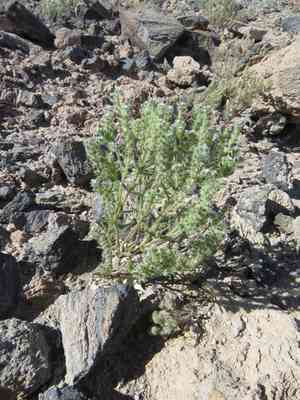
Guadalupe cryptantha (Cryptantha maritima)
Also known as: White Forget-Me-Not
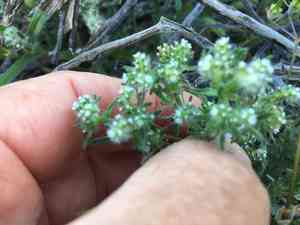
Guadalupe cryptantha is a resilient coastal wildflower that prospers in sandy, saline soils. It features slender stems topped with small white flowers, which have yellow centers. These tiny blossoms and its narrow, hairy leaves are well-suited to withstand harsh coastal winds and limited water availability. This plant thrives in its native sandy environments, showcasing its ability to adapt to tough coastal conditions.
In This Article
Attributes of Guadalupe cryptantha
Lifespan
Annual
Plant Type
Herb
Plant Height
10-40 cm
Spread
Approximately 30 cm
Leaf Color
Grayish-green
Flower Size
0.3-0.5 cm
Flower Color
White
Images of Guadalupe cryptantha
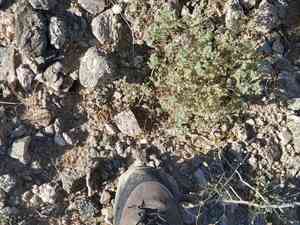
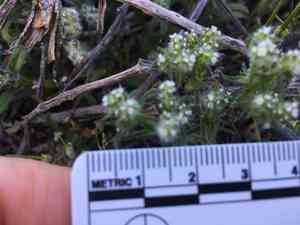
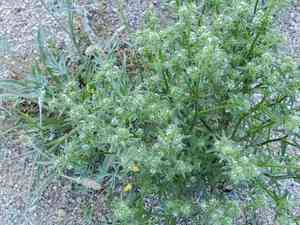
Quickly Identify Guadalupe cryptantha
1
Cryptantha maritima can be identified by its coarse, hairy texture and small, white, five-petaled flowers. Its leaves are narrow, grayish-green, and covered in fine hairs.
Scientific Classification of Guadalupe cryptantha
Phylum
Vascular plants
Class
Dicotyledons
Order
Boraginales
Family
Borage
Genus
Cat's eye
Species
Guadalupe cryptantha
Planting and Growing of Guadalupe cryptantha
Care Difficulty
Hard
Watering Schedule
Every 2 days
Sunlight Requirements
Full sun
Sunshine Duration
4-8 hours
Ideal Temperature
60-75℉
Soil Type
Potting Mix, Peat Mix
Soil pH
6-8
Fertilizer Type
Balanced
Pruning Season
Spring, Summer
Pruning Area
Branches, Leaves
Pruning Frequency
2 times a year
Repotting Season
Spring
Pot Type
Plastic, Ceramic
 How to Water Guadalupe cryptantha?
When watering Cryptantha maritima, it’s important to provide approximately 150 milliliters per session. The goal is to moisten the soil adequately, ensuring a balance that mirrors their native habitat's sporadic rainfall. As the plant prefers well-draining conditions, make sure not to let the soil sit in water.
What are the symptoms of an underwatered Guadalupe cryptantha?
›
What should I do if my Guadalupe cryptantha is not getting enough water?
›
What are the symptoms of an overwatered Guadalupe cryptantha?
›
How to save an overwatered Guadalupe cryptantha?
›
 What Are the Sunlight Requirements for Guadalupe cryptantha?
Cryptantha maritima prefers full sun for most of the day, allowing it to harness energy for active photosynthesis. Access to ideal light ensures strong growth and robust blooming cycles.
How much light does Cryptantha maritima need?
›
How to achieve ideal lighting conditions for the plant?
›
What benefits does optimal lighting provide for this plant?
›
 What Is the Ideal Temperature Range for Guadalupe cryptantha?
The ideal temperature range for Cryptantha maritima is between 60°F and 75°F. This range accommodates its natural habitat and supports optimal growth, flowering, and seed production. Maintaining temperatures within this range helps ensure the plant can carry out essential physiological processes effectively.
 What Soil is Best for Guadalupe cryptantha?
Cryptantha maritima thrives in well-drained sandy soils, as they prevent waterlogging and root rot. This requirement is crucial for the plant's survival since excessive moisture can quickly lead to deterioration. This plant is adapted to nutrient-poor soil conditions, commonly found in its natural coastal habitats. Limiting high fertilization will ensure its natural growth cycle and maintain its resilience. Cryptantha maritima prefers soil with low organic content, which mimics its native habitat where organic matter is scarce. The plant has evolved to thrive in these conditions, supporting its unique adaptations.
 How to Fertilize Guadalupe cryptantha?
Cryptantha maritima prefers a light feeding regimen. When using liquid fertilizers, ensure to dilute it to half strength of what's typically recommended for potted plants. Soluble fertilizers at a concentration of 50 ppm nitrogen, applied bi-weekly during the growing season, suffice.
 How to Prune Guadalupe cryptantha?
Begin by inspecting the plant for any dead or damaged branches. These should be removed first. Cut back any excessively long stems to promote a bushier growth. Aim to prune the plant in a way that maintains its natural shape while avoiding over-pruning. Given Cryptantha maritima’s blooming nature, ensure to cut just above the node to encourage new branches. This results in more blooms in the future. Be cautious not to remove too many flowering stems as this can reduce the plant's bloom for that season.
More About Pruning Techniques→
 How to Propagate Guadalupe cryptantha plant?
1
Fill a seed tray with a well-draining soil mix, leaving about a centimeter from the brim. This ensures that seeds are not washed away when watered. Lightly firm the soil with your hands to create a stable surface for sowing.
2
Scatter the Cryptantha maritima seeds evenly across the soil surface. Avoid burying the seeds as they require light for germination. Instead, press them gently into the soil to ensure contact but still exposed to light.
3
Mist the seeds lightly with water using a spray bottle. Cover the tray with a clear plastic lid or wrap to create a greenhouse effect, maintaining humidity and warmth vital for germination.
 How to Repot Guadalupe cryptantha plant?
1
Repot Cryptantha maritima when you notice roots coming out of the drainage holes or when the plant's growth seems stunted. Spring is the best season for repotting as the plant will be in its growth phase, allowing it to recover quickly from the repotting process.
2
Opt for a pot that is only slightly larger than the current one, with ample drainage holes to prevent waterlogging. A terracotta pot is ideal as it allows excess moisture to evaporate, helping maintain the perfect soil conditions for Cryptantha maritima’s roots.
3
Choose well-draining sandy soil to mirror the plant's natural habitat. This type of soil prevents root rot by ensuring that excess water drains away effectively, while also providing adequate support for the roots to establish comfortably.



