
Dove weed (Croton setigerus)
Also known as: Turkey Mullein, Doveweed
Turkey Mullein, also known as Dove weed, is an invasive species commonly found in southern lawns. It features thick, dark green leaves and small bluish flower clusters. Despite being attractive to turkeys and doves due to its seeds, its foliage is toxic to animals.
Attributes of Dove weed
Images of Dove weed
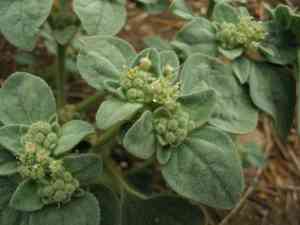
Quickly Identify Dove weed
Scientific Classification of Dove weed
Planting and Growing of Dove weed
 How to Water Dove weed?
 What Are the Sunlight Requirements for Dove weed?
 What Is the Ideal Temperature Range for Dove weed?
 What Soil is Best for Dove weed?
 How to Fertilize Dove weed?
 How to Prune Dove weed?
 How to Propagate Dove weed plant?
 How to Repot Dove weed plant?
Toxicity of Dove weed
Is Dove weed toxic to humans?
While this plant is not classified as technically toxic to humans by any reputable source, it may induce mild to moderate skin irritation in certain individuals upon contact. The stems and leaves are adorned with thick, bristle-like hairs that can lead to undesirable or painful skin reactions, including itching, burning sensations, redness, or swelling. Besides this, there are no additional recognized harmful effects on humans; however, ingesting the stems and leaves might also result in irritation of the mouth and throat due to the presence of these bristle-like hairs.
Is Dove weed toxic to cat?
Dove weed possesses a moderate toxicity level for cats. Felines could inadvertently ingest parts of the plant, leading to poisoning. Every part of the plant is toxic, thus ingestion poses a significant threat. Cats that are exposed to dove weed may show symptoms of physical discomfort, health issues, or distress. If poisoning is suspected, it is crucial to seek urgent veterinary assistance to guarantee a swift and proper reaction to the consumption of dove weed.
Is Dove weed toxic to dog?
The plant species known as dove weed is regarded as having moderate toxicity for dogs. Any part of this plant can be harmful to dogs if ingested, as it possesses toxicity throughout its entirety. When dogs consume dove weed, they may display various signs of poisoning. Symptoms might include vomiting, diarrhea, lethargy, or more serious health issues, depending on the quantity consumed. Due to the risks associated with dove weed, it is essential for dog owners to closely monitor their pets and restrict their access to this plant. If a dog accidentally ingests any part of dove weed, seeking immediate veterinary assistance is vital to effectively manage the poisoning and lessen any negative health impacts.


