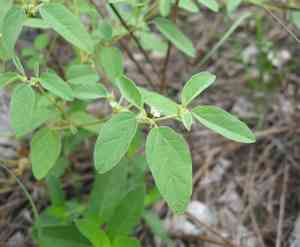
Prairie Tea (Croton monanthogynus)
Also known as: Doveweed, One-Seeded Croton
Prairie Tea (Croton monanthogynus) is an annual flowering plant native to the southeastern United States. It thrives in sunny, dry environments and can grow well in nutrient-poor soils. This plant is also known for attracting various bird species that feed on its seeds.
In This Article
Attributes of Prairie Tea
Lifespan
Annual
Plant Type
Herb
Plant Height
15 cm to 91 cm
Spread
90 cm
Leaf Color
Light green
Flower Size
2.5 mm
Flower Color
Yellow Green
Images of Prairie Tea
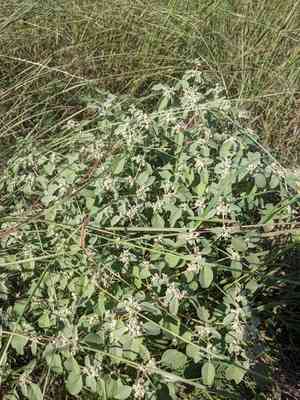
Quickly Identify Prairie Tea
1
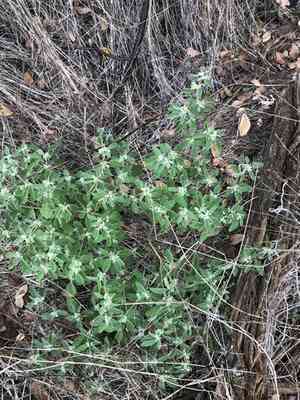
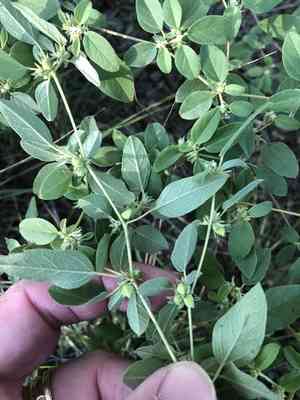
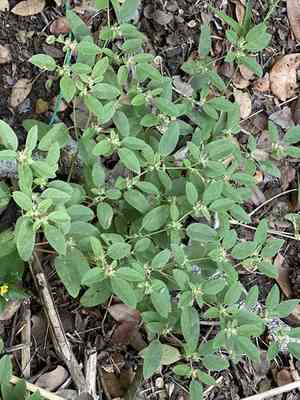
The plant can be identified by its small, herbaceous stature, barely reaching up to 0.5 meters in height. It has narrow, lance-shaped leaves that are usually light green. The flowers are tiny, white to greenish-white, and grow in elongated clusters.
Scientific Classification of Prairie Tea
Phylum
Vascular plants
Class
Dicotyledons
Order
Malpighiales
Family
Spurge
Genus
Rushfoils
Species
Prairie Tea
Planting and Growing of Prairie Tea
Care Difficulty
Easy
Watering Schedule
Every 2 days
Sunlight Requirements
Full sun
Sunshine Duration
6-10 hours
Ideal Temperature
68-77℉
Soil Type
Potting Mix, Peat Mix
Soil pH
6.5-7.5
Fertilizer Type
Balanced
Pruning Season
Spring, Summer
Pruning Area
Branches, Leaves
Pruning Frequency
2 times a year
Repotting Season
Spring
Pot Type
Plastic, Ceramic
 How to Water Prairie Tea?
Croton monanthogynus requires a precise amount of water to thrive; typically, 250 ml per session is ideal. The watering should be comprehensive to saturate the soil entirely but not so much that it leads to pooling or waterlogging. You should always allow the top inch of soil to dry out between watering sessions to prevent overhydration.
What are the symptoms of an underwatered Prairie Tea?
›
What should I do if my Prairie Tea is not getting enough water?
›
What are the symptoms of an overwatered Prairie Tea?
›
How to save an overwatered Prairie Tea?
›
 What Are the Sunlight Requirements for Prairie Tea?
Croton monanthogynus ideally thrives in full sun to partial sun. Consistent exposure to their favored light range results in lush foliage and vibrant colors, while promoting robust growth and resilience.
What is the ideal light level for Croton monanthogynus?
›
How to achieve the ideal lighting for the plant?
›
What benefits does ideal lighting bring to this plant?
›
 What Is the Ideal Temperature Range for Prairie Tea?
Maintaining an ideal temperature range of 68°F to 77°F for Croton monanthogynus ensures optimal growth and vibrancy. Within this range, the plant can efficiently perform photosynthesis and other vital metabolic processes, promoting healthy foliage and fewer stress reactions. Consistent warmth protects the plant from environmental shocks and fosters resilient growth against pests and diseases.
 What Soil is Best for Prairie Tea?
Opting for well-drained soil ensures that Croton monanthogynus does not suffer from root rot. This plant thrives in soil where excess water can easily drain away, preventing waterlogged conditions that could harm its roots. A nutrient-rich soil is vital for Croton monanthogynus to achieve vibrant growth and colorful foliage. Ensuring the soil is enriched with organic matter will provide essential nutrients, fostering healthy development. Maintaining moderate soil moisture is crucial for Croton monanthogynus. The ability of the soil to hold moisture while allowing excess water to drain prevents stress on the plant, ensuring it receives adequate hydration without being overwatered.
 How to Fertilize Prairie Tea?
When fertilizing Croton monanthogynus, it's crucial to use an amount that supports healthy growth without overwhelming the plant. Typically, apply liquid fertilizer at a concentration of half the recommended dose for general use plants. This helps in providing balanced nutrition without the risk of nutrient burn or over-fertilization.
 How to Prune Prairie Tea?
Prune during spring or early summer when the plant is actively growing. This timing allows the plant to recover quickly and encourages vigorous new growth and a more compact shape. Regular pruning helps maintain the plant's shape and encourages healthier growth. Removing older and leggy growth directs energy towards newer shoots, promoting a fuller and more aesthetically pleasing plant.
 How to Propagate Prairie Tea plant?
1
Fill the seed tray with potting soil, making sure it is level and packed to allow firm seed contact. Lightly moisten the soil to create an ideal germination environment.
2
Scatter the Croton monanthogynus seeds evenly across the soil surface, then gently press them into the soil without burying them too deeply. Cover the seeds with a fine layer of soil or vermiculite.
3
Cover the seed tray with a plastic lid or a clear plastic wrap to maintain humidity. Place the tray in a warm location with indirect sunlight and ensure consistent soil moisture for optimal germination conditions.
 How to Repot Prairie Tea plant?
1
The optimal time to repot Croton monanthogynus is when you notice roots emerging from the drainage holes or the plant appears root-bound, indicating it has outgrown its current pot. This typically hails the need for a fresh start, ideally in spring or summer, aligning with its active growth phase.
2
Select a pot that is about one to two inches larger in diameter than the current one. Ensure it has ample drainage holes to prevent waterlogging. This prevents the roots from becoming waterlogged, reducing the risk of root rot and promoting healthy aeration and drainage.
3
Choose a well-draining potting mix, ideally one formulated for indoor foliage plants. It should retain enough moisture to keep roots hydrated but also drain quickly. This combination helps in preventing water retention which can lead to root rot, supporting the croton's growth.
Toxicity
Ingestion
WARNING
The judgment on toxicity and danger is for reference only. We DO NOT GUARANTEE any accuracy of such judgment. Therefore, you SHALL NOT rely on such judgment. It is IMPORTANT TO SEEK PROFESSIONAL ADVICE in advance when necessary.


