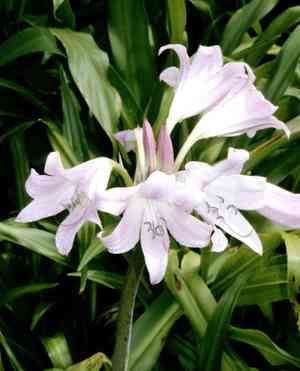
Natal lily (Crinum moorei)
Also known as: Natal Lily, Moore's Crinum, Moore's Lily
Natal lily (Crinum moorei) is a popular ornamental species for its opulent white flowers which stand out best in beds, borders, and containers. This plant is classed as vulnerable on the Red List of South African Plants due to insect attack and too much harvesting from the wild.
In This Article
Attributes of Natal lily
Lifespan
Perennial
Plant Type
Herb
Plant Height
1.5 m
Spread
1 m
Leaf Color
Green
Flower Size
10-15 cm
Flower Color
White Pink
Images of Natal lily
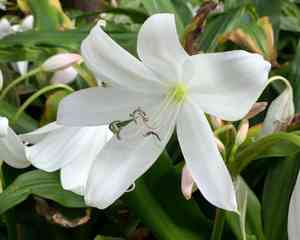
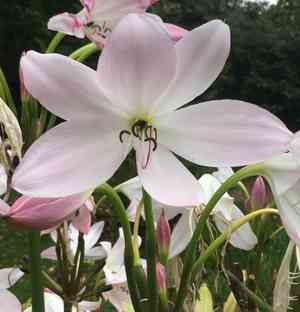
Quickly Identify Natal lily
1
Broad, semi-succulent leaves up to 3.3 feet (1 meter) long and 8 inches (20 cm) wide.
2
Large light pink flowers, approx. 4 inches (10 cm) wide, in goblet shape on umbels.
3
Drought-tolerant with cold resilience down to -6°C (20°F).
4
Funnel-shaped flowers with broad lanceolate petals, 4 inches (10 cm) long.
5
Seasonal dormancy of foliage post-flowering, creating a noticeable lifecycle pattern.
Scientific Classification of Natal lily
Phylum
Vascular plants
Class
Monocotyledons
Order
Asparagales
Family
Amaryllis
Genus
Crinum
Species
Natal lily
Planting and Growing of Natal lily
Care Difficulty
Easy
Watering Schedule
Every 2 days
Sunlight Requirements
Partial sun
Sunshine Duration
6-10 hours
Ideal Temperature
65-75℉
Soil Type
Potting Mix, Peat Mix
Soil pH
6.5-7.5
Fertilizer Type
Balanced
Pruning Season
Spring, Summer
Pruning Area
Branches, Leaves
Pruning Frequency
2 times a year
Repotting Season
Spring
Pot Type
Plastic, Ceramic
 How to Water Natal lily?
Crinum moorei requires ample water to thrive, particularly during its growing season. Aim to provide about 250ml of water each time, ensuring the soil is evenly moist but not waterlogged. Be mindful of allowing the top inch of soil to dry slightly between waterings to promote healthy root development.
What are the symptoms of an underwatered Natal lily?
›
What should I do if my Natal lily is not getting enough water?
›
What are the symptoms of an overwatered Natal lily?
›
How to save an overwatered Natal lily?
›
 What Are the Sunlight Requirements for Natal lily?
Crinum moorei ideally grows in partial sun to full shade. Adequate light ensures robust growth, vibrant foliage, and prolific blooming, contributing to the plant's longevity.
More About Sunlight Requirements Techniques→
What is the optimal lighting environment?
›
How to achieve these lighting conditions?
›
What are the benefits of ideal lighting?
›
 What Is the Ideal Temperature Range for Natal lily?
The optimal temperature range for growing Crinum moorei is between 65°F and 75°F. In this range, the plant can thrive, grow healthily, and produce vibrant foliage and flowers. This temperature range mimics its natural habitat and supports its metabolic and physiological processes effectively.
 What Soil is Best for Natal lily?
Crinum moorei thrives in well-draining soil which prevents waterlogging that can lead to root rot. Ensuring good drainage is particularly important in preventing diseases and promoting healthy root systems. The plant benefits significantly from soil rich in organic matter, which provides essential nutrients and helps retain soil moisture. This nutritional richness supports lush, vigorous foliage and robust flowering. While the soil should be well-draining, it should also be able to retain moderate moisture. This balance is crucial to keep the roots hydrated without being overly wet, thus optimizing plant health.
 How to Fertilize Natal lily?
For Crinum moorei, it is recommended to use a balanced liquid fertilizer diluted to half strength. Approximately 1 liter of the prepared solution should be used per plant per application to ensure the nutrients are evenly distributed.
 How to Prune Natal lily?
First, locate any flower stalks that have already bloomed and are starting to wilt. Using your pruning shears, cut these stalks back to the base of the plant to encourage new growth and improve appearance. Examine the plant for any yellow, brown, or damaged leaves. Carefully snip these leaves off at their base. Doing this not only enhances the plant's aesthetics but also increases airflow around its base, minimizing fungal issues.
More About Pruning Techniques→
 How to Propagate Natal lily plant?
1
Start by filling the seed tray with well-draining potting mix. Sow the seeds on the surface and gently cover them with a thin layer of soil. Water lightly to settle the seeds into the mix without waterlogging.
2
During early spring, carefully lift the Crinum moorei clump with a garden spade. Use your hands to pull apart the bulbs, ensuring each section has roots attached. This minimizes plant stress and promotes regrowth.
3
Place the seedlings or divided sections in a shaded area initially. Gradually acclimatize them to full sun over two weeks. Maintain consistent moisture in the soil but avoid overwatering to prevent rot.
 How to Repot Natal lily plant?
1
Repot Crinum moorei when you notice roots are circling the pot or emerging from drainage holes, which typically happens every 2-3 years. A lack of growth, poor blooming, or water retention issues can also signal it's time. This typically aligns with Spring or Summer when the plant is actively growing and can recover swiftly, making actual growth visible after repotting quicker. Ensuring you choose the right timing helps minimize plant stress and maximizes successful establishment in the new pot.
2
For Crinum moorei, select a pot that's about 2 inches larger in diameter than the current one. Opt for pots with ample drainage holes to prevent waterlogging, which can damage roots. Terracotta is an excellent material choice because it is porous, providing good airflow to the roots. The right pot gives the roots space to expand, reduces the need for frequent repotting, and improves the plant's overall health and hydration.
3
Crinum moorei thrives in a well-draining, rich organic soil mix. Combine garden soil with organic matter such as composted bark or leaf mold for optimal results. The mixture should retain moisture yet drain excess water quickly, facilitating oxygen flow to roots. This ensures the plant has the nutrients and structure needed to support healthy growth and robust blooming, minimizing potential root rot.
Toxicity
Ingestion, Contact
WARNING
The judgment on toxicity and danger is for reference only. We DO NOT GUARANTEE any accuracy of such judgment. Therefore, you SHALL NOT rely on such judgment. It is IMPORTANT TO SEEK PROFESSIONAL ADVICE in advance when necessary.
Learn More About Natal lily Diseases
Anthracnose
Bacterial Leaf Spot
Bacterial Soft Rot
Bacterial Wilt
Black Spot
Chemical Injury
Crown Gall
Cyst Nematode
Damping-off
Downy Mildew
Drought Stress
Fusarium Wilt
Gray Mold
Leaf Spot
Mosaic
Nutrient Deficiency
Nutrient Toxicity
Powdery Mildew
Root Rot
Root-knot Nematode
Rusts
Sooty Mold
Spider Mites
Temperature Stress
Thrips Damage
White Mold



