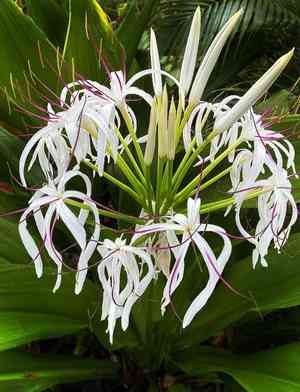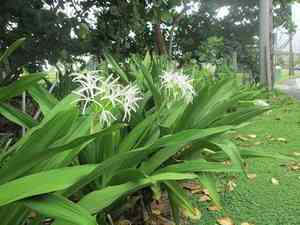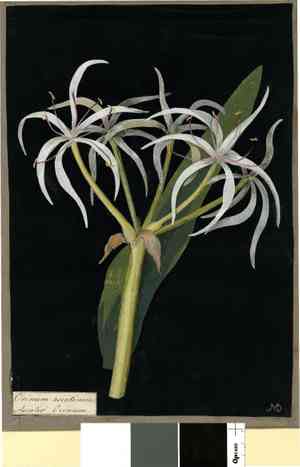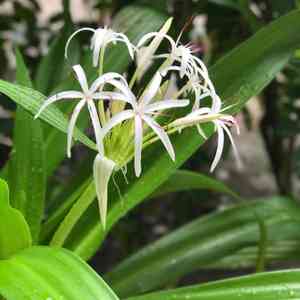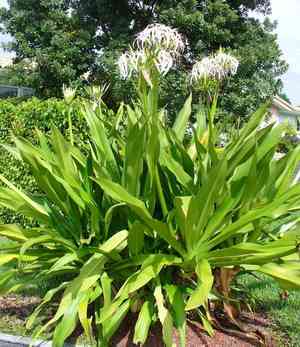
Poisonbulb(Crinum asiaticum)

Poisonbulb (Crinum asiaticum)

Also known as: Giant crinum lily, Spider lily

Crinum asiaticum, commonly known as poisonbulb, is a toxic plant native to the Pacific Islands. Ingestion can lead to symptoms such as nausea, vomiting, diarrhea, abdominal pain, and excessive salivation. In more severe cases, individuals may experience dizziness, muscle weakness, rapid heartbeat, respiratory distress, and fever. Immediate medical attention is recommended if poisoning is suspected.

Attributes of Poisonbulb

Lifespan
Perennial
Plant Type
Herb
Plant Height
1 m
Spread
1.2 m to 1.8 m
Leaf Color
Green
Flower Size
15 cm to 20 cm
Flower Color
White Pink Purple Red

PlantJoy - Identify plants with a snap

Identify and diagnose plants, get toxicity alerts, and explore safety guides for all types of fungi.

Try for Free

Images of Poisonbulb

Poisonbulb(Crinum asiaticum)

Quickly Identify Poisonbulb

1
Strap-shaped leaves in a spiral rosette, reaching 4 feet (122 cm) in length.
2
Fragrant white flower clusters on 2-foot-tall (60 cm) stalks.
3
Lanceolate white petals measuring 2.4 to 4.7 inches (6-12 cm) in length.
4
Fruit with large seeds, each 0.8 to 1.75 inches (2-4.5 cm) across.
5
Prominent parallel veins with cross veins on light green leaves, 20-60 inches (50-150 cm) long.

Scientific Classification of Poisonbulb

Phylum
Vascular plants
Class
Monocotyledons
Order
Asparagales
Family
Amaryllis
Genus
Crinum
Species
Poisonbulb

Planting and Growing of Poisonbulb

Care Difficulty
Easy
Watering Schedule
Every 2 days
Sunlight Requirements
Full sun
Sunshine Duration
4-6 hours
Ideal Temperature
68-86℉
Soil Type
Potting Mix, Peat Mix
Soil pH
6.5-7.5
Fertilizer Type
Balanced
Pruning Season
Spring, Summer
Pruning Area
Branches, Leaves
Pruning Frequency
2 times a year
Repotting Season
Spring
Pot Type
Plastic, Ceramic

water icon How to Water Poisonbulb?

Crinum asiaticum thrives on a balance of moist but well-drained soil. Ensure that you water it enough so that the top 2-3 inches of soil are moist but not soggy. This typically translates to around 500 milliliters per watering. Watering more frequently may be necessary during hot, dry periods, but be sure not to overwater and cause root rot.
What are the symptoms of an underwatered Poisonbulb?
What should I do if my Poisonbulb is not getting enough water?
What are the symptoms of an overwatered Poisonbulb?
How to save an overwatered Poisonbulb?
More About Watering Techniques

sunlight icon What Are the Sunlight Requirements for Poisonbulb?

Sunlight Requirements: Full sun, Partial sun
Duration of light: 4-6 hours sunlight
Crinum asiaticum thrives best in an environment with full to partial sun, providing approximately 4-6 hours of sunlight daily. Adequate lighting encourages healthy foliage development and robust blooming cycles.
What is the ideal light condition for Crinum asiaticum?
How can I achieve ideal lighting for Crinum asiaticum?
What benefits does Crinum asiaticum gain from ideal lighting?
More About Sunlight Requirements Techniques

temperature icon What Is the Ideal Temperature Range for Poisonbulb?

Ideal Temperature: 68 ~ 86℉
The ideal temperature range of 68-86°F provides optimal conditions for the metabolic activities and growth processes of Crinum asiaticum. In these conditions, the enzymatic reactions occur efficiently, supporting the plant’s growth and flowering potential.

soil icon What Soil is Best for Poisonbulb?

Soil type: Sandy soil, Loam, Clay soil
Soil PH: 6.5 ~ 7.5
Crinum asiaticum thrives in well-drained soils to prevent waterlogging, which can lead to root rot. Adequate drainage ensures that the roots receive sufficient oxygen and nutrients without the detrimental effects of standing water. A soil rich in organic material boosts the plant's growth by providing essential nutrients. This can be achieved by adding compost or well-rotted manure, which enhances soil fertility and structure. The plant benefits from soils that have moderate moisture retention. This ensures that the plant remains hydrated without excessive dryness or sogginess, promoting vigorous growth and blooming. More About Soil

fertilize icon How to Fertilize Poisonbulb?

Fertilizer type: Balanced
For Crinum asiaticum, apply liquid fertilizer at a rate of one tablespoon per gallon of water during the growing season. For slow-release fertilizer, use approximately half a cup per plant annually, spread evenly around the base of the plant. More About Fertilizing Techniques

prune icon How to Prune Poisonbulb?

Pruning Time: Spring, Summer, Autumn, Winter
Begin by gathering your tools, such as sharp pruning shears and gloves for protection. Start by examining the plant for any dead, diseased, or damaged leaves. Cut these leaves back to the base of the plant to improve airflow and reduce the risk of disease. After removing problematic leaves, focus on shaping the plant. Trim back overgrown areas to control size, ensuring that you cut just above a leaf node to encourage new growth. This will also help maintain the plant's tidy, elegant appearance. Conduct monthly maintenance checks for the plant, removing any yellow or withered foliage. This not only keeps the plant attractive but also allocates more energy towards producing robust blooms and healthy leaves. More About Pruning Techniques

propagate icon How to Propagate Poisonbulb plant?

Propagate Time: Spring, Early summer
1
Sow the seeds in a well-draining potting mix in a planting tray. Ensure the seeds are spaced appropriately for air circulation. Lightly cover the seeds with soil and water gently.
2
Carefully dig up the parent plant during the early summer. Separate the bulbs, ensuring each bulb has roots attached. Replant the bulbs immediately in a suitable location.
3
After planting seeds or bulbs, water thoroughly to settle the soil. Subsequent watering should be moderate until signs of growth appear to prevent overwatering.
More About Propagating Techniques

repot icon How to Repot Poisonbulb plant?

Repotting frequency: Every 2-3 years
1
Crinum asiaticum needs repotting when roots begin to emerge from the drainage holes or when the plant becomes root-bound, causing stunted growth or yellowing leaves. This typically signals the need for a larger pot and fresher soil to support the plant's continuing development.
2
Select a pot that is 2-3 inches larger in diameter than the current one, with ample drainage holes to prevent root rot. A slightly larger pot provides room for growth, ensuring the plant remains healthy and vibrant, and minimizes the risk of overwatering by promoting adequate drainage.
3
Opt for a rich potting mix with excellent drainage like a combination of loam, peat, and sand. This mix ensures the roots receive necessary nutrients and maintain proper air circulation, reducing the risk of soil compaction and promoting robust plant health over time.

PlantJoy - Identify plants with a snap

Find the best spots for them to optimize their health, simply using your phone.

Try for Free

Toxicity of Poisonbulb

Is Poisonbulb toxic to humans?

As suggested by its name, poisonbulb is likely to be toxic if consumed, although this has yet to be verified. The bulb is regarded as the most toxic section of the plant; however, every part may pose a risk due to the presence of alkaloids. Additionally, touching the plant could lead to adverse reactions, so it is advisable to wear gloves when interacting with it.

Is Poisonbulb toxic to cat?

Poisonbulb is highly toxic to felines. If a cat accidentally consumes any part of this plant, it poses a significant risk of poisoning, which can result in a range of health complications. While the exact toxic compounds are not clearly identified, it is vital for cat owners to understand the threats this plant poses. Ingestion may result in physical discomfort or illness, making it essential to observe cats closely for any symptoms of distress. Seeking immediate veterinary attention is critical for any cat that has ingested poisonbulb, ensuring their safety and overall health.

Is Poisonbulb toxic to dog?

Poisonbulb is a highly toxic plant for dogs, presenting significant health hazards if any part of it is ingested. Dogs may inadvertently eat portions of the poisonbulb, resulting in poisoning. Every part of the plant, encompassing leaves, stems, and bulbs, is toxic and must be kept out of accessible areas for pets. Indications of poisoning in dogs can manifest as vomiting, diarrhea, drooling, abdominal discomfort, and in extreme cases, seizures. If a dog consumes any part of the poisonbulb, it is crucial to obtain immediate veterinary assistance to secure the most favorable outcome for the animal.

Identify toxic plants for your safety

Learn which plants are harmful to you and your pets, and make informed choices for a safer home!

Try for Free
WARNING
The judgment on toxicity and danger is for reference only. We DO NOT GUARANTEE any accuracy of such judgment. Therefore, you SHALL NOT rely on such judgment. It is IMPORTANT TO SEEK PROFESSIONAL ADVICE in advance when necessary.
More About Toxic Techniques