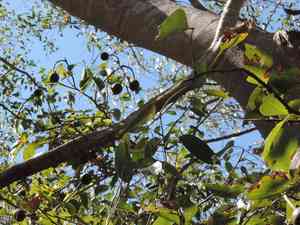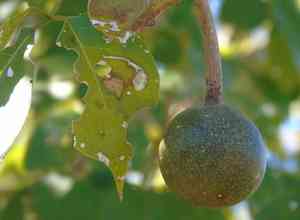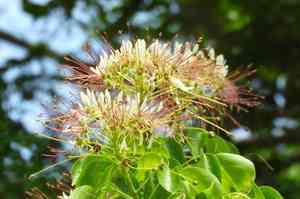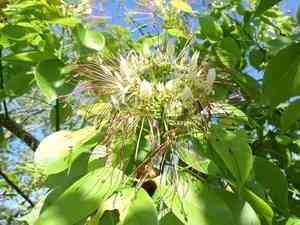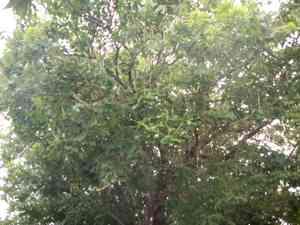
Garlic pear tree(Crateva tapia)

Garlic pear tree (Crateva tapia)

Also known as: Garlic pear

The garlic pear tree, or Crateva religiosa, stands out in urban settings for several reasons:

1. **Visual Appeal**: It features eye-catching clusters of white and yellow flowers that add beauty to city landscapes.
2. **Resilience**: This tree is adaptable to different soil types and can withstand challenging urban conditions.
3. **Wildlife Support**: The tree's round, yellowish-brown fruit provides food for birds, aiding in natural seed dispersal.
4. **Fragrant Blooms**: The aromatic flowers enhance sensory experiences in urban areas.
5. **Distinctive Foliage**: Its trifoliate leaves offer a unique and attractive appearance.

These attributes make the garlic pear tree a valuable addition to urban green spaces.

Attributes of Garlic pear tree

Lifespan
Perennial
Plant Type
Tree
Plant Height
6-15 meters
Spread
5-10 meters
Leaf Color
Green
Flower Size
3-4 centimeters
Flower Color
White Yellow Green

ForwardPlant - Identify plants with a snap

Identify and diagnose plants, get toxicity alerts, and explore safety guides for all types of fungi.

Try for Free

Images of Garlic pear tree

Garlic pear tree(Crateva tapia)

Quickly Identify Garlic pear tree

1
Crateva tapia can be identified by its trifoliate compound leaves, smooth gray bark, and distinctive white flowers with long stamens that resemble spider legs.

Scientific Classification of Garlic pear tree

Phylum
Vascular plants
Class
Dicotyledons
Order
Brassicales
Family
Capers
Genus
Crateva
Species
Garlic pear tree

Planting and Growing of Garlic pear tree

Care Difficulty
Easy
Watering Schedule
Every 3 days
Sunlight Requirements
Full sun
Sunshine Duration
4-8 hours
Ideal Temperature
65-85℉
Soil Type
Potting Mix, Peat Mix
Soil pH
6.5-7.5
Fertilizer Type
Balanced
Pruning Season
Spring, Summer
Pruning Area
Branches, Leaves
Pruning Frequency
2 times a year
Repotting Season
Spring
Pot Type
Plastic, Ceramic

water icon How to Water Garlic pear tree?

For Crateva tapia, the watering should ensure that the top 2-3 inches of soil are moist but not waterlogged. A quantity of around 500 ml per watering session is usually sufficient, adjusting based on soil dryness and environmental conditions. It’s essential to strike a balance to avoid underwatering or overwatering.
What are the symptoms of an underwatered Garlic pear tree?
What should I do if my Garlic pear tree is not getting enough water?
What are the symptoms of an overwatered Garlic pear tree?
How to save an overwatered Garlic pear tree?

sunlight icon What Are the Sunlight Requirements for Garlic pear tree?

Sunlight Requirements: Full sun, Partial sun
Duration of light: 6 to 8 hours
Crateva tapia should ideally receive full sun to partial sun for 6 to 8 hours daily. This ensures optimal photosynthesis, promoting healthy growth and abundant flowering, enhancing its ornamental appeal.
How much sunlight does Crateva tapia need?
How to ensure optimal sunlight exposure for Crateva tapia?
What are the benefits of ideal sunlight for Crateva tapia?

temperature icon What Is the Ideal Temperature Range for Garlic pear tree?

Ideal Temperature: 65 ~ 85℉
What is the ideal temperature range for cultivating Crateva tapia? The ideal growing temperature range for Crateva tapia is between 65°F and 85°F. This range provides a warm environment that supports the plant's growth and development. Temperatures within this range ensure proper physiological processes, such as photosynthesis and nutrient uptake, leading to robust health and vigorous growth.

soil icon What Soil is Best for Garlic pear tree?

Soil type: Loam, Sandy loam
Soil PH: 6.5 ~ 7.5
Crateva tapia thrives in nutrient-rich soil that provides ample minerals essential for its growth. The rich nutrient content supports strong root development, enhances foliage vitality, and promotes overall plant health, ensuring a vigorous growth cycle. The plant requires soil with excellent drainage to prevent root rot and other moisture-related issues. Well-drained soil allows excess water to escape easily, keeping the roots healthy and preventing over-saturation, which is crucial for the plant's longevity. Having soil that maintains moderate moisture levels is beneficial for Crateva tapia as it ensures steady water availability without causing waterlogging. This balance supports consistent plant growth and reduces the stress on plant tissues.

fertilize icon How to Fertilize Garlic pear tree?

Fertilizer type: Balanced
For Crateva tapia, a balanced approach to fertilization is essential. Use a standard liquid fertilizer at half the recommended strength to avoid over-fertilizing. Apply roughly 100ml per plant to provide sufficient nutrients without overwhelming the root system. For slow-release granular fertilizers, apply according to the product instructions, usually around 30g per plant annually.

prune icon How to Prune Garlic pear tree?

Pruning Time: Spring, Summer
Begin by inspecting the plant for any dead or diseased branches, which should be removed first. Next, trim back any overly long branches to encourage a fuller look. Always cut at a 45-degree angle just above a leaf bud to promote new growth. After pruning, it's crucial to water the Crateva tapia well and apply a balanced fertilizer to support new growth. Keep an eye on the plant to ensure it isn’t stressed, and watch for signs of pest infestation. More About Pruning Techniques

propagate icon How to Propagate Garlic pear tree plant?

Propagate Time: Spring
1
Collect seeds from ripe fruits of Crateva tapia. Ensure that the seeds are fully matured and dry. Store them in a cool, dry place if not planting immediately.
2
Prepare a well-draining soil mix using equal parts of sand, peat moss, and perlite to enhance aeration and avoid waterlogging, which is crucial for both seed and cutting propagation.
3
Choose healthy, disease-free branches for cuttings. Use sterilized pruning shears to make a clean cut below a node, approximately 6 inches long, and remove the lower leaves before planting.

repot icon How to Repot Garlic pear tree plant?

Repotting frequency: Every 2-3 years
1
Crateva tapia should be repotted when you see roots emerging from the drainage holes, or when growth seems stunted. The best times are during spring or autumn when the plant is not stressed by extreme weather. Watch for soil that looks compacted or lacks nutrients.
2
Select a pot that is one size larger than the current one, with good drainage holes. A pot that's too large may retain excess moisture, causing root rot. A well-proportioned pot encourages healthy root growth and prevents water standing at the bottom.
3
Opt for a well-draining loamy soil, rich in organic matter. The right soil prevents root rot by allowing excess water to escape, while maintaining sufficient moisture to nourish Crateva tapia. This balance is crucial for robust root and foliage development.

ForwardPlant - Identify plants with a snap

Find the best spots for them to optimize their health, simply using your phone.

Try for Free

Toxicity

Ingestion

Identify toxic plants for your safety

Learn which plants are harmful to you and your pets, and make informed choices for a safer home!

Try for Free
WARNING
The judgment on toxicity and danger is for reference only. We DO NOT GUARANTEE any accuracy of such judgment. Therefore, you SHALL NOT rely on such judgment. It is IMPORTANT TO SEEK PROFESSIONAL ADVICE in advance when necessary.