Buttons on a string (Crassula rupestris)
Also known as: Necklace vine, Rosary plant, Concertina plant, Concertina bush
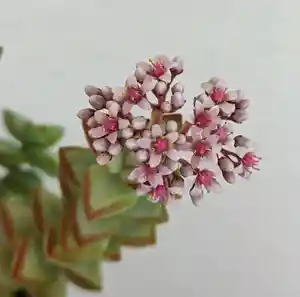
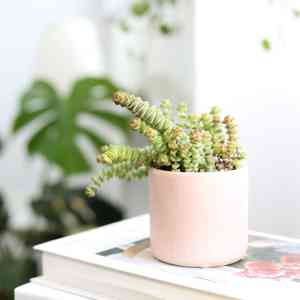
Buttons on a string (Crassula rupestris) is a succulent perennial that is native to South Africa. It has pointed, leaves that are green with red edges. The leaves cross at the base to form a star-shaped look. Flowers bloom in spring and are round clusters of white flowers that look like baby’s breath flowers. Prefers bright indirect light but can tolerate direct sun for part of the day. Plant in sandy, dry to medium, well-drained soil.
In This Article
Attributes of Buttons on a string
Lifespan
Perennial
Plant Type
Succulent
Plant Height
51 cm
Spread
50 cm
Leaf Color
Green Red
Flower Size
6 mm
Flower Color
White Pink
Images of Buttons on a string
Quickly Identify Buttons on a string
1
Crassula rupestris can be identified by its thick, fleshy leaves that are green with reddish edges. The leaves are often arranged in pairs and have a somewhat triangular shape. During flowering, clusters of small star-shaped flowers can be seen.
Scientific Classification of Buttons on a string
Phylum
Vascular plants
Class
Dicotyledons
Order
Saxifragales
Family
Stonecrop
Genus
Crassula
Species
Buttons on a string
Planting and Growing of Buttons on a string
Care Difficulty
Easy
Watering Schedule
Every 2 days
Sunlight Requirements
Full sun
Sunshine Duration
4-8 hours
Ideal Temperature
65-75℉
Soil Type
Potting Mix, Peat Mix
Soil pH
6.5-7.5
Fertilizer Type
Balanced
Pruning Season
Spring, Summer
Pruning Area
Branches, Leaves
Pruning Frequency
2 times a year
Repotting Season
Spring
Pot Type
Plastic, Terracotta
 How to Water Buttons on a string?
Crassula rupestris is a succulent that thrives on infrequent watering. You should water it with approximately 50 milliliters each time. Ensure water runs through the drainage holes, but avoid excessive sogginess, allowing the soil to dry completely between waterings.
More About Watering Techniques→
What are the symptoms of an underwatered Buttons on a string?
›
What should I do if my Buttons on a string is not getting enough water?
›
What are the symptoms of an overwatered Buttons on a string?
›
How to save an overwatered Buttons on a string?
›
 What Are the Sunlight Requirements for Buttons on a string?
Crassula rupestris flourishes in full to partial sun, ideally receiving 4 to 6 hours of sun daily, which enhances growth and color vibrancy.
More About Sunlight Requirements Techniques→
What is the ideal location for placing Crassula rupestris?
›
How can you adjust lighting if necessary?
›
What benefits does the plant experience under ideal lighting?
›
 What Is the Ideal Temperature Range for Buttons on a string?
Crassula rupestris thrives in temperatures between 65°F and 75°F. This range replicates their native habitat conditions, ensuring optimum growth and health. Consistently maintaining temperatures within this range helps the plant to efficiently carry out photosynthesis, metabolize nutrients, and maintain a strong structural form.
 What Soil is Best for Buttons on a string?
Crassula rupestris thrives in well-draining soil to prevent root rot. Well-draining soils allow excess water to pass through quickly, ensuring that the roots of the plant are not sitting in water, which can lead to fungal infections. While this plant does not have very high nutrient demands, a soil with a moderate amount of organic matter can support its growth. Organic matter in loamy soil provides essential nutrients that help the plant establish itself and grow robustly. Aeration in the soil is important for Crassula rupestris to promote healthy root growth. A sandy loam structure ensures air pockets within the substrate, facilitating oxygen availability and thus promoting vigorous growth.
More About Soil→
 How to Fertilize Buttons on a string?
The recommended amount to fertilize Crassula rupestris involves using a diluted liquid fertilizer at half strength. Measure out the appropriate amount indicated on the product label, but dilute to half the recommended strength to avoid over-fertilization. Solid or slow-release fertilizers can be applied sparingly, following the manufacturer's guidelines without exceeding the recommended amount. Typically, a small pinch of granules scattered over the soil surface is sufficient.
 How to Prune Buttons on a string?
Start by using sharp, sterilized scissors or pruning shears for a clean cut. Focus on removing dead or unhealthy leaves and branches at the base. To encourage a fuller appearance, you can pinch off the tips of the plant just above a set of leaves, which will stimulate growth along the remaining branches. When aiming to control the size or shape of your Crassula rupestris, identify the longer, more extended stems and cut them back to a leaf node. This method keeps the plant compact and promotes richer growth. Pruning is also an opportunity to guide the plant into a desired aesthetic form.
 How to Propagate Buttons on a string plant?
1
Choose a mature and healthy Crassula rupestris plant with no signs of disease or pest infestation. A strong parent plant increases the likelihood of successful propagation, as it has greater energy reserves for healthy cutting production.
2
Using a sterilized knife or scissors, cut a healthy stem or leaf from the parent plant. Ideally, this cutting should be a few inches long and free from blemishes or rot. It is important to handle the cuttings gently to avoid bruising or damaging the plant tissue.
3
Place the freshly cut segment in a dry and shaded location for a few days to allow the cut edge to callous. This helps to prevent bacterial or fungal infections when the cutting is placed into the soil.
 How to Repot Buttons on a string plant?
1
The ideal time to repot Crassula rupestris is when it starts to outgrow its container, typically indicated by roots showing through drainage holes or a noticeable slowdown in growth. Spring and summer are optimal seasons due to the plant's active growth period. Repotting at this time helps minimize stress and maximizes recovery.
2
Select a pot that is just slightly larger than the current one. Opt for materials like terracotta, which allows for better airflow and aids in water drainage, reducing the risk of root rot. Ensure it has drainage holes to prevent waterlogging, which is detrimental to succulents.
3
A well-draining cactus or succulent mix is ideal for Crassula rupestris. This type of soil prevents excess moisture retention, crucial for avoiding root rot. You may also enhance drainage by adding perlite or pumice to the mix, allowing roots to breathe and thrive.



