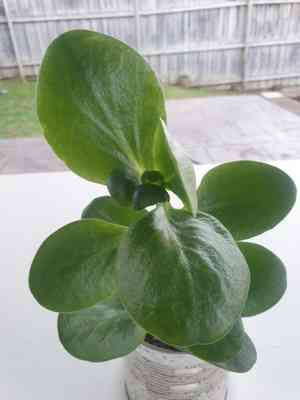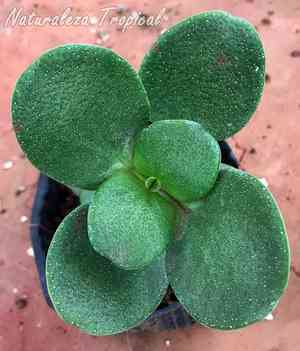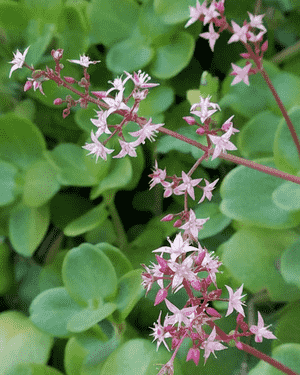
Fairy crassula(Crassula multicava)

Fairy crassula (Crassula multicava)

Also known as: London pride

Clivia miniata, also known as the Natal lily or bush lily, is indigenous to the mountainous areas of Natal, South Africa. It produces vibrant orange flowers in the spring. Due to its appealing appearance, it is frequently grown in pots and planters for decorative purposes.

Attributes of Fairy crassula

Lifespan
Perennial
Plant Type
Herb, Shrub
Plant Height
15 cm to 30 cm
Spread
60 cm
Leaf Color
Green
Flower Size
2.5 cm
Flower Color
Pink White

ForwardPlant - Identify plants with a snap

Identify and diagnose plants, get toxicity alerts, and explore safety guides for all types of fungi.

Try for Free

Images of Fairy crassula

Fairy crassula(Crassula multicava)

Quickly Identify Fairy crassula

1
Mat-forming perennial
2
Opposite pairs of glossy leaves with red dots
3
Winter white star-shaped flowers on reddish stems
4
Varied green coloration based on light exposure
5
Develops plantlets after flowering

Scientific Classification of Fairy crassula

Phylum
Vascular plants
Class
Dicotyledons
Order
Saxifragales
Family
Stonecrop
Genus
Crassula
Species
Fairy crassula

Planting and Growing of Fairy crassula

Care Difficulty
Easy
Watering Schedule
Every 2 days
Sunlight Requirements
Partial sun
Sunshine Duration
6-10 hours
Ideal Temperature
50-77℉
Soil Type
Potting Mix, Peat Mix
Soil pH
6.5-7.5
Fertilizer Type
Balanced
Pruning Season
Spring, Summer
Pruning Area
Branches, Leaves
Pruning Frequency
2 times a year
Repotting Season
Spring
Pot Type
Plastic, Ceramic

water icon How to Water Fairy crassula?

Crassula multicava prefers deep watering, allowing the soil to dry out between waterings. When watering, ensure the soil is thoroughly moistened, but avoid waterlogging. Generally, 250 ml of water should suffice to reach the root zone without excess.
What are the symptoms of an underwatered Fairy crassula?
What should I do if my Fairy crassula is not getting enough water?
What are the symptoms of an overwatered Fairy crassula?
How to save an overwatered Fairy crassula?
More About Watering Techniques

sunlight icon What Are the Sunlight Requirements for Fairy crassula?

Sunlight Requirements: Partial sun, Full shade
Duration of light: 3 to 6 hours
Partial sun to full shade allows Crassula multicava to thrive safely. This range ensures the plant receives enough sunlight for growth and flowering while minimizing the risk of leaf burn and excessive evaporation.
What is the ideal light exposure for Crassula multicava?
How can I ensure Crassula multicava gets the ideal lighting conditions in different seasons?
Why is maintaining ideal lighting conditions important for Crassula multicava?
More About Sunlight Requirements Techniques

temperature icon What Is the Ideal Temperature Range for Fairy crassula?

Ideal Temperature: 50 ~ 77℉
Crassula multicava thrives best in temperatures ranging from 50°F to 77°F. This range ensures that the plant's metabolic processes function optimally, promoting healthy growth and vibrant foliage. Keeping the plant within this temperature range mimics its natural habitat, offering it the best chance to flourish.

soil icon What Soil is Best for Fairy crassula?

Soil type: Sandy Soil, Loam, Sandy Loam
Soil PH: 6.5 ~ 7.5
Crassula multicava thrives in well-draining soil as it prevents root rot by ensuring excess water quickly escapes, thus promoting healthy root growth and longevity. This plant prefers soil with moderate nutrient content. Lightly fertilized soil provides essential nutrients without overwhelming the plant, ensuring balanced growth and vibrant foliage. An aerated soil structure is crucial for Crassula multicava, as it allows roots to breathe, supporting robust plant growth and preventing compaction-related stress. More About Soil

fertilize icon How to Fertilize Fairy crassula?

Fertilizer type: Balanced
Crassula multicava thrives in a balanced nutrient environment, so when applying liquid fertilizer, use a diluted solution at half the recommended strength to avoid overwhelming the plant. More About Fertilizing Techniques

prune icon How to Prune Fairy crassula?

Pruning Time: Spring, Summer
Begin your pruning by carefully examining the plant and identifying any dead, yellowing, or damaged leaves. Using your clean shears, gently snip these leaves off at the base to encourage new growth and maintain the plant's appearance. Look for stems that have grown thin or leggy due to lack of light or improper care. Cut these stems back by about one-third, just above a healthy leaf node, to promote a fuller, more robust appearance for your plant. To shape your Crassula multicava, focus on maintaining a uniform shape. Trim any excessively long stems that disrupt the plant's symmetry, ensuring light can reach all parts for even growth. This can create a more aesthetically pleasing and balanced appearance. More About Pruning Techniques

propagate icon How to Propagate Fairy crassula plant?

Propagate Time: Spring, Early summer
1
Choose healthy and mature leaves or stems for cuttings. Healthy plant material increases the likelihood of successful propagation, ensuring that the new plants are more vigorous.
2
Use a light and well-draining soil mix to encourage root development. A mix that retains moisture but does not stay too wet is ideal for Crassula multicava cuttings.
3
Plant seeds at a shallow depth or place cuttings just below the surface of the soil. Ensure that the cuttings have sufficient contact with the soil to start root development.
More About Propagating Techniques

repot icon How to Repot Fairy crassula plant?

Repotting frequency: Every 2-3 years
1
Repot Crassula multicava when you see roots coming out of the drainage holes, indicating that the plant has outgrown its current pot. Additionally, if the plant's growth seems stunted or the soil dries out too quickly, it's time for a new home.
2
Select a pot that is slightly larger than the current one with good drainage. A terracotta pot is ideal as it allows for better air circulation around the roots, preventing root rot and allowing the succulent to thrive.
3
Opt for a well-draining cactus or succulent mix. This helps in preventing water retention, keeping the roots dry, which is crucial for Crassula multicava to prevent root rot and to support healthy growth.
More About Repotting Techniques

ForwardPlant - Identify plants with a snap

Find the best spots for them to optimize their health, simply using your phone.

Try for Free

Toxicity of Fairy crassula

Is Fairy crassula toxic to humans?

The fairy crassula presents a moderate toxic risk to humans if ingested. Every part of this plant is deemed toxic and could result in poisoning when consumed. Upon ingestion, individuals might experience various symptoms, which may include gastrointestinal discomfort manifesting as nausea, vomiting, and diarrhea. Furthermore, signs of oral irritation may occur, such as a burning sensation in the mouth, increased salivation, and difficulty swallowing. It is crucial for people, particularly those with children or pets, to recognize the potential dangers and to take precautions to avoid any accidental consumption of fairy crassula.

Is Fairy crassula toxic to cat?

Fairy crassula presents a moderate risk of toxicity to cats. Felines may accidentally consume various parts of this plant, which can result in poisoning. When affected, a cat may display general symptoms of physical discomfort or illness. Given that all parts of the fairy crassula contain toxins, it is essential to keep the plant inaccessible to pets and to supervise for any signs of unintentional eating. If there is a suspicion that a cat has ingested fairy crassula, it is vital to seek prompt veterinary assistance to address the poisoning effects.

Is Fairy crassula toxic to dog?

Fairy crassula presents a moderate toxicity threat to dogs. Canines may unintentionally ingest parts of this plant, which can lead to potential poisoning. The entire plant is poisonous, and consumption can result in a range of symptoms that may impact the dog's health. If a dog consumes fairy crassula, they might show signs such as vomiting, diarrhea, lethargy, or possibly more serious clinical symptoms depending on the quantity ingested. It is vital for dog owners to closely observe their pets and restrict access to fairy crassula. In cases of suspected ingestion, seeking immediate veterinary care is critical to ensure timely and appropriate treatment.

Identify toxic plants for your safety

Learn which plants are harmful to you and your pets, and make informed choices for a safer home!

Try for Free
WARNING
The judgment on toxicity and danger is for reference only. We DO NOT GUARANTEE any accuracy of such judgment. Therefore, you SHALL NOT rely on such judgment. It is IMPORTANT TO SEEK PROFESSIONAL ADVICE in advance when necessary.
More About Toxic Techniques