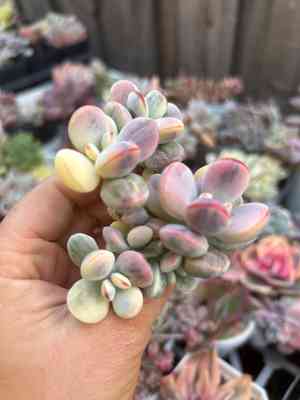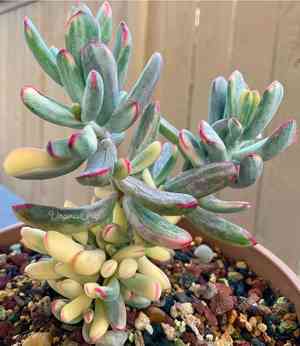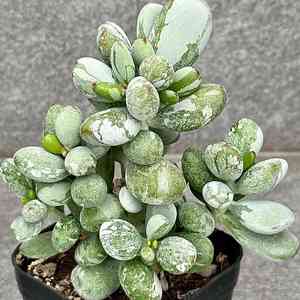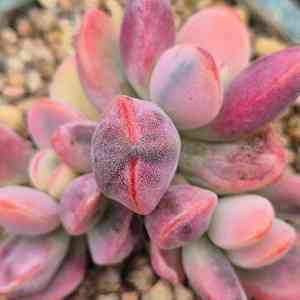
Round-leafed navel-wort(Cotyledon orbiculata)

Round-leafed navel-wort (Cotyledon orbiculata)

Also known as: Oblong pigs ear, Finger pigs ear, Common pigs ear

The **Round-leafed navel-wort (Cotyledon orbiculata)** is a plant species indigenous to South Africa, notable for its considerable variability in appearance. It commonly inhabits grasslands, fynbos, and karoo regions.

Attributes of Round-leafed navel-wort

Lifespan
Perennial
Plant Type
Shrub
Plant Height
1.3 m
Spread
60 cm
Leaf Color
Green Silver Gray
Flower Size
1-2 cm
Flower Color
Orange Red

ForwardPlant - Identify plants with a snap

Identify and diagnose plants, get toxicity alerts, and explore safety guides for all types of fungi.

Try for Free

Images of Round-leafed navel-wort

Round-leafed navel-wort(Cotyledon orbiculata)

Quickly Identify Round-leafed navel-wort

1
Look for fleshy, oval or rounded leaves often coated with a white, powdery substance, and bell-shaped flowers that range from red to yellow.

Scientific Classification of Round-leafed navel-wort

Phylum
Vascular plants
Class
Dicotyledons
Order
Saxifragales
Family
Stonecrop
Genus
Seed leaf
Species
Round-leafed navel-wort

Planting and Growing of Round-leafed navel-wort

Care Difficulty
Easy
Watering Schedule
Every 2 days
Sunlight Requirements
Full sun
Sunshine Duration
4-8 hours
Ideal Temperature
60-75℉
Soil Type
Potting Mix, Peat Mix
Soil pH
6.5-7.5
Fertilizer Type
Balanced
Pruning Season
Spring, Summer
Pruning Area
Branches, Leaves
Pruning Frequency
2 times a year
Repotting Season
Spring
Pot Type
Plastic, Ceramic

water icon How to Water Round-leafed navel-wort?

For Cotyledon orbiculata, water deeply but infrequently, ensuring the soil is thoroughly moistened. Use approximately 200 ml of water per session and water until you see drainage from the pot's bottom.
What are the symptoms of an underwatered Round-leafed navel-wort?
What should I do if my Round-leafed navel-wort is not getting enough water?
What are the symptoms of an overwatered Round-leafed navel-wort?
How to save an overwatered Round-leafed navel-wort?
More About Watering Techniques

sunlight icon What Are the Sunlight Requirements for Round-leafed navel-wort?

Sunlight Requirements: Full sun, Partial sun
Duration of light: 6 to 8 hours
Cotyledon orbiculata ideally requires full sun to partial sun, translating to about 6 to 8 hours of sunlight daily. This light range promotes lush growth and vibrant leaf colors, essential for its aesthetical and physiological health.
How much sunlight does Cotyledon orbiculata need?
What solutions ensure ideal lighting for Cotyledon orbiculata?
What benefits arise from optimal lighting conditions for Cotyledon orbiculata?
More About Sunlight Requirements Techniques

temperature icon What Is the Ideal Temperature Range for Round-leafed navel-wort?

Ideal Temperature: 60 ~ 75℉
Cotyledon orbiculata thrives in temperatures ranging from 60°F to 75°F. This range keeps the plant in optimal growth conditions, allowing it to maintain healthy leaf structure and color. When maintained in this ideal range, the plant will have an enhanced photosynthetic rate and efficient metabolic processes.

soil icon What Soil is Best for Round-leafed navel-wort?

Soil type: Sandy soil, Loam, Calcareous soil
Soil PH: 6.5 ~ 7.5
Cotyledon orbiculata thrives in well-drained soil that prevents waterlogging. This quality is crucial to avoid root rot, which can be fatal to succulents like this. Ensuring well-drained soil helps maintain healthy roots and robust growth. While being drought-tolerant, Cotyledon orbiculata benefits from a nutrient-rich medium. Adding organic matter can enhance soil fertility, providing essential nutrients that support vibrant foliage and blooming. An aerated soil structure facilitates proper oxygen flow to the roots, essential for the metabolic processes. This promotes plant health by enhancing water absorption and preventing diseases. More About Soil

fertilize icon How to Fertilize Round-leafed navel-wort?

Fertilizer type: Balanced
Cotyledon orbiculata benefits from a balanced nutrient supply tailored to its growth needs. During its active growing season in spring and summer, apply a half-strength liquid fertilizer once a month. Ensure that the fertilizer is diluted properly to prevent root burn. For slow release, apply a small dose, about the size of a tablespoon, around the plant’s base twice a year.

prune icon How to Prune Round-leafed navel-wort?

Pruning Time: Spring, Summer, Autumn
Start by sterilizing your pruning shears with rubbing alcohol. Then, remove any brown or shriveled leaves by cutting them close to the stem. Prune back any leggy growth to encourage a bushier appearance. Ensure cuts are made at a 45-degree angle where possible.

propagate icon How to Propagate Round-leafed navel-wort plant?

Propagate Time: Spring, Early summer
1
Choose healthy, disease-free plants to take cuttings or collect seeds. This increases the chances of successful propagation as healthy parent plants are more likely to produce vigorous offspring.
2
Use sterilized pruning shears to take a 5-10 cm cutting from a healthy stem. Ensure the cut is clean and avoid bruising the plant tissue. Remove lower leaves to expose nodes where roots can develop.
3
Scatter seeds on well-draining potting mix and lightly cover them with a thin layer of sand. Keep the soil moist, but not waterlogged, by using a spray bottle to water gently.
More About Propagating Techniques

repot icon How to Repot Round-leafed navel-wort plant?

Repotting frequency: Every 2-3 years
1
Cotyledon orbiculata signals its need for repotting when it becomes root-bound, and you notice roots growing out of the drainage holes. Additionally, if the growth slows or the plant becomes top-heavy and is prone to tipping over, it is time to consider repotting.
2
Select a pot that provides ample room for root expansion, ideally 1-2 inches larger in diameter than the old pot. Ensure it has drainage holes to prevent water stagnation, which can lead to root rot. A slightly heavier pot like terracotta can help balance the plant's weight and prevent tipping.
3
Opt for a well-draining cactus mix to prevent water retention around the roots. This type of soil typically contains sand, perlite, or pumice, which enhances drainage and aeration, protecting roots from rot and providing an optimal growing environment.
More About Repotting Techniques

ForwardPlant - Identify plants with a snap

Find the best spots for them to optimize their health, simply using your phone.

Try for Free

Toxicity of Round-leafed navel-wort

Is Round-leafed navel-wort toxic to humans?

The round-leafed navel-wort is considered moderately toxic to humans, with all parts of the plant posing a risk if swallowed. Accidental ingestion of any section of round-leafed navel-wort can result in poisoning, which may present a variety of symptoms. Those who have consumed portions of this plant might suffer from gastrointestinal issues, including nausea, vomiting, and diarrhea. Furthermore, symptoms can also involve lethargy, weakness, and irregular heart rates. It is essential for people, particularly those with children or pets, to recognize the toxic characteristics of this plant and to take measures to avoid any unintentional consumption of its parts.

Is Round-leafed navel-wort toxic to cat?

Round-leafed navel-wort presents a moderate toxicity hazard for cats. If a cat inadvertently consumes any portion of this plant, it might display signs of physical distress that could signal poisoning. Given that the entire plant is toxic, it is crucial to prevent cats from accessing round-leafed navel-wort. Pet owners should remain alert, as cats may show illness or discomfort without clear symptoms, making prompt veterinary care essential.

Is Round-leafed navel-wort toxic to dog?

The round-leafed navel-wort carries a moderate toxicity risk for dogs. Canines may inadvertently consume parts of this plant, resulting in toxic effects. Every part of the plant is poisonous, and ingestion can lead to a variety of concerning symptoms. Dog owners must be alert for any signs of discomfort, such as vomiting, diarrhea, lethargy, or unusual behavior, which could signify poisoning from the round-leafed navel-wort. If a dog shows any of these symptoms after exposure to this plant, it is crucial to seek prompt veterinary assistance to ensure the best possible health outcome for the pet.

Identify toxic plants for your safety

Learn which plants are harmful to you and your pets, and make informed choices for a safer home!

Try for Free
WARNING
The judgment on toxicity and danger is for reference only. We DO NOT GUARANTEE any accuracy of such judgment. Therefore, you SHALL NOT rely on such judgment. It is IMPORTANT TO SEEK PROFESSIONAL ADVICE in advance when necessary.
More About Toxic Techniques