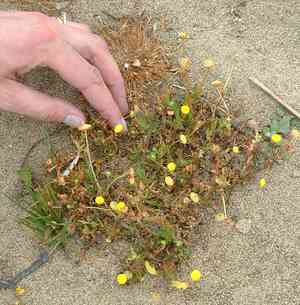
Water buttons (Cotula) (Cotula)
Also known as: Buttonweed, Brass Buttons
*Leptinella*, commonly referred to as water buttons, comprises perennial or annual herbs that have been traditionally utilized for covering bowling greens in New Zealand. These plants flower during spring and summer and are generally resistant to deer. Most species within this genus are drought tolerant and are frequently employed in xeriscaping practices.
In This Article
Attributes of Water buttons (Cotula)
Lifespan
Annual, Perennial
Plant Height
5-30 cm
Spread
Variable, typically spreading and mat-forming
Leaf Color
Green, sometimes silvery or grayish
Flower Size
1-2 cm
Flower Color
Yellow, greenish-yellow
Images of Water buttons (Cotula)
Quickly Identify Water buttons (Cotula)
1
Cotula species are generally low-growing, with finely divided leaves and small, button-like flowers that lack ray florets. The foliage can be aromatic, and the plants often have a spreading habit.
Scientific Classification of Water buttons (Cotula)
Phylum
Magnoliophyta
Class
Magnoliopsida
Order
Asterales
Family
Asteraceae
Genus
Cotula
Planting and Growing of Water buttons (Cotula)
Care Difficulty
Easy
Watering Schedule
Every 3 days
Sunlight Requirements
Full sun
Sunshine Duration
4-8 hours
Ideal Temperature
60-75℉
Soil Type
Potting Mix, Peat Mix
Soil pH
6.5-7.5
Fertilizer Type
Balanced
Pruning Season
Spring, Summer
Pruning Area
Branches, Leaves
Pruning Frequency
2 times a year
Repotting Season
Spring
Pot Type
Plastic, Ceramic
 How to Water Water buttons (Cotula)?
The Cotula plant thrives when its soil is kept moderately moist but not waterlogged. Aim to water with about 250 milliliters each session, ensuring that the soil feels damp to the touch down to a depth of about 2-3 inches. Adjust the amount slightly depending on temperature and humidity changes.
What are the symptoms of an underwatered Water buttons (Cotula)?
›
What should I do if my Water buttons (Cotula) is not getting enough water?
›
What are the symptoms of an overwatered Water buttons (Cotula)?
›
How to save an overwatered Water buttons (Cotula)?
›
 What Are the Sunlight Requirements for Water buttons (Cotula)?
Cotula prefers full sun to partial sun exposure. Ideal lighting ensures healthy foliage, vibrant colors, and optimal flowering, making the plant a visually appealing part of any garden.
What type of sunlight does Cotula prefer?
›
What are the solutions for achieving ideal lighting?
›
What are the benefits of ideal sunlight for Cotula?
›
 What Is the Ideal Temperature Range for Water buttons (Cotula)?
The ideal temperature range for Cotula is between 60°F and 75°F. This range ensures optimum growth and development, maintaining the plant's vitality and promoting healthy foliage. Staying within this temperature range helps prevent stress and encourages the best blooming results.
 What Soil is Best for Water buttons (Cotula)?
Cotula thrives in well-drained soil, which helps prevent root rot by allowing excess water to escape. This soil structure keeps roots healthy and promotes vigorous growth, ensuring your Cotula remains lush and vibrant throughout the growing season. Cotula prefers moderate fertility levels, meaning the soil should have enough nutrients to support growth without being overly rich. This balance avoids excessive vegetative growth and helps maintain the plant's natural form and flowering capacity. While drainage is crucial, Cotula also benefits from soils that can retain some moisture. This ensures the plant does not dry out completely between waterings, which is particularly important during warmer months or in arid climates.
 How to Fertilize Water buttons (Cotula)?
For Cotula, application with a balanced liquid fertilizer should be done at half the recommended strength to avoid nutrient burn. One should mix the fertilizer with water, adhering to a ratio of 10ml of fertilizer per 2 liters of water.
 How to Prune Water buttons (Cotula)?
Begin by identifying dead or diseased stems and removing them at the base. Next, shape the plant by trimming back overgrown areas, careful not to cut into the main stem. Finally, regularly remove any yellowing or browning foliage to promote healthy growth.
 How to Propagate Water buttons (Cotula) plant?
1
To sow Cotula seeds, fill seed trays with a well-draining potting mix. Gently press the seeds onto the surface without covering them as they need light to germinate. Keep the soil moist but not waterlogged, and place the trays in a location with bright, indirect light.
2
When using division propagation, carefully dig around the plant to lift it from the soil. Use a garden spade to divide the root ball into several smaller sections, making sure each section has roots and shoots for successful replanting.
3
Replant each divided section at the same depth it was originally growing. Water them well immediately after planting to help establish the roots. Ensure the soil remains consistently moist during the first few weeks following transplantation.
 How to Repot Water buttons (Cotula) plant?
1
You know it's time to repot Cotula when you notice the roots are protruding from the drainage holes or the plant's growth seems stunted. Also, if the soil is compacted due to constant watering, it's a good indicator that repotting is needed. These signs suggest that the plant has outgrown its current pot and needs more space to thrive.
2
Select a pot that is only slightly larger than the current one, ideally 1-2 inches bigger in diameter. Using a pot that's too large can lead to root rot due to excess moisture retention. Ensure the pot has sufficient drainage holes, which is crucial for preventing waterlogging and promoting healthy root development.
3
A well-draining loam mix with good aeration is essential for Cotula. This soil type allows excess water to drain away quickly, preventing root rot while retaining enough moisture for the roots. The addition of sand or perlite can improve drainage, creating an optimal environment for growth.
Learn More About Water buttons (Cotula) Diseases
Anthracnose
Bacterial Leaf Spot
Bacterial Soft Rot
Bacterial Wilt
Crown Gall
Cyst Nematode
Damping-off
Downy Mildew
Fusarium Wilt
Gray Mold
Leaf Spot
Mosaic
Powdery Mildew
Root Rot
Root-knot Nematode
Rusts
Sooty Mold
White Mold
Chemical Injury
Drought Stress
Nutrient Deficiency
Nutrient Toxicity
Temperature Stress
Spider Mites
Thrips Damage

