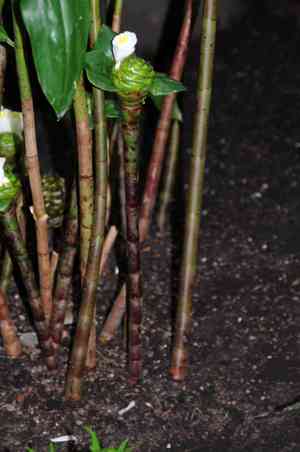
Costus (Costus) (Costus)
Also known as: Spiral Ginger, Crepe Ginger
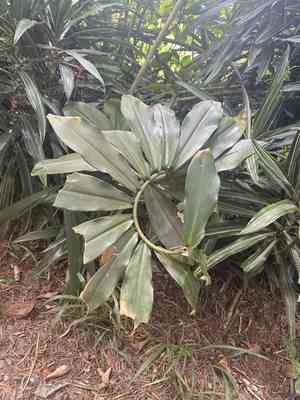
Spiral gingers (*Costus* species) are flowering perennials known for their unique spiraling stems and leaves, a feature that distinguishes them from true gingers (*Zingiber* species). Unlike the upright growth of true gingers, spiral gingers exhibit a corkscrew pattern in their stems and often have cone-like clusters of flowers at the tips.
These plants thrive in tropical and subtropical regions, with a natural habitat spanning Central and South America, Africa, and Southeast Asia. Some species in the *Costus* genus also serve as important food sources for certain rare caterpillars, such as the restricted demon (*Notocrypta curvifascia*).
In This Article
Attributes of Costus (Costus)
Lifespan
Perennial
Plant Height
1-3 meters
Spread
Varies depending on species; generally compact up to 1 meter
Leaf Color
Green, sometimes with red or purple tinges
Flower Size
2-5 cm
Flower Color
Red, yellow, white
Images of Costus (Costus)
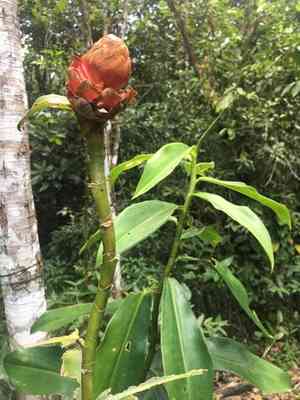
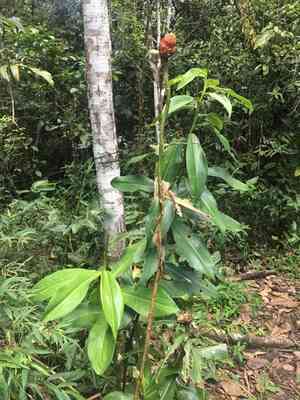
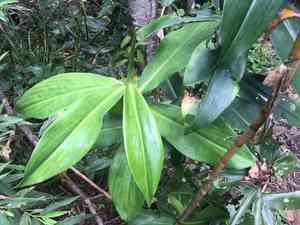
Quickly Identify Costus (Costus)
1
Recognize Costus by its spiral or twisted stems, lush green leaves, and unique, often colorful, cylindrical flowers that emerge at the top of the stems.
Scientific Classification of Costus (Costus)
Phylum
Tracheophyta (Vascular plants)
Class
Liliopsida (Monocots)
Order
Zingiberales
Family
Costaceae
Genus
Costus
Planting and Growing of Costus (Costus)
Care Difficulty
Moderate
Watering Schedule
Every 3 days
Sunlight Requirements
Partial sun
Sunshine Duration
6-10 hours
Ideal Temperature
65-75℉
Soil Type
Potting Mix, Peat Mix
Soil pH
6-7.5
Fertilizer Type
Balanced
Pruning Season
Spring, Summer
Pruning Area
Branches, Leaves
Pruning Frequency
2 times a year
Repotting Season
Spring
Pot Type
Plastic, Ceramic
 How to Water Costus (Costus)?
Costus plants like to have consistently moist but not waterlogged soil. When watering, aim to saturate the soil until water begins to drain out of the bottom of the pot. This usually requires around 500 ml, ensuring that the water permeates deeply into the root zone without causing standing water.
What are the symptoms of an underwatered Costus (Costus)?
›
What should I do if my Costus (Costus) is not getting enough water?
›
What are the symptoms of an overwatered Costus (Costus)?
›
How to save an overwatered Costus (Costus)?
›
 What Are the Sunlight Requirements for Costus (Costus)?
Partial sun to full shade conditions are preferred, replicating Costus's natural forest habitat. This balance supports healthy growth, vibrant leaves, and potential blooming, ensuring the plant thrives.
What is the ideal lighting for Costus?
›
How to achieve ideal lighting for Costus?
›
What are the benefits of proper lighting for Costus?
›
 What Is the Ideal Temperature Range for Costus (Costus)?
The ideal temperature range for Costus plants is between 65°F and 75°F. This range ensures optimal growth and vitality. Maintaining this temperature allows Costus to photosynthesize efficiently, producing vibrant foliage and healthy blooms.
 What Soil is Best for Costus (Costus)?
Costus plants thrive in well-draining soil which prevents waterlogging and root rot. This is particularly beneficial for their rhizome-like roots that require breathing space to absorb nutrients efficiently. Nutrient-rich soil is essential for the lush growth of Costus. Organic matter and compost can be mixed into the soil to supply essential nutrients, enhancing the vibrancy of the plant's foliage. While Costus requires well-draining soil, it also benefits from soil that retains adequate moisture. This balance ensures that the plant's water needs are consistently met in varying climates.
 How to Fertilize Costus (Costus)?
For Costus plants, it is essential to provide a well-balanced fertilizer solution. Use a 20-20-20 NPK fertilizer at half strength for every liquid fertilization session. Avoid excessive amounts as this can lead to nutrient burn, negatively affecting plant growth.
 How to Prune Costus (Costus)?
Begin by inspecting the plant for any dead, diseased, or damaged foliage. These parts will be more easily identifiable as brown or yellow and can be removed to prevent disease spread and encourage new growth. When making a cut, aim to trim just above a node, where a leaf joins the stem. This encourages the plant to produce new shoots from that point, promoting a bushier look. Gently trim the plant to your desired shape, keeping its natural form in mind to ensure it grows attractively and symmetrically. Regular shaping helps prevent the plant from becoming leggy and improves its aesthetic appeal.
 How to Propagate Costus (Costus) plant?
1
Select healthy stems and cut them into sections about 4-6 inches long. Remove any leaves from the lower half of the cutting to prevent decay when planted in soil.
2
Dip the cut end of the stem in rooting hormone before planting. This step can promote faster root formation and increase the success rate of propagation.
3
Place the prepared cuttings in a well-draining potting mix, ideally in a small pot or tray. Ensure that at least two nodes are buried in the soil, as this is where roots will develop.
 How to Repot Costus (Costus) plant?
1
Costus plants should be repotted when roots start to circle the bottom of the pot or if you notice stunted growth. This usually occurs every couple of years. Spring and early summer are ideal, as this is when the plant enters its growing phase, allowing it to establish better in the new pot.
2
Select a pot that is one size larger than the current one to give the roots room to expand. Ensure the pot has good drainage, as this prevents waterlogging, which can lead to root rot. A ceramic or plastic pot with multiple drainage holes works well for maintaining moisture balance.
3
Opt for a well-draining potting mix rich in organic matter. Adding perlite can improve drainage, while coconut coir helps in retaining moisture without compacting. This ensures that Costus receives adequate moisture without risking overwatering, providing an ideal growing environment.
Learn More About Costus (Costus) Diseases
Anthracnose
Bacterial Leaf Spot
Bacterial Soft Rot
Bacterial Wilt
Black Spot
Chemical Injury
Crown Gall
Damping-off
Downy Mildew
Drought Stress
Fusarium Wilt
Gray Mold
Leaf Spot
Mosaic
Nutrient Deficiency
Nutrient Toxicity
Powdery Mildew
Root Rot
Root-knot Nematode
Rusts
Sooty Mold
Spider Mites
Temperature Stress
Thrips Damage
White Mold

