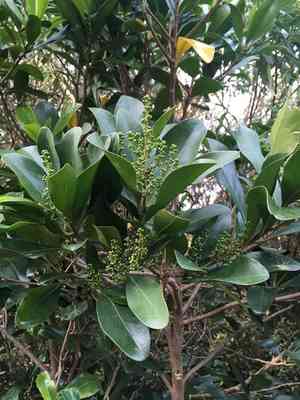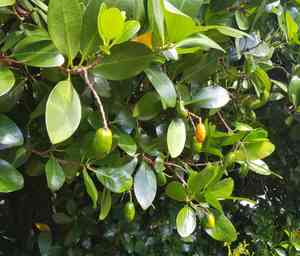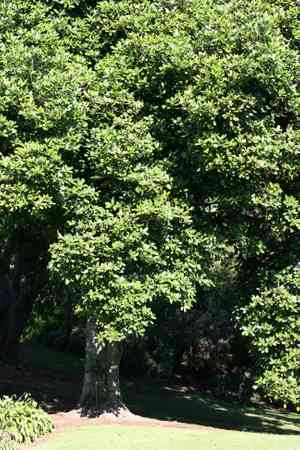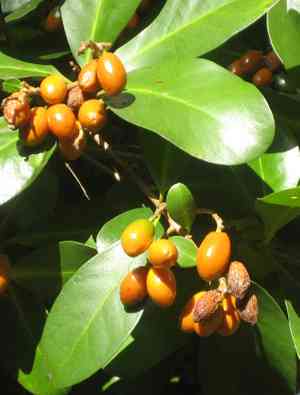
New Zealand laurel(Corynocarpus laevigatus)

New Zealand laurel (Corynocarpus laevigatus)

Also known as: Karaka

The fruit of the New Zealand laurel tree (*Corynocarpus laevigatus*) can be consumed, but several precautions are necessary due to its toxic nature:

1. **Do Not Eat Fresh Kernels:** The kernels contain toxins and are dangerous if eaten raw.
2. **Detoxification Process:** Indigenous Moriori people have developed intricate methods to detoxify the fruit, involving extensive cooking, soaking, and sometimes fermentation.
3. **Follow Traditional Methods:** Adhering strictly to these traditional preparation methods is crucial, as any mistake can lead to serious health issues.
4. **Exercise Caution:** Even after proper preparation, consume the fruit sparingly to minimize any potential risks.

Always prioritize safety and consult experts familiar with safe preparation techniques.

Attributes of New Zealand laurel

Lifespan
Perennial
Plant Type
Tree
Plant Height
15 m
Spread
8 m
Leaf Color
Green
Flower Size
4 mm to 5 mm
Flower Color
Yellow Pink Green

PlantJoy - Identify plants with a snap

Identify and diagnose plants, get toxicity alerts, and explore safety guides for all types of fungi.

Try for Free

Images of New Zealand laurel

New Zealand laurel(Corynocarpus laevigatus)

Quickly Identify New Zealand laurel

1
Narrow, upright growth reaching 25 to 40 feet (7.6 to 12.2 meters)
2
Oblong, glossy dark green leaves with sleek texture
3
Distinctive dark sheath in each leaf axil, shaped by fused stipules

Scientific Classification of New Zealand laurel

Phylum
Vascular plants
Class
Dicotyledons
Order
Cucurbitales
Family
Karaka
Genus
Corynocarpus
Species
New Zealand laurel

Planting and Growing of New Zealand laurel

Care Difficulty
Easy
Watering Schedule
Every 3 days
Sunlight Requirements
Partial sun
Sunshine Duration
4-8 hours
Ideal Temperature
60-77℉
Soil Type
Potting Mix, Peat Mix
Soil pH
6.5-7.5
Fertilizer Type
Balanced
Pruning Season
Spring, Summer
Pruning Area
Branches, Leaves
Pruning Frequency
2 times a year
Repotting Season
Spring
Pot Type
Plastic, Ceramic

water icon How to Water New Zealand laurel?

Corynocarpus laevigatus thrives when its soil is moist but not waterlogged. Watering with about 500 ml each session usually keeps the soil in the ideal condition. Ensure the surface is dry before re-watering to avoid root rot.
What are the symptoms of an underwatered New Zealand laurel?
What should I do if my New Zealand laurel is not getting enough water?
What are the symptoms of an overwatered New Zealand laurel?
How to save an overwatered New Zealand laurel?

sunlight icon What Are the Sunlight Requirements for New Zealand laurel?

Sunlight Requirements: Partial sun
Duration of light: 4 to 6 hours
Corynocarpus laevigatus benefits from partial sun exposure, balancing between 4 to 6 hours daily. Such conditions foster robust growth, lush leaf color, and comprehensive health by facilitating effective photosynthesis while preventing stress.
Preferred Environment
Light Adjustment
Seasonal Considerations
More About Sunlight Requirements Techniques

temperature icon What Is the Ideal Temperature Range for New Zealand laurel?

Ideal Temperature: 60 ~ 77℉
Corynocarpus laevigatus thrives best in temperatures between 60°F and 77°F. This range provides optimal conditions for photosynthesis, nutrient absorption, and overall metabolic function. In this temperature bracket, the plant experiences robust growth and maintains its vigor and health.

soil icon What Soil is Best for New Zealand laurel?

Soil type: Loam, Sandy loam
Soil PH: 6.5 ~ 7.5
Corynocarpus laevigatus prefers well-draining soil to prevent waterlogging, which can cause root rot. Ensuring good drainage enhances root health and promotes vigorous growth. Incorporating organic matter into the soil improves its structure, providing essential nutrients and enhancing microbial activity that benefits Corynocarpus laevigatus. While drainage is essential, the soil should retain some moisture. Sandy loam with organic content provides the right balance, keeping the plant hydrated but not waterlogged.

fertilize icon How to Fertilize New Zealand laurel?

Fertilizer type: Balanced
The recommended amount for fertilizing Corynocarpus laevigatus is to apply a balanced 10-10-10 liquid fertilizer, diluted to half strength, twice a month during the growing season. For slow-release fertilizers, 500 grams per plant should be applied three times annually, preferably in the spring, summer, and fall.

prune icon How to Prune New Zealand laurel?

Pruning Time: Spring, Summer
Begin by identifying dead or damaged branches, removing them using sharp, clean pruning shears. Maintain the plant's natural shape by trimming back overgrown areas, ensuring not to cut too aggressively. This encourages healthy growth and maintains aesthetic appeal. Focus on shaping the canopy by selectively trimming branches to open up the center of the plant, which enhances light penetration and air circulation. This is crucial for preventing disease and promoting vigorous growth. More About Pruning Techniques

propagate icon How to Propagate New Zealand laurel plant?

Propagate Time: Spring, Late spring
1
Gather ripe seeds from mature Corynocarpus laevigatus fruits. Ensure fruits are fully matured and the seeds are extracted carefully to avoid damage.
2
Select healthy and disease-free branches for cutting. Trim sections of about 10-15 cm, making sure each cutting includes several leaves.
3
Prepare a seed-starting mix or rooting medium composed of equal parts peat moss and perlite, which will retain moisture and provide good drainage.
More About Propagating Techniques

repot icon How to Repot New Zealand laurel plant?

Repotting frequency: Every 2-3 years
1
Corynocarpus laevigatus signals a need for repotting when its roots start protruding through drainage holes. Spring or early summer is the ideal time to repot, as it aligns with the plant's active growth phase, ensuring it recovers more quickly and efficiently.
2
Select a pot that is one size larger than the current one, ensuring it has adequate drainage holes. This prevents waterlogging while accommodating new root growth. Opting for a breathable material like terracotta helps regulate soil moisture and temperature.
3
The ideal soil for Corynocarpus laevigatus is a well-draining potting mix. This helps prevent root rot by ensuring adequate water flow, while still retaining enough moisture for the plant's needs. A mix specifically designed for indoor foliage or tropical plants works best.

PlantJoy - Identify plants with a snap

Find the best spots for them to optimize their health, simply using your phone.

Try for Free

Toxicity of New Zealand laurel

Is New Zealand laurel toxic to humans?

Accidental ingestion of the seeds from the New Zealand laurel is the primary cause of poisoning associated with this plant. The fruit's kernels are known to contain a potent alkaloid called karakin, which poses a serious toxicity risk to humans. Consuming these seeds can lead to severe health consequences, including the possibility of death. Symptoms of such poisoning may manifest as intense convulsions and extreme muscle spasms, potentially resulting in paralysis and physical deformity. It is important to note that children might be at a greater risk of mistakenly consuming the seeds.

Identify toxic plants for your safety

Learn which plants are harmful to you and your pets, and make informed choices for a safer home!

Try for Free
WARNING
The judgment on toxicity and danger is for reference only. We DO NOT GUARANTEE any accuracy of such judgment. Therefore, you SHALL NOT rely on such judgment. It is IMPORTANT TO SEEK PROFESSIONAL ADVICE in advance when necessary.
More About Toxic Techniques