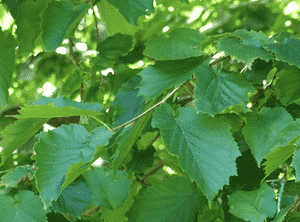
Turkish hazel (Corylus colurna)
Also known as: Turkish hazel nut
The Turkish hazel (Corylus colurna) is a deciduous tree native to Europe and Asia. As the largest species of hazel, it is frequently used in urban landscaping due to its high tolerance for pollution.
In This Article
Attributes of Turkish hazel
Lifespan
Perennial
Plant Type
Tree
Plant Height
12 m to 24 m
Spread
8 m to 11 m
Leaf Color
Green
Flower Size
2.5 cm
Flower Color
Yellow Green
Images of Turkish hazel
Quickly Identify Turkish hazel
1
Heart-shaped leaves with doubly serrated edges.
2
Distinctive yellow male catkins in dense clusters.
3
Edible nuts encased in spiny, hairy husks.
4
Robust stem with wide-angled branching.
5
Mottled, corky bark peeling to reveal orange-brown inner bark.
Scientific Classification of Turkish hazel
Phylum
Vascular plants
Class
Dicotyledons
Order
Fagales
Family
Birch
Genus
Hazels
Species
Turkish hazel
Planting and Growing of Turkish hazel
Care Difficulty
Easy
Watering Schedule
Every 4 days
Sunlight Requirements
Full sun
Sunshine Duration
4-8 hours
Ideal Temperature
59-77℉
Soil Type
Potting Mix, Peat Mix
Soil pH
6.5-7.5
Fertilizer Type
Balanced
Pruning Season
Spring, Summer
Pruning Area
Branches, Leaves
Pruning Frequency
2 times a year
Repotting Season
Spring
Pot Type
Plastic, Ceramic
 How to Water Turkish hazel?
Corylus colurna, commonly known as Turkish hazel, prefers deep watering. Ensure the water reaches the root zone, usually to a depth of about 30-40 centimeters. This is especially crucial for newly planted trees, helping to establish strong, deep roots which are crucial for the tree's long-term health. The amount of water may vary based on the soil type, age of the plant, and the climate in which it is planted.
What are the symptoms of an underwatered Turkish hazel?
›
What should I do if my Turkish hazel is not getting enough water?
›
What are the symptoms of an overwatered Turkish hazel?
›
How to save an overwatered Turkish hazel?
›
 What Are the Sunlight Requirements for Turkish hazel?
Corylus colurna ideally enjoys full sun to partial sun, with the optimal light exposure encouraging healthy growth and nut production by sustaining effective photosynthesis throughout most of the day.
More About Sunlight Requirements Techniques→
What are the ideal lighting conditions?
›
How to achieve ideal lighting?
›
Benefits of ideal lighting?
›
 What Is the Ideal Temperature Range for Turkish hazel?
Corylus colurna thrives in a moderate temperature range, ideally between 59°F and 77°F. This range provides the best conditions for its growth, allowing the plant to photosynthesize efficiently and maintain its metabolic processes. During these temperatures, the plant can produce healthy leaves and nuts.
 What Soil is Best for Turkish hazel?
Corylus colurna thrives in well-drained soil to prevent root rot. The soil should allow efficient drainage while retaining enough moisture. This balance is crucial for healthy root development. The soil must be rich in organic matter and nutrients to support the growth and production of hazelnuts. Regular addition of compost or well-rotted manure can enhance soil fertility. Corylus colurna requires moderate soil moisture. Consistent watering, especially in dry periods, ensures the plant receives enough hydration without the danger of waterlogging.
 How to Fertilize Turkish hazel?
For Corylus colurna, the amount of fertilizer should be carefully balanced as this tree naturally does not require excessive nutrients. During the growing season, a diluted liquid fertilizer can be applied monthly, ensuring not to saturate the soil with nutrients. Generally, half the recommended amount on the fertilizer package is sufficient, as over-fertilization can lead to adverse effects.
 How to Prune Turkish hazel?
Start pruning your Corylus colurna by removing any dead, damaged, or diseased branches using clean, sharp pruning shears. Cut these branches back to the point where they join a healthy branch or the trunk. This not only helps in maintaining the tree's health but also prevents the spread of disease. To shape your Corylus colurna, focus on cutting back overlong branches to enhance the tree's aesthetic appeal. Trim back any growth that disrupts the desired shape of the tree. Always make cuts just above a bud facing the direction you want new growth to develop. Select and retain a strong central leader along with well-spaced lateral branches. Remove any crossing branches or those growing inward towards the center. This encourages a sturdy framework and promotes better air circulation and light penetration, crucial for healthy growth.
More About Pruning Techniques→
 How to Propagate Turkish hazel plant?
1
Gather seeds in autumn once they have fully matured. Store them in a cool, dry place until you're ready to plant in late winter or early spring.
2
Take semi-hardwood cuttings in the spring. Ensure each cutting is around 10 to 15 cm long, with a few leaves at the top and a clean cut below a node at the bottom.
3
For grafting, select healthy scions and compatible rootstocks. Ensure both are similar in diameter for a successful union. Best performed in late winter before sap flow begins.
 How to Repot Turkish hazel plant?
1
Corylus colurna should be repotted when its roots start to encircle the pot or if the growth seems stunted. Spring or early autumn are excellent times for this process as the plant can recover in the growing season.
2
Select a pot that is slightly larger than the current one. Ensure it has good drainage holes to prevent waterlogging. A slightly bigger pot allows room for root expansion, promoting healthy growth and stability.
3
Use a well-drained loamy soil mixed with organic matter. This mixture ensures good aeration, moisture retention, and nourishment, supporting the robust growth typical for Turkish hazelnut trees.



