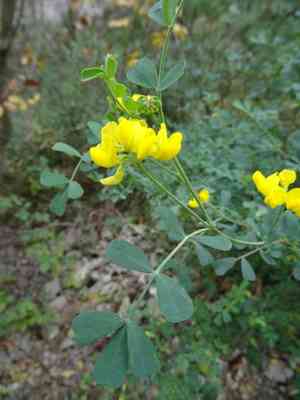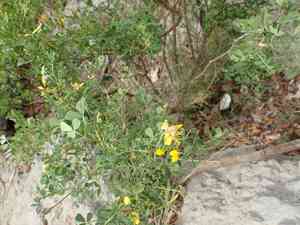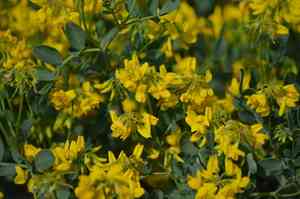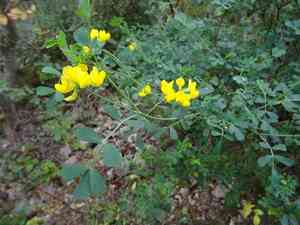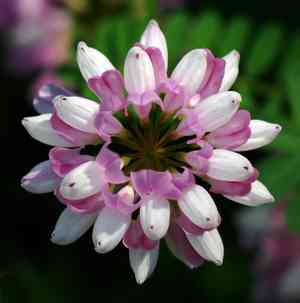
Shrubby crownvetch(Coronilla valentina)

Shrubby crownvetch (Coronilla valentina)

Also known as: Mediterranean crownvetch

Spanish broom (Spartium junceum), a legume family member, hails from southern Europe. It is known for its fragrant, peach-scented yellow flowers that stand out against its green stems. This plant has been honored with the Royal Horticultural Society’s Award of Garden Merit.

Attributes of Shrubby crownvetch

Lifespan
Perennial
Plant Type
Shrub
Plant Height
80 cm
Spread
1.5 m
Leaf Color
Green Red Purple
Flower Size
0.5 inches (1.3 cm)
Flower Color
Yellow Cream

ForwardPlant - Identify plants with a snap

Identify and diagnose plants, get toxicity alerts, and explore safety guides for all types of fungi.

Try for Free

Images of Shrubby crownvetch

Shrubby crownvetch(Coronilla valentina)

Quickly Identify Shrubby crownvetch

1
Identify Coronilla valentina by its bright yellow pea-like flowers, which bloom in clusters, and its finely divided, fern-like leaves. The foliage is typically blue-green, and the plant has a sprawling growth habit.

Scientific Classification of Shrubby crownvetch

Phylum
Vascular plants
Class
Dicotyledons
Order
Fabales
Family
Legume
Genus
Coronilla
Species
Shrubby crownvetch

Planting and Growing of Shrubby crownvetch

Care Difficulty
Easy
Watering Schedule
Every 3 days
Sunlight Requirements
Full sun
Sunshine Duration
6-8 hours
Ideal Temperature
59-68℉
Soil Type
Potting Mix, Peat Mix
Soil pH
6.5-7.5
Fertilizer Type
Balanced
Pruning Season
Spring, Summer
Pruning Area
Branches, Leaves
Pruning Frequency
2 times a year
Repotting Season
Spring
Pot Type
Plastic, Ceramic

water icon How to Water Shrubby crownvetch?

The watering amount for Coronilla valentina should be approximately 250 ml per session. It is essential to water the plant thoroughly but avoid waterlogging. Ensure that the soil becomes evenly moist, reaching the plant's root zone without allowing excess water to remain in the pot tray. It promotes healthy root growth and helps prevent root rot.
What are the symptoms of an underwatered Shrubby crownvetch?
What should I do if my Shrubby crownvetch is not getting enough water?
What are the symptoms of an overwatered Shrubby crownvetch?
How to save an overwatered Shrubby crownvetch?

sunlight icon What Are the Sunlight Requirements for Shrubby crownvetch?

Sunlight Requirements: Full sun, Partial sun
Duration of light: 6-8 hours a day
Coronilla valentina thrives with a light range of full sun to partial sun. This exposure ensures optimal photosynthesis, leading to vigorous growth, abundant blooms, and a healthy plant structure.
What is the ideal sun exposure for Coronilla valentina?
How can I provide the ideal light conditions for this plant?
What are the benefits of providing ideal lighting for Coronilla valentina?
More About Sunlight Requirements Techniques

temperature icon What Is the Ideal Temperature Range for Shrubby crownvetch?

Ideal Temperature: 59 ~ 68℉
For Coronilla valentina, the ideal temperature range is between 59°F and 68°F. This range provides just the right amount of warmth to facilitate healthy growth and prevent stress-related issues. Within this range, the plant can effectively photosynthesize, absorb nutrients, and maintain a robust metabolic rate. Ensuring temperatures remain between these values helps to avoid undue stress and promotes vibrant blooms.

soil icon What Soil is Best for Shrubby crownvetch?

Soil type: Sandy soil, Loam, Calcareous soil
Soil PH: 6.5 ~ 7.5
Coronilla valentina thrives in well-draining soils that prevent waterlogging, which could otherwise lead to root rot. This characteristic is critical for the plant to access oxygen and nutrients efficiently, promoting vigorous growth and vibrant flowering. While Coronilla valentina is not overly demanding, it benefits from moderately fertile soil to provide essential nutrients that help support its lush foliage and prolific blooming. This ensures the plant maintains healthy foliage and a robust root system. A soil pH between 6.5 and 7.5 helps maintain the availability of vital nutrients, ensuring Coronilla valentina grows without nutrient deficiencies or toxicities. Balanced soil encourages optimal growth and helps in resisting diseases.

fertilize icon How to Fertilize Shrubby crownvetch?

Fertilizer type: Balanced
Coronilla valentina requires a balanced approach to fertilization. Use a general-purpose liquid fertilizer at a concentration of 10-10-10 NPK. When using slow-release fertilizers, apply no more than 50 grams around the base of the plant per application.

prune icon How to Prune Shrubby crownvetch?

Pruning Time: Spring, Summer
Begin by removing any dead or damaged branches to clear the shrub. Trim back the overgrown branches by up to one-third to keep a compact shape. Ensure you use clean, sharp shears to make precise cuts just above a node or bud, which promotes new growth. During its blooming season, lightly deadhead any spent flowers to prolong the plant's flowering period. This not only keeps the Coronilla valentina looking tidy but also prevents seed production, channeling the plant's energy back into blooming. More About Pruning Techniques

propagate icon How to Propagate Shrubby crownvetch plant?

Propagate Time: Spring, Early summer
1
Before sowing, it's best to soak the seeds in warm water for 24 hours. This helps to soften the seed coat and encourage germination. The seeds should then be sown in a seed tray filled with well-draining potting mix.
2
Select a healthy stem about 5-10cm long and make a cut just below a node. Remove the lower leaves to prevent rotting and dip the cutting's base in rooting hormone to encourage root development before planting in moist soil.
3
Insert the cutting into a pot filled with a mix of sand and peat. Make sure at least two nodes are buried. Firm the soil around the cutting to secure it in place and water gently. Keep the pot in a warm, bright place but out of direct sunlight.
More About Propagating Techniques

repot icon How to Repot Shrubby crownvetch plant?

Repotting frequency: Every 2-3 years
1
Coronilla valentina typically shows it needs repotting when its roots start peeking from the pot's drainage holes or the growth appears stunted. The best time to act is in early spring when the plant is starting to grow actively, ready to take advantage of fresh nutrients and more space.
2
Select a pot that is one size larger than the current one, ensuring it has drainage holes. A slightly bigger pot gives the roots room to expand, without overwhelming the plant with too much soil, which can lead to waterlogging.
3
Opt for a well-draining potting mix, often a blend with added sand or perlite. The benefit is rapid drainage, which is crucial to prevent root rot, promoting healthier roots and flowering.

ForwardPlant - Identify plants with a snap

Find the best spots for them to optimize their health, simply using your phone.

Try for Free

Toxicity of Shrubby crownvetch

Is Shrubby crownvetch toxic to humans?

Shrubby crownvetch exhibits a moderate degree of toxicity to humans, as all parts of the plant pose a risk if ingested. The primary contributor to its toxic characteristics is beta-nitropropionic acid. Ingestion can lead to various symptoms, including gastrointestinal issues like nausea, vomiting, and abdominal discomfort. Furthermore, neurological manifestations such as headaches, dizziness, and the potential for seizures may arise, indicating the systemic effects of the compound. Since the entire plant is toxic, it is essential to exercise caution to avoid accidental ingestion, especially for those who may encounter shrubby crownvetch in natural settings or gardens.

Is Shrubby crownvetch toxic to cat?

The shrubby crownvetch presents a moderate risk of toxicity to cats. When felines inadvertently consume any part of this plant, it can result in poisoning. Every component of the shrubby crownvetch is toxic due to the presence of dangerous substances like beta-nitropropionic acid. Should cats ingest shrubby crownvetch, they may undergo substantial distress, evidencing symptoms of physical unease. It is crucial for cat guardians to vigilantly observe their pets and pursue prompt veterinary assistance at the initial indication of possible poisoning to secure the optimal outcome for their beloved feline friends.

Is Shrubby crownvetch toxic to dog?

Shrubby crownvetch presents a moderate toxicity risk for dogs. Canines might unintentionally consume parts of this plant, potentially leading to poisoning. The entire plant is poisonous, indicating that any ingestion of its leaves, stems, or flowers can have harmful effects. If a dog consumes shrubby crownvetch, it may display symptoms like gastrointestinal disturbances, lethargy, or more severe reactions contingent on the quantity ingested. The toxicity of the plant is largely due to the presence of beta-nitropropionic acid. Should ingestion be suspected, it is crucial for pet owners to seek prompt veterinary attention to secure the best possible outcome for their canine companion.

Identify toxic plants for your safety

Learn which plants are harmful to you and your pets, and make informed choices for a safer home!

Try for Free
WARNING
The judgment on toxicity and danger is for reference only. We DO NOT GUARANTEE any accuracy of such judgment. Therefore, you SHALL NOT rely on such judgment. It is IMPORTANT TO SEEK PROFESSIONAL ADVICE in advance when necessary.
More About Toxic Techniques