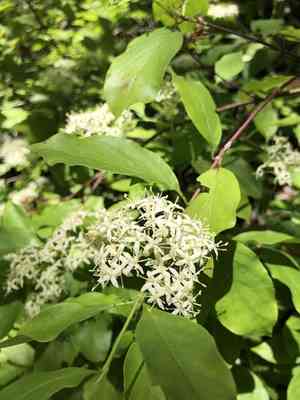
Brown dogwood (Cornus glabrata)
Also known as: Smooth Dogwood
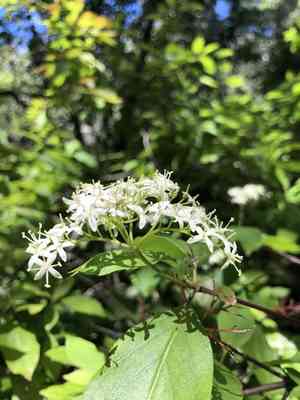
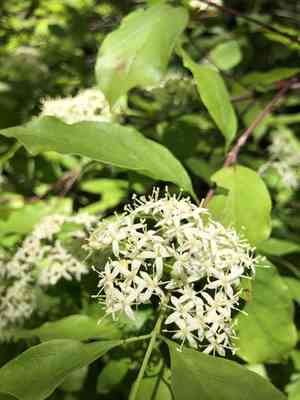
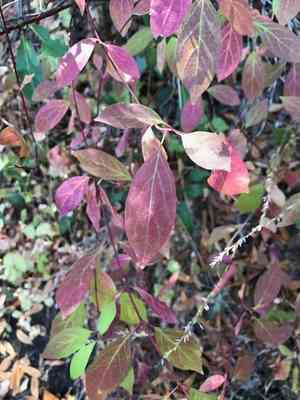
The brown dogwood (Cornus glabrata) is a deciduous shrub indigenous to Western North America. It stands out with its smooth, reddish-brown stems and typically reaches heights of 4-10 feet. Its leaves are opposite, ovate, and transition to a reddish-purple in the fall. In late spring, it produces small clusters of white flowers, which eventually give way to blue-black berries.
Ecologically, the brown dogwood serves several important functions:
1. **Habitat**: It offers shelter and nesting sites for birds and small mammals.
2. **Nourishment**: The berries are a vital food source for birds and other wildlife.
3. **Soil Stabilization**: Its root system helps stabilize soil, particularly along stream banks, thereby preventing erosion.
4. **Pollinator Attractant**: Its flowers attract various pollinators, including bees and butterflies.
This shrub thrives in moist, well-drained soils, often found in forested areas, and is a valuable contributor to local biodiversity and ecosystem health.
Attributes of Brown dogwood
Images of Brown dogwood
 How to Water Brown dogwood?
  What Are the Sunlight Requirements for Brown dogwood?
  What Is the Ideal Temperature Range for Brown dogwood?
  What Soil is Best for Brown dogwood?
  How to Fertilize Brown dogwood?
  How to Prune Brown dogwood?
  How to Propagate Brown dogwood plant?
 How to Repot Brown dogwood plant?



