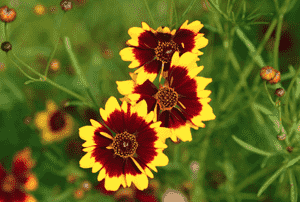
Plains coreopsis (Coreopsis tinctoria)
Also known as: Garden tickseed, Dye-flower
Plains coreopsis (Coreopsis tinctoria) is an annual flower native to Canada, the United States, and China, often found along roadsides and in agricultural fields. When cultivated in gardens, it thrives in well-drained soils and has a preference for sandy textures. Additionally, its flowers can be used to produce a mahogany-colored dye.
In This Article
Attributes of Plains coreopsis
Lifespan
Annual, Perennial, Biennial
Plant Type
Herb
Plant Height
30 cm to 1 m
Spread
30 cm to 60 cm
Leaf Color
Green
Flower Size
2.5 cm to 4.5 cm
Flower Color
Yellow Red Brown Orange Gold
Images of Plains coreopsis
Quickly Identify Plains coreopsis
1
Vibrant daisy-like blooms with yellow-orange petals and reddish-brown center.
2
Slender, finely textured foliage providing a delicate backdrop for bold blossoms.
3
Black achenes less than 1/8 inch (3 mm) in size with a single wing.
4
Opposite, pinnately compound leaves with bright green, feathery appearance.
5
Distinct notched petals in daisy-like arrangement with reddish-purple central disks.
Scientific Classification of Plains coreopsis
Phylum
Vascular plants
Class
Dicotyledons
Order
Asters bellflowers fanflowers and allies
Family
Daisy
Genus
Calliopsis
Species
Plains coreopsis
Planting and Growing of Plains coreopsis
Care Difficulty
Easy
Watering Schedule
Every 4 days
Sunlight Requirements
Full sun
Sunshine Duration
6-10 hours
Ideal Temperature
70-80℉
Soil Type
Potting Mix, Peat Mix
Soil pH
6.5-7.5
Fertilizer Type
Balanced
Pruning Season
Spring, Summer
Pruning Area
Branches, Leaves
Pruning Frequency
2 times a year
Repotting Season
Spring
Pot Type
Plastic, Ceramic
 How to Water Plains coreopsis?
For Coreopsis tinctoria, ensure the soil is moistened thoroughly but not waterlogged. Water around 250 ml at a time, ensuring excess water is allowed to drain away. The aim is to moisten the top 2-3 inches of soil, following the 'soak and dry' principle to prevent root rot.
More About Watering Techniques→
What are the symptoms of an underwatered Plains coreopsis?
›
What should I do if my Plains coreopsis is not getting enough water?
›
What are the symptoms of an overwatered Plains coreopsis?
›
How to save an overwatered Plains coreopsis?
›
 What Are the Sunlight Requirements for Plains coreopsis?
Coreopsis tinctoria thrives in full sun, requiring 6-8 hours of direct sunlight. Ideal light ensures robust growth and a vibrant display of flowers, enhancing both plant health and lifespan.
More About Sunlight Requirements Techniques→
What is the ideal light condition for Coreopsis tinctoria?
›
How can you achieve the ideal light conditions for Coreopsis tinctoria?
›
What benefits does the plant have under ideal light conditions?
›
 What Is the Ideal Temperature Range for Plains coreopsis?
Coreopsis tinctoria thrives best when grown in temperatures ranging from 70°F to 80°F. This range offers optimal conditions for growth and flowering, allowing the plant to perform its biological functions efficiently. Maintaining a steady temperature within this range ensures that the plant remains healthy and vibrant.
 What Soil is Best for Plains coreopsis?
Coreopsis tinctoria thrives in well-drained soils, preventing root rot and ensuring proper nutrient uptake, contributing to its vibrant blooming. This plant benefits from soils with moderate nutrient levels, which encourages balanced growth without excessive foliage at the expense of flowers. Preferring warmer soil temperatures, this plant grows more robustly, with better seed germination and stronger root development, leading to a lush display.
More About Soil→
 How to Fertilize Plains coreopsis?
Coreopsis tinctoria thrives on modest fertilization. Use a balanced fertilizer with an NPK ratio of 10-10-10. For liquid fertilizers, dilute to half the recommended strength and apply approximately 100 mL per plant, ensuring you don’t overfeed and stress the plant.
More About Fertilizing Techniques→
 How to Prune Plains coreopsis?
Coreopsis tinctoria benefits greatly from deadheading, the process of removing faded or spent flowers. To do this, use sharp scissors or pruning shears to snip the flower stems just above the next bud or leaf node. This encourages the plant to produce more blooms and keeps it looking fresh throughout the season. To maintain a tidy and compact shape, trim back any overly long or scraggly stems. Cut back to a healthy leaf node or the base of a robust stem. This not only keeps the plant from becoming leggy but also fosters a bushier growth habit.
More About Pruning Techniques→
 How to Propagate Plains coreopsis plant?
1
To begin with seed propagation, prepare a fine seed bed using a well-drained mix of soil that is slightly damp. Ensure the soil is free of stones and compact it lightly before sowing the seeds evenly across the surface.
2
For cutting propagation, select healthy, disease-free shoots and cut them to about 4-6 inches. Remove any leaves from the lower half of the cutting and dip the end into rooting hormone powder to encourage root development.
3
After planting seeds or inserting cuttings into the prepared medium, gently water and place them in a bright spot with indirect sunlight. Keep the medium moist and monitor for signs of growth, adjusting care as needed.
 How to Repot Plains coreopsis plant?
1
Coreopsis tinctoria shows signs it needs repotting when roots emerge from drainage holes, or water sits on the soil surface after watering — both are signals that the plant is root-bound and needs more space.
2
Select a pot that is 1 to 2 inches larger in diameter than the current one to allow growth while preventing root rot. The pot should have adequate drainage holes to ensure excess water is easily expelled.
3
Opt for sandy loam that improves water drainage and soil aeration, benefiting the roots. This mix prevents water retention, mimics natural conditions, and fosters robust plant growth.
Learn More About Plains coreopsis Diseases
Anthracnose
Bacterial Leaf Spot
Bacterial Soft Rot
Bacterial Wilt
Black Spot
Chemical Injury
Crown Gall
Cyst Nematode
Damping-off
Downy Mildew
Drought Stress
Fusarium Wilt
Gray Mold
Leaf Spot
Mosaic
Nutrient Deficiency
Nutrient Toxicity
Powdery Mildew
Root Rot
Root-knot Nematode
Rusts
Sooty Mold
Spider Mites
Temperature Stress
Thrips Damage
White Mold



