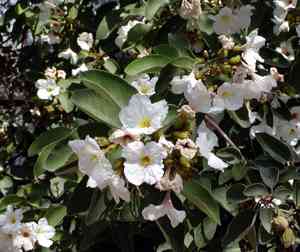
Manjacks (Cordia) (Cordia)
Also known as: Geigertree, Bocote
Bauhinias are a diverse genus comprising more than 200 species of trees and shrubs found across the globe. They are often cultivated for their beautiful flowers and produce high-quality timber suitable for furniture-making. Additionally, bauhinias are recognized for their distinctive hairy leaves.
In This Article
Attributes of Manjacks (Cordia)
Lifespan
The growth cycle of Cordia varies depending on the species, but most are perennial plants that continue to grow year after year.
Plant Height
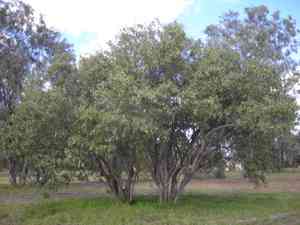
Up to 15 meters (about 50 feet) depending on species
Spread
Varies greatly; can be up to 10 meters (about 33 feet) depending on species
Leaf Color
Green
Flower Size
Typically 1-3 cm
Flower Color
White, yellow, or orange
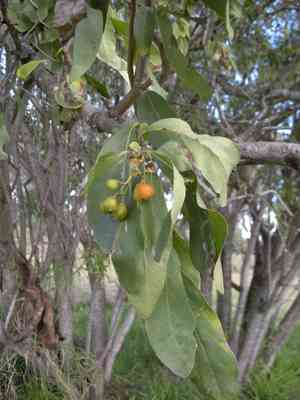
Images of Manjacks (Cordia)
Quickly Identify Manjacks (Cordia)
1
To identify Cordia species, look for shrub or small tree forms, usually with rough bark. Leaves are generally simple and alternately arranged. Flowers are often white or yellow, with a tubular structure, and fruits are typically small, hard drupes.
Scientific Classification of Manjacks (Cordia)
Phylum
Magnoliophyta
Class
Magnoliopsida
Order
Boraginales
Family
Boraginaceae
Genus
Cordia
Planting and Growing of Manjacks (Cordia)
Care Difficulty
Easy
Watering Schedule
Every 2 days
Sunlight Requirements
Full sun
Sunshine Duration
4-6 hours
Ideal Temperature
65-75℉
Soil Type
Potting Mix, Peat Mix
Soil pH
6-8
Fertilizer Type
Balanced
Pruning Season
Spring, Summer
Pruning Area
Branches, Leaves
Pruning Frequency
2 times a year
Repotting Season
Spring
Pot Type
Plastic, Terracotta
 How to Water Manjacks (Cordia)?
Cordia prefers to have its soil kept consistently moist but not waterlogged. Watering should be thorough, ensuring that the water reaches deep into the root system without leaving standing water. Ideally, the soil should remain slightly moist between waterings, akin to a wrung-out sponge.
What are the symptoms of an underwatered Manjacks (Cordia)?
›
What should I do if my Manjacks (Cordia) is not getting enough water?
›
What are the symptoms of an overwatered Manjacks (Cordia)?
›
How to save an overwatered Manjacks (Cordia)?
›
 What Are the Sunlight Requirements for Manjacks (Cordia)?
Cordia ideally grows in environments offering full to partial sun exposure (6-8 hours daily). Ideal light boosts photosynthesis, enhances blooms, and maintains healthy foliage without causing stress.
How much sunlight is optimal for Cordia?
›
What can you do to ensure Cordia receives ideal sunlight?
›
What are the benefits of providing the optimal sunlight to Cordia?
›
 What Is the Ideal Temperature Range for Manjacks (Cordia)?
The ideal temperature range for cultivating Cordia is between 65°F and 75°F. This range ensures optimal growth and health for the plant, promoting strong leaf development, flowering, and overall vigor. Maintaining temperatures within this range provides the plant with the necessary warmth without causing stress from heat extremes.
 What Soil is Best for Manjacks (Cordia)?
Cordia thrives in nutrient-rich soil as it provides essential nutrients required for growth and health. This ensures a robust root system and a vibrant foliage appearance. Well-drained soil prevents waterlogging that could lead to root rot. This type of soil helps maintain adequate moisture levels without oversaturation, promoting healthier plant growth. Soil rich in organic matter supports the biodiversity of microorganisms beneficial to Cordia. Incorporating compost or other organic materials enhances soil fertility and structure.
 How to Fertilize Manjacks (Cordia)?
Cordia plants thrive with a balanced approach to fertilization. Apply liquid fertilizers at a rate of 1/2 teaspoon per gallon of water. For slow-release granules, use approximately 1 to 1.5 pounds per 100 square feet of soil. Adjust based on plant growth and soil quality.
 How to Prune Manjacks (Cordia)?
Start by identifying dead, diseased, or damaged branches and remove them with sharp, clean pruning shears. Make cuts at a slight angle just above a node to encourage new growth. Thin out crowded branches to improve air circulation but avoid excessive cutbacks, which can stress the plant. Focus on shaping the plant to match the desired form, whether it's a bushier growth or a taller structure.
 How to Propagate Manjacks (Cordia) plant?
1
Choose healthy, disease-free stems for cuttings. The stems should be semi-hardwood for the best results, with a few sets of leaves.
2
Cut sections about 4-6 inches long just below a node. Remove the lower set of leaves to prevent decay when planted in soil.
3
Dip the cut end in rooting hormone and plant it in a well-draining potting mix. Firm the soil around the cutting to remove air pockets.
 How to Repot Manjacks (Cordia) plant?
1
Recognize the need to repot Cordia by observing root congestion at the pot's base and soil compaction, which impede water drainage. Spring is an ideal time, as the plant can utilize the active growth phase for successful acclimatization.
2
Select a pot that is 2 to 3 inches larger in diameter than the current one to allow space for root expansion. Ensure it has adequate drainage holes, which will prevent waterlogging and root rot, fostering a healthy growth environment.
3
Use a loamy, well-draining soil mix to repot Cordia. This soil type balances moisture retention with drainage efficiency, providing optimal conditions for root development and minimizing risks of overwatering.
Learn More About Manjacks (Cordia) Diseases
Anthracnose
Bacterial Leaf Spot
Black Spot
Chemical Injury
Crown Gall
Damping-off
Downy Mildew
Drought Stress
Fusarium Wilt
Gray Mold
Leaf Curl
Leaf Spot
Mosaic
Nutrient Deficiency
Nutrient Toxicity
Powdery Mildew
Root Rot
Root-knot Nematode
Rusts
Sooty Mold
Spider Mites
Temperature Stress
Thrips Damage
White Mold

