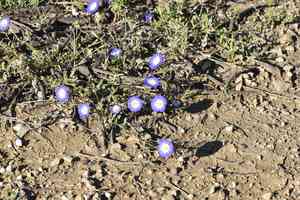
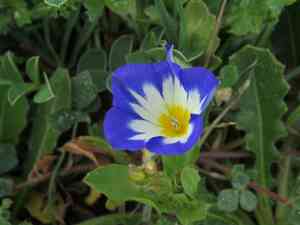
Dwarf morning glory(Convolvulus tricolor)

Dwarf morning glory (Convolvulus tricolor)

Also known as: Dwarf glory bind, Tricolor convolvulus

Dwarf morning glory (Convolvulus tricolor), native to the Mediterranean, is well-suited for garden borders, window boxes, and hanging baskets due to its adaptability. It can withstand heat, drought, and less fertile soil, making it a resilient choice. The plant features striking cobalt blue blooms with white and yellow centers that, although short-lived, are continuously replaced by new flowers. These vibrant blossoms attract hummingbirds and butterflies, adding dynamic life to any garden space.

Attributes of Dwarf morning glory

Lifespan
Annual, Perennial, Biennial
Plant Type
Herb
Plant Height
15 cm
Spread
30 cm to 45 cm
Leaf Color
Green
Flower Size
3 cm
Flower Color
Blue White Yellow Pink Purple

ForwardPlant - Identify plants with a snap

Identify and diagnose plants, get toxicity alerts, and explore safety guides for all types of fungi.

Try for Free

Images of Dwarf morning glory

Dwarf morning glory(Convolvulus tricolor)

Quickly Identify Dwarf morning glory

1
Non-climbing perennial with mounded growth habit, spreading branches, and significant landscape presence.
2
Vibrant, trumpet-shaped flowers in blue, white, yellow, or purple, with symmetrical corolla and central star.

Scientific Classification of Dwarf morning glory

Phylum
Vascular plants
Class
Dicotyledons
Order
Nightshades, bindweeds, gooseweeds, and allies
Family
Morning-glory
Genus
Bindweed
Species
Dwarf morning glory

Planting and Growing of Dwarf morning glory

Care Difficulty
Easy
Watering Schedule
Every 4 days
Sunlight Requirements
Full sun
Sunshine Duration
6-10 hours
Ideal Temperature
60-75℉
Soil Type
Potting Mix, Peat Mix
Soil pH
6.5-7.5
Fertilizer Type
Balanced
Pruning Season
Spring, Summer
Pruning Area
Branches, Leaves
Pruning Frequency
2 times a year
Repotting Season
Spring
Pot Type
Ceramic, Plastic

water icon How to Water Dwarf morning glory?

For Convolvulus tricolor, water should be provided until you notice it draining out of the bottom of the container. Ensure the soil remains evenly moist but not soggy to avoid root rot. Approximately 250 ml of water is sufficient per watering session, depending on the pot size and environmental conditions.
What are the symptoms of an underwatered Dwarf morning glory?
What should I do if my Dwarf morning glory is not getting enough water?
What are the symptoms of an overwatered Dwarf morning glory?
How to save an overwatered Dwarf morning glory?

sunlight icon What Are the Sunlight Requirements for Dwarf morning glory?

Sunlight Requirements: Full sun
Duration of light: 6-8 hours daily
Convolvulus tricolor ideally needs full sun conditions. The abundant sunlight fosters strong stems, vivid flowers, and a good overall health profile, enhancing its display as a garden or potted plant.
What is the ideal light condition?
How to achieve ideal lighting?
Benefits of ideal lighting?
More About Sunlight Requirements Techniques

temperature icon What Is the Ideal Temperature Range for Dwarf morning glory?

Ideal Temperature: 60 ~ 75℉
The ideal temperature range for Convolvulus tricolor is between 60°F and 75°F. Within this range, the plant can photosynthesize effectively, promoting robust growth and vibrant blooms. These conditions closely mimic the plant's native Mediterranean environment where temperatures are mild but warm.

soil icon What Soil is Best for Dwarf morning glory?

Soil type: Sandy soil, Loam, Sandy loam
Soil PH: 6.5 ~ 7.5
Convolvulus tricolor thrives in well-drained soil because it prevents root rot. Good drainage allows excess water to escape, ensuring the roots stay healthy and oxygenated. Nutrient-rich soil provides essential minerals and nutrients for optimal growth and vibrant blooms. It enhances the plant's resilience and overall health. Moderate moisture retention helps maintain adequate hydration levels without waterlogging the roots. This balance is key to supporting steady growth and flowering.

fertilize icon How to Fertilize Dwarf morning glory?

Fertilizer type: Balanced
Convolvulus tricolor prefers a balanced approach when it comes to fertilizer. For liquid fertilizers, it's safe to use a water-soluble fertilizer at half the recommended strength every two weeks during its active growing season. For slow-release granules, use them sparingly as they release nutrients over time. Aim for a formulation that provides balanced nutrients to avoid over-fertilization.

prune icon How to Prune Dwarf morning glory?

Pruning Time: Spring, Summer
Start by inspecting your Convolvulus tricolor for any dead, damaged, or diseased stems. Use clean, sharp scissors or pruning shears to make neat cuts just above a leaf node or at the base of the stem. This encourages healthy growth and helps maintain the plant's desired shape. Regular pruning encourages more vibrant blooms by redirecting nutrients and energy toward producing new flowers, resulting in a more bountiful display of colorful blossoms. More About Pruning Techniques

propagate icon How to Propagate Dwarf morning glory plant?

Propagate Time: Spring, Early summer
1
To propagate Convolvulus tricolor from seeds, fill a seed tray with quality seed compost and sow the seeds thinly across the surface. Lightly cover them with a thin layer of compost and water gently. Keep the tray in a warm, bright place, ensuring even moisture.
2
For cutting propagation, choose a healthy mother plant and cut a 4-6 inch shoot just below a leaf node. Remove the lower leaves to leave a bare stem. Dip the cut end in rooting hormone powder to encourage faster root development.
3
Insert the prepared cuttings into pots filled with a well-draining potting mix, burying them deep enough to stay upright. Water lightly and cover with a plastic bag to create a humid environment. Place in indirect light until roots develop.
More About Propagating Techniques

repot icon How to Repot Dwarf morning glory plant?

Repotting frequency: Every 1-2 years
1
Convolvulus tricolor appreciates a repotting when you notice roots emerging from the drainage holes or when the plant seems to outgrow its container. Typically, the best time to repot is in spring or early summer when it's experiencing active growth.
2
Choose a pot that is one size larger than the current one, ensuring it has proper drainage holes. A clay pot can be beneficial as it allows for better air circulation and prevents the soil from becoming waterlogged, reducing the risk of root rot.
3
Opt for a light, sandy, and well-draining soil mix. This type of soil retains adequate moisture without becoming soggy, which is crucial for Convolvulus tricolor. A mix for cacti or succulents often fits well, promoting healthy root development and preventing waterlogging.

ForwardPlant - Identify plants with a snap

Find the best spots for them to optimize their health, simply using your phone.

Try for Free

Toxicity of Dwarf morning glory

Is Dwarf morning glory toxic to humans?

Dwarf morning glory exhibits a low level of toxicity to humans, with the entire plant being capable of inducing poisoning upon consumption. When consumed, individuals may experience various symptoms typical of mild poisoning. These symptoms can encompass gastrointestinal upset, including nausea, vomiting, and diarrhea, along with potential dizziness or headaches. Since all parts of dwarf morning glory contain toxins, it is prudent to exercise caution to avoid unintentional ingestion. The mild toxicity associated with dwarf morning glory indicates that while the symptoms might be uncomfortable, they are generally not life-threatening. It is crucial for individuals, particularly those with children or pets, to recognize the plant's toxic characteristics and refrain from consuming any of its parts.

Is Dwarf morning glory toxic to cat?

The dwarf morning glory exhibits a mild level of toxicity in cats. In the event that a cat accidentally consumes the plant, it may showcase signs of physical distress. Given that all components of the dwarf morning glory are toxic, it's crucial to keep these plants out of cats' reach. If a cat ingests any part of the dwarf morning glory, the pet owner should promptly take their animal to a veterinary clinic for necessary care.

Is Dwarf morning glory toxic to dog?

The dwarf morning glory plant species is recognized for having a mild toxicity level towards dogs. If any part of this plant is consumed by dogs, poisoning can occur, as the entire plant is toxic. Symptoms indicative of poisoning may arise if a dog ingests dwarf morning glory, which can include gastrointestinal disturbances, vomiting, diarrhea, or even more severe reactions depending on the quantity consumed and the dog's individual sensitivity. It is vital for dog owners to supervise their pets and prevent any accidental consumption of plants, particularly when dwarf morning glory is present in their surroundings. Should ingestion be suspected, seeking immediate veterinary care is crucial to ensure proper treatment and avoid further complications.

Identify toxic plants for your safety

Learn which plants are harmful to you and your pets, and make informed choices for a safer home!

Try for Free
WARNING
The judgment on toxicity and danger is for reference only. We DO NOT GUARANTEE any accuracy of such judgment. Therefore, you SHALL NOT rely on such judgment. It is IMPORTANT TO SEEK PROFESSIONAL ADVICE in advance when necessary.
More About Toxic Techniques