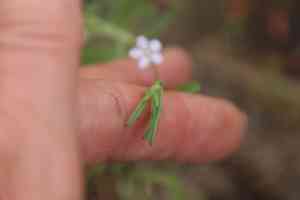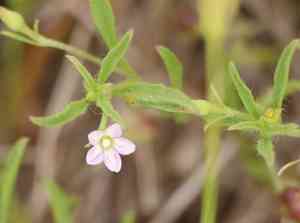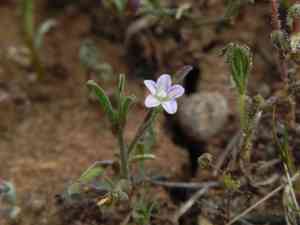
Small-flowered morning-glory(Convolvulus simulans)

Small-flowered morning-glory (Convolvulus simulans)

Also known as: Small-flowered Bindweed

The small-flowered morning-glory (Convolvulus arvensis) is a perennial herb recognized for its twining growth habit. Here are its main characteristics and growth tendencies:

1. **Leaves**: Arrowhead-shaped or lanceolate.
2. **Flowers**: Small, funnel-shaped, typically white or pink, 1-2 cm in diameter.
3. **Stems**: Slender, capable of twining around other plants or structures.
4. **Roots**: Deep, extensive root system, allowing for persistent regrowth.
5. **Habitat**: Found in fields, gardens, and along roadsides; thrives in well-drained soils.
6. **Reproduction**: Spreads through both seeds and root fragments.

This plant is often seen as invasive due to its aggressive growth, which enables it to outcompete other plants for resources.

Attributes of Small-flowered morning-glory

Lifespan
Annual
Plant Type
Herb, Vine
Plant Height
10-40 cm
Spread
N/A
Leaf Color
Green
Flower Size
1-2 cm
Flower Color
Pale pink to white

ForwardPlant - Identify plants with a snap

Identify and diagnose plants, get toxicity alerts, and explore safety guides for all types of fungi.

Try for Free

Images of Small-flowered morning-glory
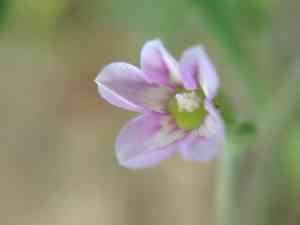
Small-flowered morning-glory(Convolvulus simulans)

Quickly Identify Small-flowered morning-glory

1
Look for twining or trailing stems with small, funnel-shaped flowers, typically pale pink to white, and pointed leaves that alternate along the stem.

Scientific Classification of Small-flowered morning-glory

Phylum
Vascular plants
Class
Dicotyledons
Order
Solanales
Family
Morning-glory
Genus
Bindweed
Species
Small-flowered morning-glory

Planting and Growing of Small-flowered morning-glory

Care Difficulty
Moderate
Watering Schedule
Every 2 days
Sunlight Requirements
Full sun
Sunshine Duration
10-12 hours
Ideal Temperature
60-75℉
Soil Type
Potting Mix, Peat Mix
Soil pH
6.5-7.5
Fertilizer Type
Balanced
Pruning Season
Spring, Summer
Pruning Area
Branches, Leaves
Pruning Frequency
2 times a year
Repotting Season
Spring
Pot Type
Plastic, Ceramic

water icon How to Water Small-flowered morning-glory?

Convolvulus simulans requires around 150 milliliters of water per session. The watering should ensure the soil is moist but not waterlogged. Be careful to avoid pooling of water at the base, which can harm the roots. It's ideal to water until you see it slightly draining from the pot's bottom.
What are the symptoms of an underwatered Small-flowered morning-glory?
What should I do if my Small-flowered morning-glory is not getting enough water?
What are the symptoms of an overwatered Small-flowered morning-glory?
How to save an overwatered Small-flowered morning-glory?

sunlight icon What Are the Sunlight Requirements for Small-flowered morning-glory?

Sunlight Requirements: Full sun, Partial sun
Duration of light: 6 to 8 hours daily
Convolvulus simulans thrives in full to partial sunlight conditions. Ideal lighting prevents leggy growth, supports lush foliage, and enhances blooming. Regular sunlight maximizes energy production, resulting in healthy, vigorous plants.
What are ideal lighting conditions?
Solutions for achieving ideal lighting?
Benefits of ideal lighting?

temperature icon What Is the Ideal Temperature Range for Small-flowered morning-glory?

Ideal Temperature: 60 ~ 75℉
The ideal temperature range for growing Convolvulus simulans is between 60°F to 75°F. This range provides the plant with optimal conditions for photosynthesis, metabolic activities, and growth. Growing within this range ensures the plant can develop healthily, producing vibrant blooms and robust foliage. Temperatures within this scope help maintain soil warmth that enhances root activities, crucial for nutrient uptake.

soil icon What Soil is Best for Small-flowered morning-glory?

Soil type: Sandy soil, Loam, Sandy loam
Soil PH: 6.5 ~ 7.5
Convolvulus simulans thrives in well-drained soil as it prevents waterlogging and allows enough oxygen for root development. This condition is vital to avoid root rot and ensure the plant's robustness and vibrancy. Having a nutrient-rich medium is essential for Convolvulus simulans. Regularly incorporating organic matter like compost enhances soil fertility, fostering more lush growth and abundant flowering. The plant benefits from soil that retains moderate moisture. This balance helps maintain adequate hydration without excessive water retention, which can harm root systems.

fertilize icon How to Fertilize Small-flowered morning-glory?

Fertilizer type: Balanced
When it comes to fertilizing Convolvulus simulans, use a balanced liquid fertilizer, such as a 10-10-10 NPK solution. Apply about 1/2 tablespoon mixed with a gallon of water. This amount ensures that the nutrients are delivered without risking root burn or over-fertilization.

propagate icon How to Propagate Small-flowered morning-glory plant?

Propagate Time: Spring,Early spring,Late spring
1
Prepare your soil by ensuring it is well-draining and rich in organic matter. A mixture of sand, peat, and perlite can further enhance drainage and aeration, crucial for seed germination and seedling development.
2
Once the soil is ready, sow the Convolvulus simulans seeds on the surface and lightly cover them with a thin layer of soil. Ensure that the seeds are evenly spaced to avoid overcrowding, which can lead to competition for nutrients.
3
After sowing, water the soil gently to keep it moist but not waterlogged. Consistent moisture helps seeds germinate, but overwatering can lead to fungal problems. Utilize a fine spray to prevent soil disturbance.
More About Propagating Techniques

repot icon How to Repot Small-flowered morning-glory plant?

Repotting frequency: Every 2-3 years
1
Look for signals such as roots growing out of the drainage holes or visibly circling the surface soil. Another sign is when the plant's growth appears stunted despite proper care. Repotting in spring or summer is ideal, as it aligns with their active growth period, providing a fresh, nourishing environment as they flourish.
2
Choose a pot that is slightly larger than the current one, ensuring it has drainage holes to prevent waterlogging. The increased size should not be too overwhelming, as Convolvulus simulans prefers a cozy space that supports its root network. Terra-cotta pots are a wonderful choice because they offer breathability, preventing root rot.
3
Opt for a well-draining potting mix such as a cactus or succulent blend, which mimics its native habitat. This type of soil ensures that the plant's roots do not sit in water, which could lead to rot. The airy, gritty nature allows for optimal aeration and supports healthy root development.

ForwardPlant - Identify plants with a snap

Find the best spots for them to optimize their health, simply using your phone.

Try for Free