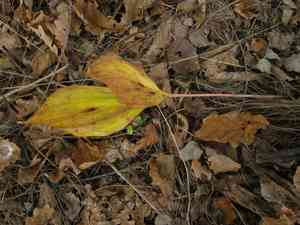
Convallaria keiskei (Convallaria keiskei)
Also known as: Keiskei Lily, Japanese Lily-of-the-Valley
Lily of the Valley (Convallaria majalis) is a perennial herbaceous plant that flourishes in cool, shaded areas. Renowned for its sweetly fragrant, small, bell-shaped white flowers, it typically blooms in late spring. The plant features arching stems and broad, lance-shaped leaves, and it often forms large colonies under forest canopies, making it well-suited to thrive in low-light conditions commonly found in dense woodlands.
In This Article
Attributes of Convallaria keiskei
Lifespan
Perennial
Plant Type
Herb
Plant Height
30 cm
Spread
50 cm
Leaf Color
Green
Flower Size
0.5-1 centimeter
Flower Color
White to pinkish
Images of Convallaria keiskei


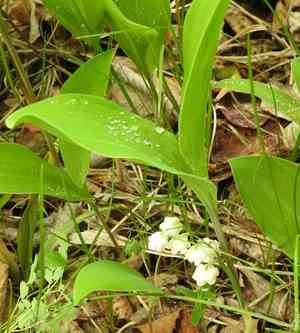
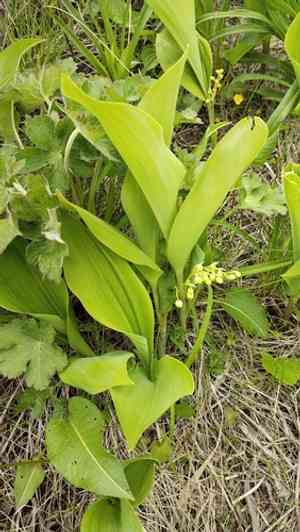
Quickly Identify Convallaria keiskei
1
Look for the characteristic bell-shaped, white to pinkish flowers that hang down in clusters. The leaves are broad and lance-shaped, and the plant typically forms a ground-covering clump.
Scientific Classification of Convallaria keiskei
Phylum
Vascular plants
Class
Monocotyledons
Order
Asparagus and allies
Family
Asparagus
Genus
Lily of the valley
Species
Convallaria keiskei
Planting and Growing of Convallaria keiskei
Care Difficulty
Moderate
Watering Schedule
Every 2 days
Sunlight Requirements
Full shade
Sunshine Duration
4-8 hours
Ideal Temperature
65-75℉
Soil Type
Potting Mix, Peat Mix
Soil pH
6.5-7.5
Fertilizer Type
Balanced
Pruning Season
Spring, Summer
Pruning Area
Branches, Leaves
Pruning Frequency
2 times a year
Repotting Season
Spring
Pot Type
Plastic, Ceramic
 How to Water Convallaria keiskei?
Water Convallaria keiskei with approximately 250 milliliters each time. This ensures that the moisture reaches the root system but doesn't leave the soil soggy. The goal is to maintain consistently moist soil without over-saturating it.
What are the symptoms of an underwatered Convallaria keiskei?
›
What should I do if my Convallaria keiskei is not getting enough water?
›
What are the symptoms of an overwatered Convallaria keiskei?
›
How to save an overwatered Convallaria keiskei?
›
 What Are the Sunlight Requirements for Convallaria keiskei?
Partial sunlight with a few hours of direct exposure is optimal. Ideal lighting ensures sturdy growth and vibrant blossoms, enhancing health and longevity by giving the plant enough energy to sustain its developmental processes.
What type of lighting is best for Convallaria keiskei?
›
How to ensure Convallaria keiskei receives ideal lighting conditions?
›
What benefits does Convallaria keiskei gain from ideal lighting?
›
 What Is the Ideal Temperature Range for Convallaria keiskei?
The ideal temperature range for growing Convallaria keiskei is between 65°F and 75°F. Within this range, the plant shows optimal growth and vitality. Maintaining temperatures in this range ensures healthy leaf development, vibrant blooms, and overall robust growth.
 What Soil is Best for Convallaria keiskei?
Convallaria keiskei thrives in soil that retains moisture without becoming waterlogged. Adequate moisture is crucial for its lush foliage and prolific blooming, ensuring the plant remains vigorous and full of life. A nutrient-dense soil rich in organic matter supports the plant’s growth and vibrant blooming. It ensures the plant has access to essential nutrients that promote a robust root system and overall plant health. While the soil should retain moisture, it must also drain well to prevent root rot. This balance between moisture retention and drainage ensures healthy roots and prevents diseases linked to over-saturated soil.
 How to Fertilize Convallaria keiskei?
For Convallaria keiskei, the fertilizer amount should be moderate. When using liquid fertilizer, dilute it to half the recommended strength on the bottle to avoid root burn. Solid, slow-release fertilizers should be applied evenly around the base, approximately 1-2 tablespoons per plant, which gradually releases nutrients as the plant needs.
 How to Prune Convallaria keiskei?
Start by examining the plant for any wilted or discolored leaves. Use sharp, sterile pruning shears to cut these at the base, ensuring you do not damage nearby healthy parts. Next, trim back any excessively long stems to encourage a more compact growth habit. Finally, check the plant for any signs of pest infestation and prune away affected areas. Dispose of any cuttings responsibly to prevent disease spread.
More About Pruning Techniques→
 How to Propagate Convallaria keiskei plant?
1
Before dividing, water the plant thoroughly the day before to ensure roots are hydrated. This step reduces stress and shock during the division and replanting process.
2
Use a sharp spade or knife to cut through the root clump of the Convallaria keiskei. Ensure each division has roots and several shoots to increase the chances of successful establishment.
3
Once divided, plant each section immediately in a prepared garden bed. Ensure the soil is well-draining and enriched with organic matter to support new growth.
 How to Repot Convallaria keiskei plant?
1
Convallaria keiskei shows signs of needing a new pot when its roots start to overgrow the current container. You'll notice roots peeking through drainage holes or circling at the top of the soil. Additionally, if growth has slowed despite regular care, it may need more space. Early spring or autumn is the ideal time to repot, as the plant's natural growth will facilitate quick adaptation to its new home.
2
Choose a pot that is only slightly larger than the current one. This helps prevent overwatering issues that can arise with too much soil. A good rule of thumb is to select a pot that is 1-2 inches larger in diameter. Ensure the pot has adequate drainage holes to improve aeration and prevent water from stagnating at the bottom, which can cause root rot.
3
The ideal soil for Convallaria keiskei is a rich, loamy mix. This type of soil provides a balanced blend of nutrients, moisture retention, and drainage. Adding organic matter or compost can further enhance soil fertility, allowing for robust root development. Loamy soil also supports structural stability, catering to both the anchoring and nutritional needs of the plant.
Learn More About Convallaria keiskei Diseases
Anthracnose
Bacterial Leaf Spot
Bacterial Soft Rot
Crown Gall
Cyst Nematode
Damping-off
Downy Mildew
Drought Stress
Fusarium Wilt
Gray Mold
Leaf Spot
Mosaic
Nutrient Deficiency
Nutrient Toxicity
Powdery Mildew
Root Rot
Root-knot Nematode
Sooty Mold
Spider Mites
Temperature Stress
Thrips Damage
White Mold



