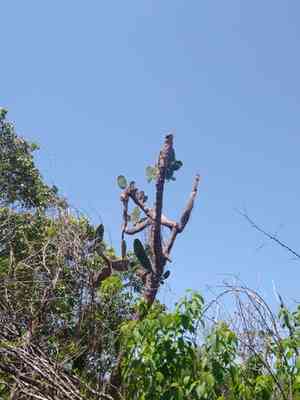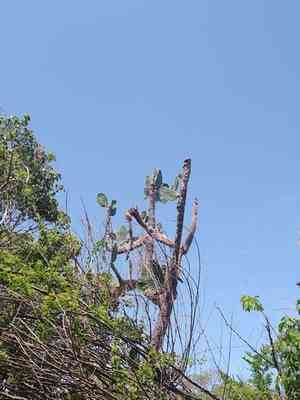
Sour pricklypear(Consolea rubescens)

Sour pricklypear (Consolea rubescens)

Also known as: Roadkill cactus, Consolea corallicola

The sour pricklypear cactus, originating from the Caribbean and Florida, has a rich history and notable ornamental appeal.

**Historical Uses:**
1. **Dye Production:** Its sap was traditionally used to produce a vivid red dye, thanks to the cochineal insects that inhabit the cactus.
2. **Edible Uses:** Indigenous communities have long utilized the pads (nopales) and fruit (tunas) despite the fruit's tartness, which requires careful preparation.

**Ornamental Benefits:**
1. **Visual Interest:** Featuring striking pink flowers against its green, spiny pads, this cactus adds vibrant color and texture to desert gardens.
2. **Low Maintenance:** Its ability to thrive in arid conditions makes it an excellent choice for water-efficient landscaping.
3. **Wildlife Habitat:** It supports various wildlife, offering shelter and food to birds and insects, enhancing garden biodiversity.

The sour pricklypear cactus is distinguished by its historical significance and its ability to create a visually captivating and resilient feature in drought-prone gardens.

Attributes of Sour pricklypear

Lifespan
Perennial
Plant Type
Succulent
Plant Height
6 m
Spread
2 m
Leaf Color
Green with potential reddish tinge
Flower Size
2 to 3 centimeters
Flower Color
Orange

ForwardPlant - Identify plants with a snap

Identify and diagnose plants, get toxicity alerts, and explore safety guides for all types of fungi.

Try for Free

Images of Sour pricklypear

Sour pricklypear(Consolea rubescens)

Quickly Identify Sour pricklypear

1
To identify Consolea rubescens, look for its distinctive fleshy stems that are flattened and paddle-shaped. The stems are often segmented and can vary in color from green to a red hue, especially when exposed to strong sunlight. The cactus produces small, round, reddish-orange fruits and has glochids (tiny, barbed hair-like spines) that can be quite irritating to the skin.

Scientific Classification of Sour pricklypear

Phylum
Vascular plants
Class
Dicotyledons
Order
Caryophyllales
Family
Cactuses
Genus
Pricklypear
Species
Sour pricklypear

Planting and Growing of Sour pricklypear

Care Difficulty
Hard
Watering Schedule
Every day
Sunlight Requirements
Full sun
Sunshine Duration
6-10 hours
Ideal Temperature
70-85℉
Soil Type
Potting Mix, Peat Mix
Soil pH
6.5-7.5
Fertilizer Type
Balanced
Pruning Season
Spring, Summer
Pruning Area
Branches, Leaves
Pruning Frequency
2 times a year
Repotting Season
Spring
Pot Type
Plastic, Ceramic

water icon How to Water Sour pricklypear?

For Consolea rubescens, also known as the Road Kill Cactus, the watering amount should typically be around 250 milliliters per session. It is essential to ensure the soil is well-drained and that the water does not stay at the bottom of the pot, which can lead to root rot. Watering should mimic its natural habitat, with more significant watering during growth periods and less so during its dormant phase.
What are the symptoms of an underwatered Sour pricklypear?
What should I do if my Sour pricklypear is not getting enough water?
What are the symptoms of an overwatered Sour pricklypear?
How to save an overwatered Sour pricklypear?

sunlight icon What Are the Sunlight Requirements for Sour pricklypear?

Sunlight Requirements: Full sun, Partial sun
Duration of light: 6 to 8 hours
This plant prefers full sun to partial sun, flourishing when given 6 to 8 hours of light. Optimal lighting improves physiological processes, fortifying it against adverse conditions and enhancing its ornamental value.
Why is consistent lighting crucial?
How to ensure ideal lighting?
What are the benefits of ideal lighting?

temperature icon What Is the Ideal Temperature Range for Sour pricklypear?

Ideal Temperature: 70 ~ 85℉
Consolea rubescens thrives best in warm conditions with temperatures ranging from 70°F to 85°F. This range provides the best environment for photosynthesis and overall growth, ensuring the plant maintains its vibrant appearance and structural integrity. Consistency within this range will support both flowering and the development of new shoots.

soil icon What Soil is Best for Sour pricklypear?

Soil type: Sandy soil, Loam, Calcareous soil
Soil PH: 6.5 ~ 7.5
Consolea rubescens thrives in well-draining soil to avoid waterlogging, which can lead to root rot. By ensuring proper drainage, the roots receive adequate air, promoting healthy growth and stability of the plant. While Consolea rubescens can grow in poor soils, supplying a nutrient-rich soil can enhance its growth and prolong its life. Nutrients help the plant develop robust structures and vibrant coloration. Although drought-tolerant, this cactus benefits from occasional watering that keeps the soil moderately moist. This balance prevents dehydration without risking fungal diseases from overly wet conditions.

fertilize icon How to Fertilize Sour pricklypear?

Fertilizer type: Balanced
Consolea rubescens requires moderate fertilization. When using liquid fertilizers, apply around 1/4 strength of a balanced houseplant fertilizer. For slow-release fertilizers, use a small scoop of granules, typically 1/2 to 1 teaspoon per pot of cactus mix. Always ensure that the fertilizer is evenly distributed.

prune icon How to Prune Sour pricklypear?

Pruning Time: Spring, Summer, Autumn
Examine the plant for any dead or withered pads; these should be your primary targets. Identifying crowded areas where pads are overlapped is crucial, as removing some can enhance airflow and light penetration. Hold the pad you want to remove securely and snip it off at the joint where it connects to the main plant. Make sure to cut it cleanly to avoid leaving jagged edges that could be prone to disease. After pruning, avoid watering the plant for a few days to allow the cut surfaces to callous over. This reduces the chance of infection and allows the plant to recover more effectively. More About Pruning Techniques

propagate icon How to Propagate Sour pricklypear plant?

Propagate Time: Spring, Early summer
1
Harvest seeds from mature Consolea rubescens fruit when they are ripe. Ensure the seeds are cleaned and dried properly to prevent mold and prepare them for sowing.
2
Select healthy, mature stems and use clean shears to cut 4-6 inches sections. Remove the lower leaves and allow the cuttings to callous over for a few days before planting.
3
Place prepared seeds on the surface of the potting mix in a seed tray. Cover them lightly with soil and water gently. Ensure the tray is placed in a warm, well-lit area to facilitate germination.
More About Propagating Techniques

repot icon How to Repot Sour pricklypear plant?

Repotting frequency: Once every 2-3 years
1
Repot Consolea rubescens when it becomes root-bound or shows stunted growth. A clear signal is when you see roots growing out of the drainage holes. Another sign is when water takes longer to penetrate the soil. Ideally, check your plant in early spring or summer for these signs to determine the perfect time for repotting.
2
For your Consolea rubescens, select a pot that is one size larger than the current one, with sufficient drainage holes. A terracotta pot is ideal as it allows the soil to dry out more quickly, preventing root rot. The added weight also provides stability to prevent toppling.
3
Use a well-draining cactus mix for Consolea rubescens. This type of soil prevents waterlogging and ensures good aeration. You can enhance it with added perlite or coarse sand to improve drainage and simulate its natural habitat, promoting healthy growth.

ForwardPlant - Identify plants with a snap

Find the best spots for them to optimize their health, simply using your phone.

Try for Free

Toxicity

Ingestion, skin contact

Identify toxic plants for your safety

Learn which plants are harmful to you and your pets, and make informed choices for a safer home!

Try for Free
WARNING
The judgment on toxicity and danger is for reference only. We DO NOT GUARANTEE any accuracy of such judgment. Therefore, you SHALL NOT rely on such judgment. It is IMPORTANT TO SEEK PROFESSIONAL ADVICE in advance when necessary.