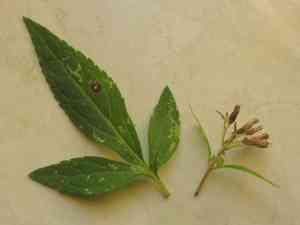
Betonyleaf thoroughwort (Conoclinium betonicifolium)
Also known as: Padre island mistflower
Betonyleaf thoroughwort (Eupatorium hyssopifolium) thrives in dry, open areas such as prairies, savannas, and roadsides, favoring sandy or well-drained soils. This perennial plant features small, white flower clusters that bloom from late summer to early fall, drawing in pollinators like butterflies and bees. Its narrow, lance-shaped leaves provide a subtle green backdrop to its delicate blooms. Ideal for naturalistic gardens, it flourishes in full to partial sunlight.
In This Article
Attributes of Betonyleaf thoroughwort
Lifespan
Perennial
Plant Type
Herb
Plant Height
30 cm to 91 cm
Spread
Not typically measured in terms of crown diameter due to its herbaceous nature.
Leaf Color
Green
Flower Size
Approximately 1 cm
Flower Color
Blue-violet
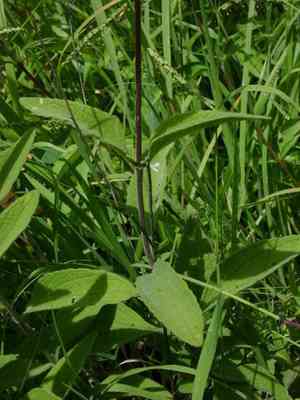
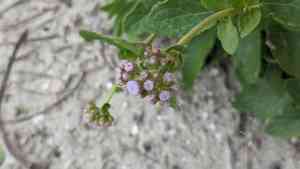
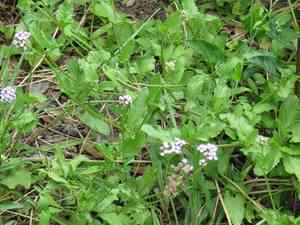
Images of Betonyleaf thoroughwort
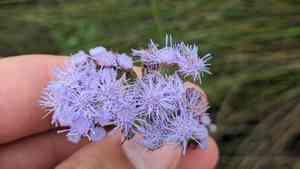
Quickly Identify Betonyleaf thoroughwort
1
This plant can be identified by its lance-shaped, serrated leaves and dense clusters of small, tubular blue-violet flowers. It often grows in clumps and has a somewhat sprawling habit.
Scientific Classification of Betonyleaf thoroughwort
Phylum
Vascular plants
Class
Dicotyledons
Order
Asterales
Family
Daisy
Genus
Mistflowers
Species
Betonyleaf thoroughwort
Planting and Growing of Betonyleaf thoroughwort
Care Difficulty
Easy
Watering Schedule
Every 4 days
Sunlight Requirements
Partial sun
Sunshine Duration
6-10 hours
Ideal Temperature
65-75℉
Soil Type
Potting Mix, Peat Mix
Soil pH
6.5-7.5
Fertilizer Type
Balanced
Pruning Season
Spring, Summer
Pruning Area
Branches, Leaves
Pruning Frequency
2 times a year
Repotting Season
Spring
Pot Type
Plastic, Ceramic
 How to Water Betonyleaf thoroughwort?
Conoclinium betonicifolium, also known as Betony-leaf mistflower, requires a watering depth of about 250 ml. The principle is to simulate a gentle rainfall, ensuring moisture reaches the root zone effectively without causing waterlogging.
What are the symptoms of an underwatered Betonyleaf thoroughwort?
›
What should I do if my Betonyleaf thoroughwort is not getting enough water?
›
What are the symptoms of an overwatered Betonyleaf thoroughwort?
›
How to save an overwatered Betonyleaf thoroughwort?
›
 What Are the Sunlight Requirements for Betonyleaf thoroughwort?
Conoclinium betonicifolium thrives in partial to full sun environments, making it versatile for gardens or spaces with varying light conditions. Adequate sunlight ensures healthy blooms and vigorous growth.
What is the ideal amount of sunlight?
›
How to achieve the optimal sunlight?
›
Benefits of ideal sunlight?
›
 What Is the Ideal Temperature Range for Betonyleaf thoroughwort?
For optimal growth, Conoclinium betonicifolium thrives best in temperatures ranging from 65°F to 75°F. This range is suitable for its metabolic processes and enhances its overall growth and flowering. It ensures that the plant can photosynthesize efficiently without unnecessary stress.
 What Soil is Best for Betonyleaf thoroughwort?
Conoclinium betonicifolium thrives in nutrient-rich soil as it provides the essential minerals and nutrients. This ensures the plant achieves vibrant blooms and healthy growth, crucial for its overall vigor and resistance to diseases. The plant requires well-drained soil to prevent root rot, which can occur if water accumulates around the roots. Good drainage also aids in the optimal uptake of water and nutrients. This plant prefers soil with moderate moisture as it supports continuous growth and flowering. It ensures the plant maintains its lush appearance even during drier seasons.
 How to Fertilize Betonyleaf thoroughwort?
For Conoclinium betonicifolium, using a balanced 10-10-10 NPK liquid fertilizer, mix 1 teaspoon per gallon of water. Apply evenly to the root zone, avoiding direct contact with the leaves to prevent burning.
 How to Prune Betonyleaf thoroughwort?
Begin by examining the overall shape of Conoclinium betonicifolium. Aim for a balanced look that allows sunlight to penetrate all areas. Identify any areas that are too dense or unbalanced, then proceed with careful trimming. When pruning, make sure each cut is sharp and clean. This minimizes stress on the plant. Cut just above a node or bud to encourage new growth. Avoid leaving stubs as they can become entry points for pests or disease. Gather and dispose of the pruned material properly. Leaving cut branches or leaves around the base of the plant can invite pests or diseases. Compost healthy clippings or discard them if there's any sign of disease.
More About Pruning Techniques→
 How to Propagate Betonyleaf thoroughwort plant?
1
Harvest seeds when they have fully matured on the plant. This is typically when the flower heads start to dry out and turn brown. Gently rub the seed heads to collect the seeds.
2
Use sharp garden shears to cut healthy, disease-free stems. Trim each cutting to about 4-6 inches in length, ensuring each has at least two sets of leaves.
3
Sow seeds in seed trays filled with a sterile seed-starting mix, or insert cuttings into the soil. Water gently to settle the soil, ensuring it remains moist but not waterlogged.
 How to Repot Betonyleaf thoroughwort plant?
1
You should consider repotting Conoclinium betonicifolium when you notice roots growing out of the drainage holes or when the plant appears to have outgrown its current pot. Additionally, if the soil dries out very quickly or the plant's growth has noticeably slowed even during its growing season, these are signs that it's time for a new pot.
2
Select a pot that is only slightly larger than its current one, typically 1-2 inches larger in diameter. This helps prevent overwatering, ensures the roots have space to grow, and allows the plant to establish itself without excessive stress. Opt for pots with drainage holes to ensure proper water flow.
3
Choose a well-draining potting mix that retains some moisture without becoming waterlogged. A blend containing components such as perlite or sand is ideal. This aids in preventing root rot, enables air circulation to the roots, and ensures the plant can thrive in its new environment.
Learn More About Betonyleaf thoroughwort Diseases
Anthracnose
Bacterial Leaf Spot
Bacterial Soft Rot
Bacterial Wilt
Black Spot
Chemical Injury
Crown Gall
Damping-off
Downy Mildew
Drought Stress
Fusarium Wilt
Gray Mold
Leaf Curl
Leaf Spot
Mosaic
Nutrient Deficiency
Nutrient Toxicity
Powdery Mildew
Root Rot
Root-knot Nematode
Rusts
Sooty Mold
Spider Mites
Temperature Stress
Thrips Damage
White Mold



