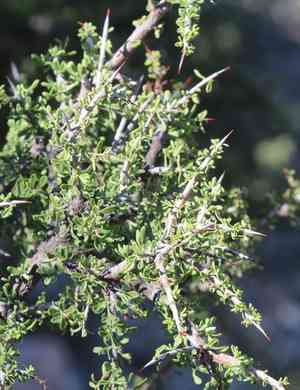
Warnock's snakewood (Condalia warnockii)
Also known as: Warnock's Snakewood
Warnock's snakewood is a tough shrub that thrives in dry environments, particularly on rocky terrain. It has adapted well to arid conditions through several key features:
1. **Compact, Leathery Leaves**: These reduce water loss and are well-suited to conserving moisture.
2. **Unassuming Flowers and Fruits**: It produces small flowers and dark berries that are adapted to its environment.
3. **Twisted Branches and Thorns**: The gnarled branches and thorny stems offer protection from herbivores.
These adaptations help Warnock's snakewood conserve water and deter predators, making it well-suited for survival in harsh, dry climates.
In This Article
Attributes of Warnock's snakewood
Lifespan
Perennial
Plant Type
Shrub
Plant Height
1-3 meters
Spread
1-2 meters
Leaf Color
Dark green
Flower Size
Less than 1 cm
Flower Color
Greenish
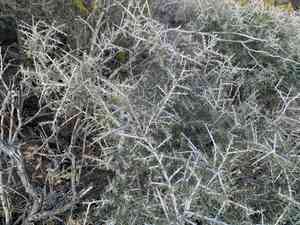
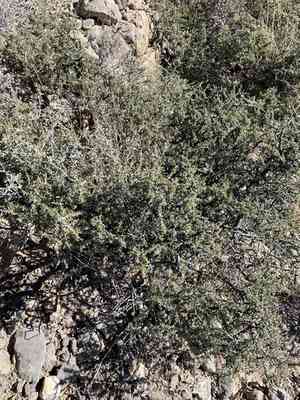
Images of Warnock's snakewood


Quickly Identify Warnock's snakewood
1
To identify Condalia warnockii, look for its rigid branches armed with sharp thorns, small leathery leaves, and tiny greenish flowers. It often forms dense thickets and produces small, dark purple to black drupes.
Scientific Classification of Warnock's snakewood
Phylum
Vascular plants
Class
Dicotyledons
Order
Rosales
Family
Buckthorn
Genus
Bluewoods
Species
Warnock's snakewood
Planting and Growing of Warnock's snakewood
Care Difficulty
Moderate
Watering Schedule
Every 2 days
Sunlight Requirements
Full sun
Sunshine Duration
6-10 hours
Ideal Temperature
70-85℉
Soil Type
Potting Mix, Peat Mix
Soil pH
6.5-8
Fertilizer Type
Balanced
Pruning Season
Spring, Summer
Pruning Area
Branches, Leaves
Pruning Frequency
2 times a year
Repotting Season
Spring
Pot Type
Plastic, Ceramic
 How to Water Warnock's snakewood?
Condalia warnockii requires a careful balance in watering. It's best to ensure the soil is moist but not waterlogged. Typically, 250 milliliters per session is adequate, taking moderation as the guiding principle to maintain its natural arid environment simulation.
What are the symptoms of an underwatered Warnock's snakewood?
›
What should I do if my Warnock's snakewood is not getting enough water?
›
What are the symptoms of an overwatered Warnock's snakewood?
›
How to save an overwatered Warnock's snakewood?
›
 What Are the Sunlight Requirements for Warnock's snakewood?
Condalia warnockii thrives in conditions of full sun exposure, achieving prime growth and vigor. Ideally, it should bask in six to eight hours of direct sunlight daily.
How does Condalia warnockii thrive best?
›
What are the solutions for ideal lighting?
›
What are the benefits of ideal lighting?
›
 What Is the Ideal Temperature Range for Warnock's snakewood?
Condalia warnockii thrives best in warm environments with a temperature range between 70°F to 85°F. This range ensures optimal growth and development, providing the plant with sufficient warmth to sustain its metabolic activities and avoid stress from temperature fluctuations. Maintaining consistent temperatures within this range will help to ensure robust health and growth for the Condalia warnockii.
 What Soil is Best for Warnock's snakewood?
Condalia warnockii thrives in well-drained soil that prevents waterlogging. This requirement is crucial as it helps the plant avoid root rot and other fungal diseases, ensuring healthy growth and vigour. Interestingly, Condalia warnockii can prosper in nutrient-poor soils, making it adaptable to less fertile environments. This adaptability reduces the need for frequent fertilization, simplifying care routines. While it can tolerate a range of pH levels, a slightly acidic to neutral soil pH is ideal for optimal nutrient uptake. This balance helps the plant make the most of available nutrients, promoting robust growth.
 How to Fertilize Warnock's snakewood?
For Condalia warnockii, a moderate amount of fertilizer is ideal. When using liquid fertilizer, apply it at a rate of 1 teaspoon (around 5 ml) per gallon of water. For slow-release fertilizer, use around 1 to 2 ounces (28-57 grams) per application, ensuring even distribution around the base of the plant.
 How to Prune Warnock's snakewood?
Use sharp pruning shears for smaller branches and loppers for thicker stems. This ensures clean cuts and minimizes harm to the plant. Target dead, damaged, or crossing branches first, then thin out the canopy by removing some of the older growth to encourage air circulation and new growth. Make cuts at a 45-degree angle just above a leaf node or outward-facing bud, which promotes proper regrowth and prevents water from sitting on the cut.
More About Pruning Techniques→
 How to Propagate Warnock's snakewood plant?
1
Choose healthy, non-flowering stems for cuttings that are disease-free. Select ripe seeds that have naturally fallen or are easily removed from the parent plant.
2
Use a sterile, well-draining mixture of sand and peat moss for cuttings, and seed-starting mix for seeds. Moisten the medium before planting to encourage rooting.
3
For cuttings, insert the cut end into the prepared medium, ensuring a few leaves remain above the surface. For seeds, scatter them lightly on the surface and cover with a thin layer of soil.
 How to Repot Warnock's snakewood plant?
1
Keep an eye out for signals like roots poking through the drainage holes or noticeably decreased growth. The ideal time to repot Condalia warnockii is during its active growth phases in spring or summer when it can recover swiftly from the transplantation stress.
2
Select a pot that is one or two sizes larger than the current one with adequate drainage holes. A slightly larger pot ensures room for growth and avoids waterlogging, preventing root rot and promoting a healthier root system.
3
Opt for a well-draining sandy soil mix that mimics the plant's natural desert habitat. This type of soil prevents water from accumulating, helping maintain healthy roots and facilitating the robust growth of Condalia warnockii.



