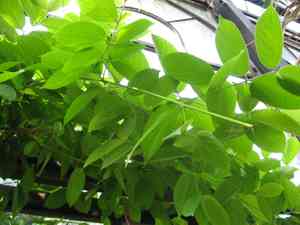
Rangoon creeper (Combretum indicum)
Also known as: Burma creeper, Quisqualis
The Rangoon Creeper (Combretum indicum) boasts lush, climbing foliage, making it perfect for adorning pergolas, fencelines, or trellises. Its flowers release a captivating fragrance after sunset, enhancing the natural beauty of any garden. This plant is particularly attractive to pollinators and nectar-feeding insects.
Attributes of Rangoon creeper
Images of Rangoon creeper
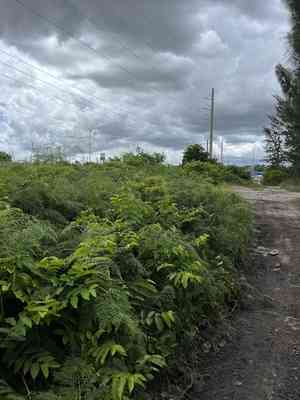
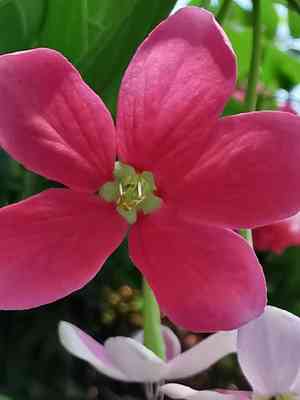
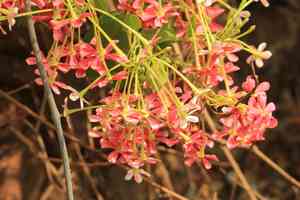
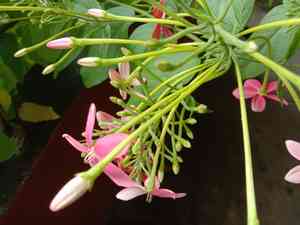
Quickly Identify Rangoon creeper
Scientific Classification of Rangoon creeper
Planting and Growing of Rangoon creeper
 How to Water Rangoon creeper?
 What Are the Sunlight Requirements for Rangoon creeper?
 What Is the Ideal Temperature Range for Rangoon creeper?
 What Soil is Best for Rangoon creeper?
 How to Fertilize Rangoon creeper?
 How to Prune Rangoon creeper?
 How to Propagate Rangoon creeper plant?
 How to Repot Rangoon creeper plant?
Toxicity of Rangoon creeper
Is Rangoon creeper toxic to humans?
Rangoon creeper exhibits a mild level of toxicity, which is primarily linked to its seeds. When these seeds are inadvertently consumed by humans, they can trigger a toxic reaction. The signs of poisoning are notably extensive, ranging from gastrointestinal issues like nausea and vomiting to more systemic effects such as headaches and dizziness. It is vital for individuals, especially children who may be attracted to the seeds out of curiosity, to refrain from eating them. The mild toxicity of rangoon creeper highlights the necessity of acknowledging the potential hazards linked to the accidental ingestion of plant seeds, even when other parts of the plant may not pose similar risks.



