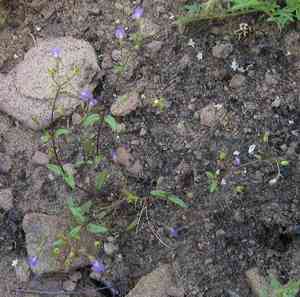
Parry's blue eyed mary (Collinsia parryi)
Also known as: Parry's Collinsia, Parry's blue-eyed Mary
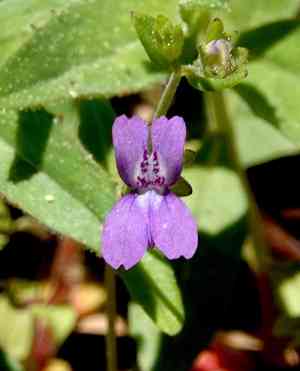
Parry's blue-eyed Mary (Collinsia parviflora) is a fragile wildflower native to the grasslands of Western North America. It is recognized for its two-lipped, violet-blue blossoms that flourish in spring. This plant favors sunny, open areas and has a unique structure with foliage clustered at the base and flowers perched on slender stems, attracting pollinators to its nectar.
In This Article
Attributes of Parry's blue eyed mary
Lifespan
Annual
Plant Type
Herb
Plant Height
Up to 20 cm
Spread
Not applicable
Leaf Color
Green
Flower Size
About 1 cm
Flower Color
Blue and white
Images of Parry's blue eyed mary
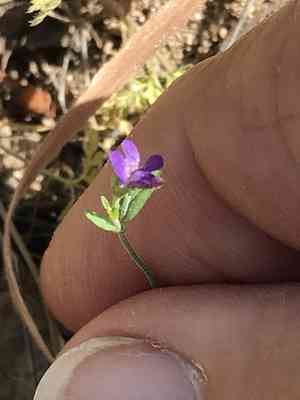
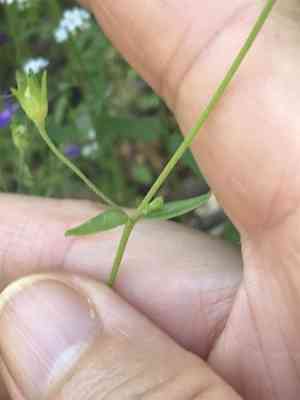
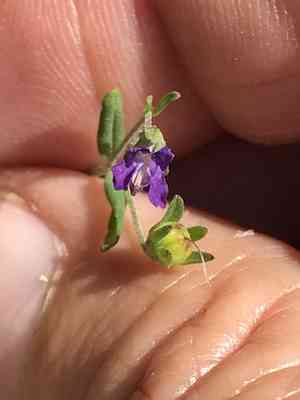
Quickly Identify Parry's blue eyed mary
1
Identify this plant by its unique blue and white bicolored flowers with a distinct upper lip and lower lip structure. The plants usually grow close to the ground or up to a height of about 20 cm.
Scientific Classification of Parry's blue eyed mary
Phylum
Vascular plants
Class
Dicotyledons
Order
Lamiales
Family
Plantain
Genus
Blue eyed Marys
Species
Parry's blue eyed mary
Planting and Growing of Parry's blue eyed mary
Care Difficulty
Moderate
Watering Schedule
Every 3 days
Sunlight Requirements
Partial sun
Sunshine Duration
4-8 hours
Ideal Temperature
60-75℉
Soil Type
Potting Mix, Peat Mix
Soil pH
6.5-7.5
Fertilizer Type
Balanced
Pruning Season
Spring, Summer
Pruning Area
Branches, Leaves
Pruning Frequency
2 times a year
Repotting Season
Spring
Pot Type
Plastic, Ceramic
 How to Water Parry's blue eyed mary?
Collinsia parryi requires a balanced watering approach. Generally, watering should aim to keep the soil consistently moist without being waterlogged. Approximately 150 milliliters each time should suffice, ensuring water reaches the root zone without pooling on the surface.
What are the symptoms of an underwatered Parry's blue eyed mary?
›
What should I do if my Parry's blue eyed mary is not getting enough water?
›
What are the symptoms of an overwatered Parry's blue eyed mary?
›
How to save an overwatered Parry's blue eyed mary?
›
 What Are the Sunlight Requirements for Parry's blue eyed mary?
Collinsia parryi thrives with 4–6 hours of light, ideally under partial sun to full sun. Adequate light ensures robust growth and vivid blooms essential for its lifecycle.
What is the ideal light condition?
›
How to achieve the ideal light condition?
›
What are the benefits of ideal lighting?
›
 What Is the Ideal Temperature Range for Parry's blue eyed mary?
Collinsia parryi, like many native plants from California, thrives best in temperate weather. Ideally, it should be grown in conditions where temperatures range from 60°F to 75°F. This range provides the right balance for optimal photosynthesis and growth, ensuring the plant's metabolic processes function smoothly.
 What Soil is Best for Parry's blue eyed mary?
Collinsia parryi thrives in well-drained soils that prevent waterlogging. Good drainage is crucial as it ensures that the roots receive adequate oxygen and reduces the risk of root rot, promoting healthy growth. While Collinsia parryi can grow in less fertile soils, a nutrient-rich environment helps it flourish. Incorporating compost or well-rotted manure can enrich the soil, providing essential nutrients that support vibrant blooms and lush foliage. Maintaining moderate soil moisture is important for the optimal growth of Collinsia parryi. Consistent watering without over-saturating ensures the plant remains healthy, helping it withstand dry spells and continue to produce flowers.
 How to Fertilize Parry's blue eyed mary?
Collinsia parryi benefits from modest fertilization; too much can lead to excessive foliage growth at the expense of flowers. Use a diluted liquid fertilizer mixture, preferably at half the recommended strength for flowering plants. This ensures optimal growth without overwhelming the plant.
 How to Prune Parry's blue eyed mary?
Avoid heavy pruning as Collinsia parryi prefers lighter touch-ups. Remove no more than one-third of the plant at a time to prevent stress and ensure the plant continues to thrive without losing too much of its foliage. After pruning, it is beneficial to water the plant thoroughly and add a layer of mulch around the base. This keeps the soil moist and reduces stress on the plant, aiding recovery and growth. Avoid fertilizing immediately after pruning.
More About Pruning Techniques→
 How to Propagate Parry's blue eyed mary plant?
1
Begin by filling seed trays with a suitable potting mix. Sow the seeds thinly and cover them with a fine layer of soil. Ensure the soil is moist, but not waterlogged, to facilitate germination.
2
Place the seed trays in a location with ample indirect sunlight and consistent temperatures around 18-22°C (64-72°F). Monitor soil moisture levels and adjust as necessary to maintain a damp environment.
3
Once seedlings have developed their first set of true leaves, gently transplant them into individual pots or a prepared planting bed. Handle the seedlings carefully to avoid damaging the roots.
 How to Repot Parry's blue eyed mary plant?
1
Observe for signs such as roots growing out of the drainage holes or soil drying out too quickly. These are clear indicators that it's time for a repotting session for Collinsia parryi. Pick a time at the beginning of the growing season for best results.
2
Opt for a pot that is 1-2 inches larger in diameter than the current one. This provides ample space for root growth, prevents overcrowding, and enhances overall plant health, ensuring your Collinsia parryi thrives.
3
Select a well-draining, sandy soil mix to mimic the plant's natural environment. This prevents root rot and allows for optimal water and air circulation, creating a happy home for Collinsia parryi's roots.
Learn More About Parry's blue eyed mary Diseases
Anthracnose
Bacterial Leaf Spot
Bacterial Soft Rot
Bacterial Wilt
Crown Gall
Cyst Nematode
Damping-off
Downy Mildew
Drought Stress
Fusarium Wilt
Gray Mold
Leaf Curl
Leaf Spot
Mosaic
Nutrient Deficiency
Nutrient Toxicity
Powdery Mildew
Root Rot
Root-knot Nematode
Rusts
Sooty Mold
Spider Mites
Temperature Stress
Thrips Damage
White Mold



