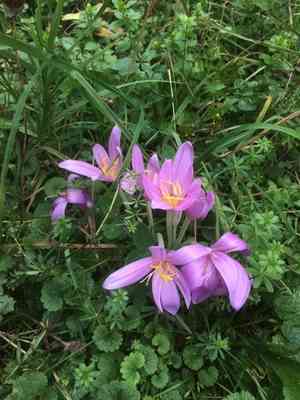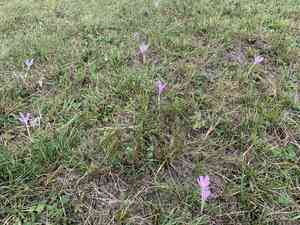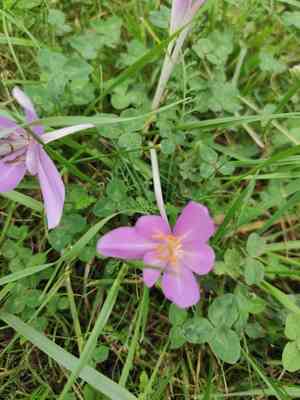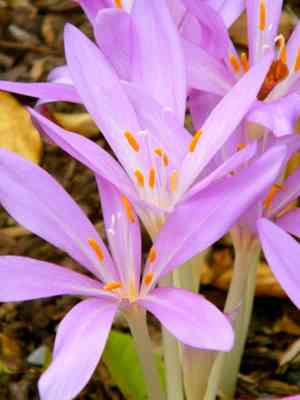
Autumn crocus(Colchicum autumnale)

Autumn crocus (Colchicum autumnale)

Also known as: Fall crocus, Mysteria

The autumn crocus (*Colchicum autumnale*) is a flowering plant that originates from the coastal regions of the Mediterranean and Black Sea. This plant produces flower stalks in the fall, only after its leaves have withered away, so you won't see both its flowers and leaves simultaneously. It's important to note that the autumn crocus is highly toxic if ingested, especially for cats. Unlike the saffron crocus (*Crocus sativus*), the autumn crocus does not produce saffron.

Attributes of Autumn crocus

Lifespan
Perennial
Plant Type
Herb
Plant Height
15 cm
Spread
25 cm to 30 cm
Leaf Color
Green
Flower Size
7 cm to 8 cm
Flower Color
Pink White Purple Lavender

PlantJoy - Identify plants with a snap

Identify and diagnose plants, get toxicity alerts, and explore safety guides for all types of fungi.

Try for Free

Images of Autumn crocus

Autumn crocus(Colchicum autumnale)

Quickly Identify Autumn crocus

1
Star-shaped flowers in shades of purple-pink to white.
2
Leaves transition from dark green to yellow before summer dormancy.
3
Flowers measure 1.5 to 6 inches (4 to 15 cm) in length.
4
Distinct absence of stems; flowers rise directly from underground tuber.
5
Symmetrical arrangement of six petals on each delicate flower.

Scientific Classification of Autumn crocus

Phylum
Vascular plants
Class
Monocotyledons
Order
Lilies, supplejacks and allies
Family
Colchicum
Genus
Naked Lady
Species
Autumn crocus

Planting and Growing of Autumn crocus

Care Difficulty
Easy
Watering Schedule
Every 2 days
Sunlight Requirements
Full sun
Sunshine Duration
4-8 hours
Ideal Temperature
60-70℉
Soil Type
Potting Mix, Peat Mix
Soil pH
6.5-7.5
Fertilizer Type
Balanced
Pruning Season
Spring, Summer
Pruning Area
Branches, Leaves
Pruning Frequency
2 times a year
Repotting Season
Spring
Pot Type
Plastic, Ceramic

water icon How to Water Autumn crocus?

For Colchicum autumnale, water with about 250 milliliters per session, ensuring the soil is evenly moist but not waterlogged. It's crucial to let the soil dry out slightly between watering to prevent rot. Use the soak-and-dry method, where you thoroughly water until it runs slightly from the pot's drainage holes, then wait for it to dry out before watering again.
What are the symptoms of an underwatered Autumn crocus?
What should I do if my Autumn crocus is not getting enough water?
What are the symptoms of an overwatered Autumn crocus?
How to save an overwatered Autumn crocus?

sunlight icon What Are the Sunlight Requirements for Autumn crocus?

Sunlight Requirements: Full sun, Partial sun
Duration of light: 4 to 6 hours
Partial sun ranging from 4 to 6 hours of sunlight daily is ideal for Colchicum autumnale. Adequate light ensures robust growth and vibrant flowering, enhancing its decorative appeal.
How much sunlight does Colchicum autumnale need?
What happens if Colchicum autumnale doesn't get enough light?
How to ensure Colchicum autumnale maintains optimal light?
More About Sunlight Requirements Techniques

temperature icon What Is the Ideal Temperature Range for Autumn crocus?

Ideal Temperature: 60 ~ 70℉
For optimal growth, Colchicum autumnale thrives in a temperature range of 60 to 70°F. This range allows the plant to maintain healthy cellular processes, including photosynthesis and respiration. Maintaining this temperature stability is crucial for the plant to develop robust blooms. Inconsistencies could inhibit growth, so regular monitoring is recommended.

soil icon What Soil is Best for Autumn crocus?

Soil type: Loam, Sandy loam, Calcareous soil
Soil PH: 6.5 ~ 7.5
Colchicum autumnale thrives in nutrient-rich soils that provide essential minerals for robust growth. This enhances the plant's ability to produce vibrant flowers and resist diseases, making it a must for gardeners aiming for a lively display. This plant prefers well-draining soil to prevent root rot. Excess water should seep away quickly, allowing air to reach the roots, which is vital for healthy growth and blooming. While colchicums prefer well-draining soil, they still require a moderate level of moisture. Keeping the soil slightly damp ensures that the plant receives constant hydration without the risk of waterlogging.

fertilize icon How to Fertilize Autumn crocus?

Fertilizer type: Balanced
When fertilizing Colchicum autumnale, it's crucial to strike a balance. For liquid fertilizers, use a diluted solution, mixing about half the recommended strength. For slow-release fertilizers, evenly distribute a small handful around the plant's base in spring and again in midsummer. Over-fertilization can lead to weak, leggy growth, so moderation is key.

prune icon How to Prune Autumn crocus?

Pruning Time: Spring, Autumn
Begin by waiting until after the flowering period in Autumn. Trim back any dead or damaged foliage to the base. Remove any brown or wilted leaves to allow the plant to prepare for the winter months in optimal health. More About Pruning Techniques

propagate icon How to Propagate Autumn crocus plant?

Propagate Time: Spring, Early spring, Autumn
1
Ensure that the soil is well-draining and enriched with organic matter. This provides a nutrient-rich environment that promotes healthy root development for both seeds and divided bulbs.
2
For seed propagation, plant the seeds at a shallow depth into the prepared soil. For bulb division, plant the divided sections a few inches apart to give them room to grow.
3
Water the newly planted seeds or bulbs thoroughly but ensure the soil is not waterlogged. Proper moisture helps in initiating root growth and establishing the plant.
More About Propagating Techniques

repot icon How to Repot Autumn crocus plant?

Repotting frequency: every 3-4 years
1
Look for signals such as overcrowded bulbs, roots growing out of drainage holes, or decreased flowering. These signs indicate that it's time to repot Colchicum autumnale. The best time to do this is during the dormancy period in early spring or after flowering in autumn to minimize stress on the plant.
2
Select a pot that is slightly larger than the current one, with adequate drainage holes. A clay pot is ideal as it allows the soil to breathe and prevents waterlogging, which is crucial for the healthy growth of Colchicum autumnale.
3
Opt for well-draining loamy soil mixed with some sand to enhance drainage capability. This prevents the bulbs from sitting in water, reducing the risk of rot, which is paramount in maintaining vigorous plant health.

PlantJoy - Identify plants with a snap

Find the best spots for them to optimize their health, simply using your phone.

Try for Free

Toxicity of Autumn crocus

Is Autumn crocus toxic to humans?

The autumn crocus is an extremely toxic species. Every component of the plant, such as the stem, leaves, seeds, and flowers, is poisonous. It contains hazardous alkaloids, notably colchicine, which disrupts cell mitosis and can have detrimental effects on overall well-being. Ingesting any portion of the plant may lead to a range of side effects, from mild to severe. Minor symptoms include sensations of burning in the mouth and throat, alongside abdominal discomfort. More severe reactions can result in blood disorders, as well as complications affecting the liver and kidneys, potentially leading to organ failure and even death. Poisoning frequently happens when the bulbs are wrongly identified as onions.

Is Autumn crocus toxic to cat?

The autumn crocus is an extremely poisonous plant that can be fatal to cats if consumed. It contains colchicine, which can result in severe symptoms such as diarrhea, shock, damage to multiple organs, bloody vomiting, and ultimately, death. Every part of this plant is toxic, so if you believe your cat has ingested it, contact your veterinarian without delay.

Is Autumn crocus toxic to dog?

The autumn crocus is highly poisonous to dogs. If you suspect your dog has ingested any portion of this plant, prompt medical attention is essential. Every part of the autumn crocus harbors dangerous alkaloids, particularly abundant in its flowers and seeds. Ingesting this plant may result in symptoms such as vomiting, diarrhea (which may be bloody), and lethargy. A significant amount consumed can trigger liver and kidney failure, potentially resulting in seizures, coma, or even fatality.

Identify toxic plants for your safety

Learn which plants are harmful to you and your pets, and make informed choices for a safer home!

Try for Free
WARNING
The judgment on toxicity and danger is for reference only. We DO NOT GUARANTEE any accuracy of such judgment. Therefore, you SHALL NOT rely on such judgment. It is IMPORTANT TO SEEK PROFESSIONAL ADVICE in advance when necessary.
More About Toxic Techniques