
Job's tears (Coix) (Coix)
Also known as: Job's Tears, Adlay, Coixseed
The genus *Coix*, commonly known as Job's tears, consists of plants found in Asia and Australia and belongs to the grass family.
In This Article
Attributes of Job's tears (Coix)
Lifespan
Annual
Plant Height
1-3 meters
Spread
Not applicable
Leaf Color
Green
Flower Size
6-10 mm
Flower Color
Yellow to brownish
Images of Job's tears (Coix)

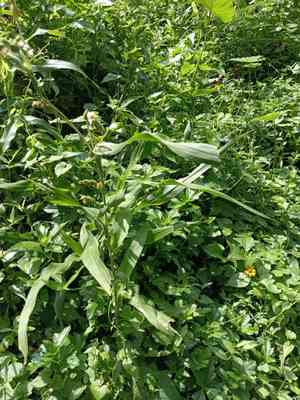
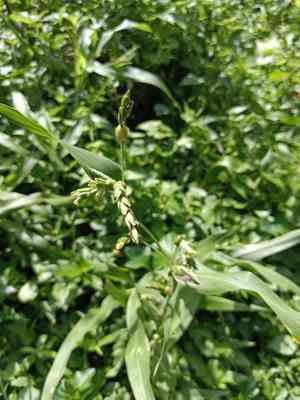

Quickly Identify Job's tears (Coix)
1
Coix can be identified by its tall stature ranging from 1 to 3 meters in height, broad leaves, and characteristic bead-like grains that form at the axils of leaves. The grains are usually oval and can be white, brown, or gray.
Scientific Classification of Job's tears (Coix)
Phylum
Magnoliophyta (Angiosperms)
Class
Liliopsida (Monocots)
Order
Poales
Family
Poaceae
Genus
Coix
Planting and Growing of Job's tears (Coix)
Care Difficulty
Moderate
Watering Schedule
Every 4 days
Sunlight Requirements
Full sun
Sunshine Duration
6-12 hours
Ideal Temperature
68-86℉
Soil Type
Potting Mix, Peat Mix
Soil pH
5.5-7.5
Fertilizer Type
Balanced
Pruning Season
Spring, Summer
Pruning Area
Branches, Leaves
Pruning Frequency
Once a year
Repotting Season
Spring
Pot Type
Plastic, Ceramic
 How to Water Job's tears (Coix)?
For Coix, the watering should mimic its native environment, which is traditionally quite humid. Ensure that the soil is evenly moist but not waterlogged. Water until excess moisture starts to drip from drainage holes, approximately 500 ml per session.
What are the symptoms of an underwatered Job's tears (Coix)?
›
What should I do if my Job's tears (Coix) is not getting enough water?
›
What are the symptoms of an overwatered Job's tears (Coix)?
›
How to save an overwatered Job's tears (Coix)?
›
 What Are the Sunlight Requirements for Job's tears (Coix)?
Coix ideally needs full sun to partial sun exposure, ensuring it receives 6-8 hours of light daily. This range supports healthy growth, maximizes photosynthetic activity, and encourages robust development.
What is the best lighting environment for Coix?
›
How can I achieve ideal sunlight for Coix?
›
What are the benefits of providing ideal light conditions to Coix?
›
 What Is the Ideal Temperature Range for Job's tears (Coix)?
For optimal growth, Coix plants thrive in temperatures ranging from 68°F to 86°F. This range ensures adequate warmth without causing heat stress, promoting healthy metabolic functions and growth.
 What Soil is Best for Job's tears (Coix)?
Coix requires soil that drains well to prevent root rot. Ensuring proper drainage will allow the roots to get enough oxygen while avoiding waterlogging, which is crucial for healthy growth. This plant thrives in nutrient-rich soils that supply the essential minerals required for its growth. Enriched soil helps in fostering robust development and a bountiful seed yield. Coix needs soil with a consistent moisture level — not too wet and not too dry. Maintaining a balance helps in supporting vigorous plant growth and high photosynthetic activity.
 How to Fertilize Job's tears (Coix)?
When it comes to fertilizing Coix, a general rule of thumb is to apply a balanced 10-10-10 liquid fertilizer at half the recommended strength every two weeks during the growing season. Solid fertilizers can be applied at a rate of 30 grams per square meter, early in the growing season to support robust growth and seed development.
 How to Prune Job's tears (Coix)?
Begin by removing any dead or diseased leaves and stems. Cut back to healthy tissue to prevent spreading any potential disease to the rest of the plant. Shape the plant by selectively cutting long shoots. Aim for a balanced form that promotes better air circulation through the plant, reducing the risk of fungal infections. To encourage new growth, focus on cutting old flowers and seed heads. This redirection of energy fosters vigorous new shoots and a healthier plant overall.
 How to Propagate Job's tears (Coix) plant?
1
Fill the seed trays with a quality seed starting mix, ensuring it is evenly spread and lightly firmed. This provides the ideal conditions for the seeds to germinate, offering a good balance between moisture retention and drainage.
2
Place the seeds on the surface of the soil and lightly cover them with additional soil mix. Make sure the seeds are evenly spaced to allow sufficient room for growth and ensure they receive enough light for germination.
3
Use a watering can to gently water the seeds. Keep the soil consistently moist but avoid over-watering as it may lead to seed rot. Ensure trays are in a warm, sunny location but protected from harsh sunlight to prevent drying out.
 How to Repot Job's tears (Coix) plant?
1
Coix plants should be repotted when you notice roots coming out of the drainage holes or becoming bound and compacted. Also, if water isn't draining properly or you observe stunted growth, these are signs it's time for a new pot. Typically, repotting every 2-3 years during active growth in spring or summer will keep Coix thriving.
2
Select a pot that is one size larger in diameter and depth than the current pot to give roots ample space to expand. Ensure it has adequate drainage holes to prevent waterlogging, which can lead to root rot. Opt for terracotta pots to enhance breathability and facilitate healthier root environments.
3
A well-draining sandy loam mixture enriched with organic matter is ideal for Coix. This combination retains the right moisture level and supports nutrient uptake without suffocating roots. The gritty texture prevents compaction and allows excess water to drain away, reducing the risk of rot.

