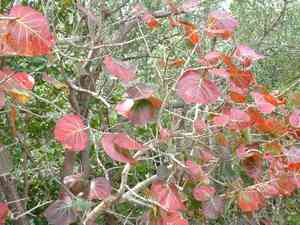
Coccoloba (Coccoloba) (Coccoloba)
Also known as: Sea Grape
Coccoloba is a genus that includes mainly tropical and subtropical trees, shrubs, and woody vines. These plants are known for their large leaves and spiky flower clusters. While few species hold significant commercial or ornamental value, the Seagrape (C. uvifera) is widely cultivated in the Caribbean. Genetic studies indicate that the genus likely originated in Central America, with many species now found in various regions both north and south of there.
In This Article
Attributes of Coccoloba (Coccoloba)
Lifespan
Perennial
Plant Height
Up to 8 meters (26 feet)
Spread
Up to 6 meters (20 feet)
Leaf Color
Green, often with red veins
Flower Size
Small, less than 1 centimeter (0.4 inches)
Flower Color
White or cream
Images of Coccoloba (Coccoloba)
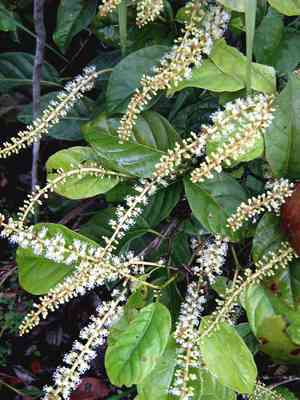
Quickly Identify Coccoloba (Coccoloba)
1
Look for large, leathery, round leaves with prominent veins. The sea grape has a distinctive clusters of small grape-like fruits, which turn from green to purple when ripe. The bark is smooth and brownish-gray, often peeling.
Scientific Classification of Coccoloba (Coccoloba)
Phylum
Magnoliophyta
Class
Magnoliopsida
Order
Caryophyllales
Family
Polygonaceae
Genus
Coccoloba
Planting and Growing of Coccoloba (Coccoloba)
Care Difficulty
Moderate
Watering Schedule
Every 2 days
Sunlight Requirements
Full sun
Sunshine Duration
4-6 hours
Ideal Temperature
65-85℉
Soil Type
Potting Mix, Peat Mix
Soil pH
6.5-7.5
Fertilizer Type
Balanced
Pruning Season
Spring, Summer
Pruning Area
Branches, Leaves
Pruning Frequency
2 times a year
Repotting Season
Spring
Pot Type
Plastic, Ceramic
 How to Water Coccoloba (Coccoloba)?
For Coccoloba, the general rule of thumb is ensuring the soil is thoroughly moistened but not waterlogged. This typically translates to about 300 ml per watering session, ensuring the water reaches the root zone.
What are the symptoms of an underwatered Coccoloba (Coccoloba)?
›
What should I do if my Coccoloba (Coccoloba) is not getting enough water?
›
What are the symptoms of an overwatered Coccoloba (Coccoloba)?
›
How to save an overwatered Coccoloba (Coccoloba)?
›
 What Are the Sunlight Requirements for Coccoloba (Coccoloba)?
Coccoloba thrives under partial to full sun exposure, ideally receiving 4 to 6 hours of direct sunlight daily. This balance encourages robust growth and maintains vibrant leaf coloration.
What amount of sunlight does Coccoloba need?
›
Can Coccoloba tolerate shade, and if so, how much?
›
What solutions exist for ensuring Coccoloba receives its ideal sunlight?
›
 What Is the Ideal Temperature Range for Coccoloba (Coccoloba)?
The ideal temperature range for Coccoloba, a genus that includes plants like sea grape, is between 65°F and 85°F. At these temperatures, the plants can efficiently perform photosynthesis, which supports robust growth and development. Providing a stable environment within this range ensures the plant's health, minimizing stress and promoting vibrant foliage.
 What Soil is Best for Coccoloba (Coccoloba)?
Coccoloba thrives in well-drained soils, ensuring that the roots don't remain waterlogged. This allows for proper aeration, which is crucial for nutrient uptake. The plant benefits from soils that are moderately fertile, providing essential nutrients that promote vigorous growth and lush foliage. While the soil needs to be well-drained, retaining some moisture is beneficial. This helps in reducing the frequency of watering and supports consistent growth.
 How to Fertilize Coccoloba (Coccoloba)?
Coccoloba plants require moderate amounts of fertilizer. A balanced liquid fertilizer diluted to half strength should be used. For slow-release fertilizers, apply approximately 1/4 cup per square foot around the base of the plant.
 How to Prune Coccoloba (Coccoloba)?
Pruning too much can lead to stress and shock for the plant. Ensure you are removing no more than one-third of the plant's overall size at a time to maintain its health. After pruning, provide adequate watering and ensure the plant is placed in an area with sufficient sunlight. This helps with recovery and promotes new growth. While Coccoloba can be pruned in spring, summer, or autumn, avoid doing so during winter, as this is when the plant is naturally less active and more susceptible to damage.
 How to Propagate Coccoloba (Coccoloba) plant?
1
Before sowing, soak the seeds in lukewarm water for 24 hours. This process will increase their germination rate by softening the outer seed coat and enabling better water absorption.
2
Select a healthy parent plant and cut a 4-6 inch stem below a node. Ensure there's at least two leaf nodes on each cutting. Removing lower leaves helps to reduce water loss during root development.
3
Dip the cut end of each cutting into a rooting hormone to boost root growth, then plant them in a moist, well-draining potting mixture. Provide adequate space so the leaves of different cuttings don't touch each other.
 How to Repot Coccoloba (Coccoloba) plant?
1
Signs that your Coccoloba needs repotting include roots growing out of the drainage holes, soil drying out quickly, or stunted growth. It's best to repot during active growth phases in spring or summer, ensuring the plant adjusts well.
2
Choose a pot that is about 2 inches larger in diameter than the current one to allow root growth without overwhelming the plant. Ensure it has adequate drainage holes to prevent waterlogging, promoting healthy root systems.
3
Opt for a well-draining potting mix that often includes components like peat, perlite, and pine bark. Such soil mimics Coccoloba's natural habitat, preventing root rot while providing proper aeration and nutrition absorption.

