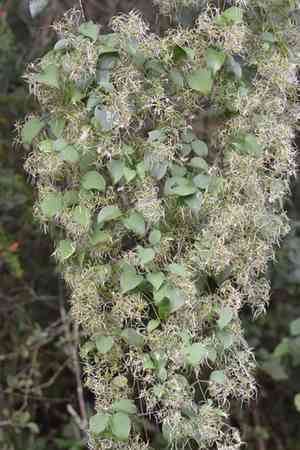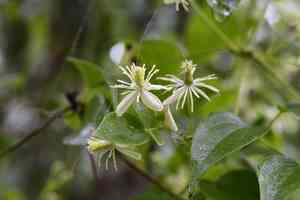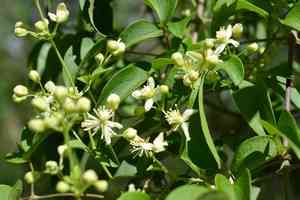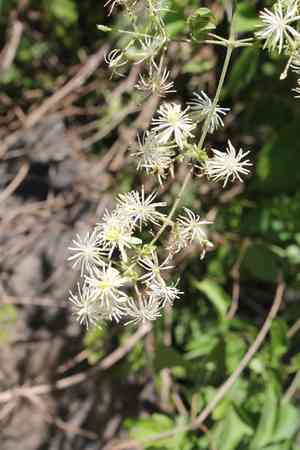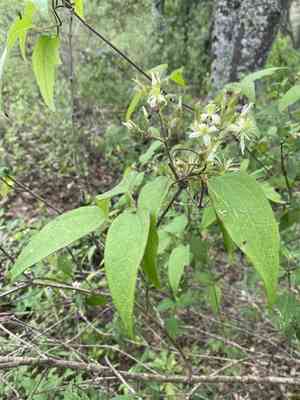
Cabellos de angel(Clematis dioica)

Cabellos de angel (Clematis dioica)

Also known as: Old Man's Beard, Devil's Darning Needles

Cabellos de ángel (Clematis vitalba) is a distinctive climbing vine, recognized for its separate male and female plants. Key features include:

- **Flowers**: Small, creamy white blooms that appear in late summer to early autumn, often blending with the foliage.
- **Leaves**: Compound leaves with 3-5 dark green leaflets.
- **Seeds**: Notable for its fluffy, silvery seed heads resembling an old man's beard.

**Growing Conditions**:

- **Light**: Prefers full sun to partial shade.
- **Soil**: Thrives in well-draining, fertile soil with a neutral to slightly alkaline pH.
- **Water**: Requires consistent watering but dislikes waterlogged conditions.
- **Support**: Needs a support structure such as a trellis or fence for climbing.
- **Pruning**: Best pruned in late winter or early spring to encourage robust growth and flowering.

Due to its vigorous growth, it's essential to manage Clematis vitalba carefully, as it can become invasive in certain areas.

Attributes of Cabellos de angel

Lifespan
Perennial
Plant Type
Vine, Herb
Plant Height
3-10 meters
Spread
N/A
Leaf Color
Green
Flower Size
1-2 cm
Flower Color
White, Cream

ForwardPlant - Identify plants with a snap

Identify and diagnose plants, get toxicity alerts, and explore safety guides for all types of fungi.

Try for Free

Images of Cabellos de angel

Cabellos de angel(Clematis dioica)

Quickly Identify Cabellos de angel

1
To identify Clematis dioica, look for its long, woody vines that can reach several meters in length. The leaves are usually compound with three leaflets. The plant is most easily recognized by its dense clusters of small, white, or cream-colored flowers and distinct feathery seed heads that look like old man\'s beard.

Scientific Classification of Cabellos de angel

Phylum
Vascular plants
Class
Dicotyledons
Order
Ranunculales
Family
Buttercup
Genus
Clematis
Species
Cabellos de angel

Planting and Growing of Cabellos de angel

Care Difficulty
Hard
Watering Schedule
Every 4 days
Sunlight Requirements
Full sun
Sunshine Duration
4-8 hours
Ideal Temperature
65-85℉
Soil Type
Potting Mix, Peat Mix
Soil pH
6.5-7.5
Fertilizer Type
Balanced
Pruning Season
Spring, Summer
Pruning Area
Branches, Leaves
Pruning Frequency
2 times a year
Repotting Season
Spring
Pot Type
Plastic, Ceramic

water icon How to Water Cabellos de angel?

Clematis dioica prefers soil that is consistently moist, but not soggy. It requires about 1000 milliliters (1 liter) of water per session. The key is to ensure the top inch of soil feels dry before watering again, as this promotes healthy root growth without risking root rot.
What are the symptoms of an underwatered Cabellos de angel?
What should I do if my Cabellos de angel is not getting enough water?
What are the symptoms of an overwatered Cabellos de angel?
How to save an overwatered Cabellos de angel?

sunlight icon What Are the Sunlight Requirements for Cabellos de angel?

Sunlight Requirements: Full sun, Partial sun
Duration of light: 6-8 hours daily
Clematis dioica prefers partial to full sun, ensuring robust flowering and healthy foliage. It benefits from a light range of 6-8 sunlight hours daily, which maximizes photosynthesis and bloom production.
What is the ideal light preference for Clematis dioica?
How can I ensure optimal lighting for my Clematis dioica?
What benefits does optimal lighting have for Clematis dioica?

temperature icon What Is the Ideal Temperature Range for Cabellos de angel?

Ideal Temperature: 65 ~ 85℉
Clematis dioica thrives best in temperatures between 65°F and 85°F. This range provides the optimal conditions for photosynthesis and nutrient uptake, leading to healthy growth and flowering. Maintaining temperatures within this window ensures the plant remains vigorous and less prone to stress.

soil icon What Soil is Best for Cabellos de angel?

Soil type: Loam, Sandy loam
Soil PH: 6.5 ~ 7.5
Clematis dioica thrives in soil that is rich in organic matter, which provides essential nutrients for robust growth. Incorporating compost or well-rotted manure can enhance the soil's fertility, promoting lush foliage and vibrant blooms. Proper drainage is crucial to prevent root rot and other water-related issues. Sandy loam soils are ideal as they allow excess water to drain away, keeping the root system healthy and ensuring that the plant receives adequate oxygen. While Clematis dioica needs good drainage, maintaining moisture is equally important. Loam soils can hold moisture without becoming waterlogged, offering the plant consistent hydration for optimal growth and flowering.

fertilize icon How to Fertilize Cabellos de angel?

Fertilizer type: Balanced
Clematis dioica typically requires a balanced nitrogen, phosphorus, and potassium fertilizer. For young plants, apply a light dose of fertilizer, around one teaspoon per gallon of soil during spring. For older plants, increase this to a tablespoon. Always follow the specific product instructions to avoid over-application.

prune icon How to Prune Cabellos de angel?

Pruning Time: Spring, Autumn
Begin by inspecting the plant and removing all dead, diseased, or damaged stems. Cut these back to healthy tissue or to the base of the plant, if necessary. Removing unhealthy growth first helps prevent the spread of disease and sets a foundation for more focused pruning. Next, work on shaping the plant to encourage an open structure. Cut back any overcrowded stems to promote better air circulation. Aim for a balance where stems have enough space for growth without tangling with each other. This step helps to minimize diseases and supports a vibrant flowering season. Finally, prune some of the older, woody stems down to the ground to invigorate new growth. This can be done with discretion, leaving the newer stems to flourish. New growth tends to be more floriferous, providing a fresh look and abundant blooms.

propagate icon How to Propagate Cabellos de angel plant?

Propagate Time: Spring, Early summer
1
Choose a healthy stem from a non-flowering part of the plant to ensure it can focus its energy on root development. Look for a section that is at least 6 inches long and has multiple nodes, as these are potential points for root growth.
2
Remove any leaves from the lower half of the cutting to prevent rotting when planted in soil. Optionally, dip the cut end in rooting hormone to boost the chances of rooting.
3
Insert the cutting into a pot filled with a mix of perlite and peat moss. Ensure it is inserted deep enough to remain stable and cover it with a plastic bag to maintain humidity. Place the pot in a warm, bright area but avoid direct sunlight.
More About Propagating Techniques

repot icon How to Repot Cabellos de angel plant?

Repotting frequency: Every 2-3 years
1
Clematis dioica should be repotted when you see roots bursting through the pot's drainage holes, or the plant becomes root-bound with a dense root ball. Additionally, if you notice reduced vigor or yellowing leaves, these can be indicators that repotting is necessary. Always aim to repot during spring or autumn for optimal plant recovery.
2
Select a pot that's 2-3 inches larger in diameter than the current one, with ample drainage holes to allow excess water escape. A slightly larger pot prevents overpotting, which can retain too much soil moisture and lead to root rot. Use a material like terracotta or ceramic, which aids in natural aeration, helping the roots to breathe.
3
Opt for a well-draining potting mix that can hold moisture without becoming waterlogged. A mix enriched with perlite, peat moss, and compost is ideal, ensuring adequate aeration and nutrient content. This type of soil composition facilitates strong root development and healthier growth cycles.

ForwardPlant - Identify plants with a snap

Find the best spots for them to optimize their health, simply using your phone.

Try for Free

Toxicity

Ingestion, skin contact

Identify toxic plants for your safety

Learn which plants are harmful to you and your pets, and make informed choices for a safer home!

Try for Free
WARNING
The judgment on toxicity and danger is for reference only. We DO NOT GUARANTEE any accuracy of such judgment. Therefore, you SHALL NOT rely on such judgment. It is IMPORTANT TO SEEK PROFESSIONAL ADVICE in advance when necessary.