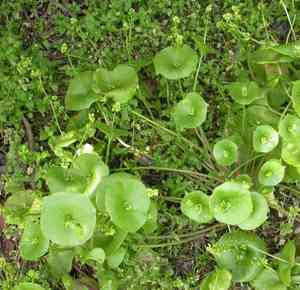
Miner's lettuce (Claytonia perfoliata)
Also known as: Spring beauty, Palsingat
Miner's lettuce, scientifically known as Claytonia perfoliata, is a petite herbaceous winter annual featuring succulent, disk-shaped leaves. It produces white to pale pink flowers from winter to spring. This plant is highly valued for its flavorful and nutrient-dense edible parts, including its flowers, leaves, and roots. It typically reaches a height of up to 30 cm.
In This Article
Attributes of Miner's lettuce
Lifespan
Annual, Perennial
Plant Type
Herb
Plant Height
40 cm
Spread
25 cm
Leaf Color
Green Blue Red
Flower Size
3 mm to 1 cm
Flower Color
White
Images of Miner's lettuce
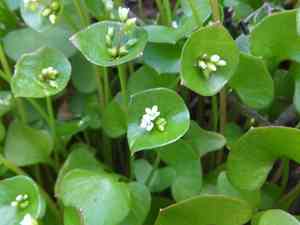
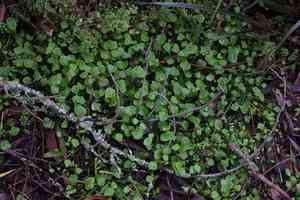
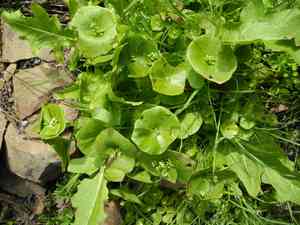
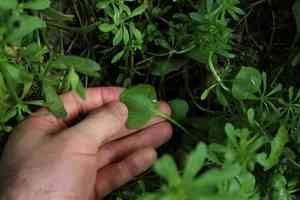
Quickly Identify Miner's lettuce
1
Miner\'s lettuce is identified by its small, smooth, spoon-shaped leaves that form a rosette at the base. The small white to pink flowers grow in clusters, and a distinctive feature is the perfoliate leaves where the stem appears to pass through the leaf.
Scientific Classification of Miner's lettuce
Phylum
Vascular plants
Class
Dicotyledons
Order
Caryophyllales
Family
Pussypaw
Genus
Spring beauty
Species
Miner's lettuce
Planting and Growing of Miner's lettuce
Care Difficulty
Easy
Watering Schedule
Every 4 days
Sunlight Requirements
Partial sun
Sunshine Duration
6-10 hours
Ideal Temperature
50-68℉
Soil Type
Potting Mix, Peat Mix
Soil pH
6.5-7.5
Fertilizer Type
Balanced
Pruning Season
Spring, Summer
Pruning Area
Branches, Leaves
Pruning Frequency
2 times a year
Repotting Season
Spring
Pot Type
Plastic, Ceramic
 How to Water Miner's lettuce?
Claytonia perfoliata, also known as miner's lettuce, thrives in moist soil. Watering should be sufficient to keep the soil consistently damp but not waterlogged. Generally, 250 milliliters per watering session will sustain its growth comfortably without oversaturating the roots. Pour gradually to prevent runoff.
What are the symptoms of an underwatered Miner's lettuce?
›
What should I do if my Miner's lettuce is not getting enough water?
›
What are the symptoms of an overwatered Miner's lettuce?
›
How to save an overwatered Miner's lettuce?
›
 What Are the Sunlight Requirements for Miner's lettuce?
Partial sun to full shade is ideal. Such lighting ensures moisture retention, supports optimal growth, and prevents leaf burn, resulting in a healthy, thriving plant.
How much light is ideal for Claytonia perfoliata?
›
What solutions exist for achieving ideal lighting for this plant?
›
What benefits does ideal lighting bring to Claytonia perfoliata?
›
 What Is the Ideal Temperature Range for Miner's lettuce?
Claytonia perfoliata thrives best in temperatures ranging from 50 to 68 degrees Fahrenheit. This range facilitates healthy photosynthesis and proper nutrient absorption, ensuring robust growth and flowering.
 What Soil is Best for Miner's lettuce?
Claytonia perfoliata thrives in soils rich in organic matter, which provides essential nutrients that support its rapid growth and leaf vitality. A nutrient-rich soil enhances the plant's lush, green appearance and ensures robust flowering. This plant prefers well-drained soils to prevent waterlogging, which can lead to root rot. A well-drained soil setup ensures that excess water quickly drains away, keeping the root system healthy and promoting vigorous growth. While good drainage is crucial, Claytonia perfoliata also benefits from soil that retains some moisture. This helps in maintaining consistent hydration for the plant, essential for its succulent leaves which store water.
 How to Fertilize Miner's lettuce?
For Claytonia perfoliata, a gentle hand is preferred when it comes to fertilization. Use a balanced liquid fertilizer, diluted to half strength, at about 1 tablespoon (15 ml) per gallon (3.8 liters) of water. This should be sufficient to keep the plant lush and healthy, avoiding nutrient overload.
 How to Prune Miner's lettuce?
Begin by identifying healthy growth versus any damaged or yellowing leaves. Focus on cutting back only the unhealthy or overgrown parts to promote new growth and maintain the plant's vigor. Always use clean and sharp scissors or pruning shears to make clean cuts on the plant. This reduces the risk of transmitting diseases and makes the healing process faster for the plant. When trimming Claytonia perfoliata, focus on managing overgrown areas. Cut down stems that appear too long or are sprawling beyond the desired growing area to encourage a neater, denser form. Pruning the tips of the plant can encourage branching and result in a fuller appearance. Cut just above a leaf node, which is where new leaves will emerge, to encourage vibrant and lush growth.
 How to Propagate Miner's lettuce plant?
1
Select healthy and mature seeds of Claytonia perfoliata for better germination rates. Inspect the seeds for any signs of damage or disease, discarding those that don't meet quality standards.
2
Fill your seed trays with potting mix, ensuring it is loose and well-aerated. Gently firm the soil without compacting it too much, allowing for easy root establishment for emerging seedlings.
3
Evenly distribute the seeds over the soil surface, covering them lightly with a thin layer of potting mix. Ensure they are not sown too deeply, as this can hinder their germination.
 How to Repot Miner's lettuce plant?
1
Watch for signs that your Claytonia perfoliata needs repotting, like roots crowding the pot or water failing to drain well. Spring and autumn are the ideal seasons to do this, as the plant is in active growth and can adjust easier to new soil.
2
Select a pot with adequate drainage holes to prevent waterlogging, slightly larger than the current one. This ensures the plant has enough room to grow, minimizing the risk of root rot and encouraging healthy development.
3
Opt for a well-draining, sandy loam soil mix to prevent root rot, maintaining adequate moisture without becoming waterlogged. This type of soil mimics the plant's natural habitat, supporting healthy growth and mineral uptake.



