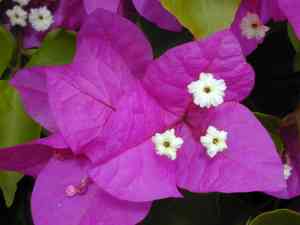
Streambank spring beauty (Claytonia parviflora)
Also known as: Little-flower springbeauty
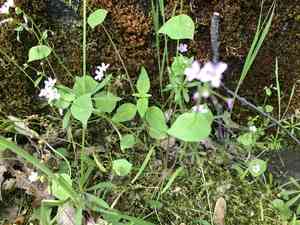
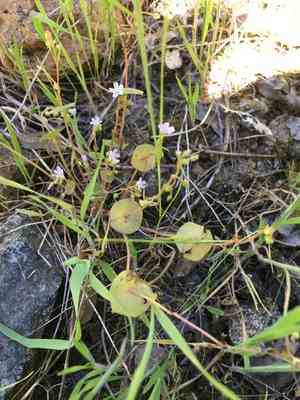
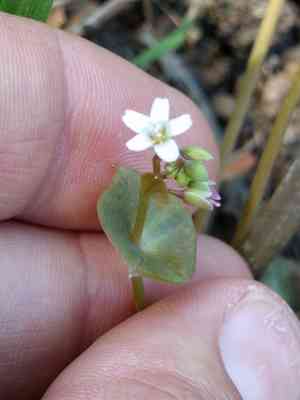
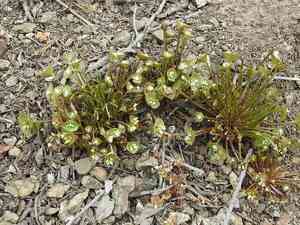
This annual herb can either form a dense clump or spread out, reaching up to 30 cm in length. Its basal leaves are lance-shaped and sit atop long, tapering petioles. The plant's foliage ranges from green to pink. It produces an inflorescence consisting of a cluster of up to 40 small flowers, each featuring petals that are white or have a pink tint.
In This Article
Attributes of Streambank spring beauty
Lifespan
Annual
Plant Type
Herb
Plant Height
5 to 30 cm
Spread
Not applicable
Leaf Color
Green
Flower Size
0.5 to 1 cm
Flower Color
White to pink
Images of Streambank spring beauty
Quickly Identify Streambank spring beauty
1
Claytonia parviflora can be identified by its small, white to pinkish flowers, which typically bloom in clusters. The leaves are succulent and can be either basal or stem-clasping. The flowers usually have five petals and are less than 1 cm in diameter.
Scientific Classification of Streambank spring beauty
Phylum
Vascular plants
Class
Dicotyledons
Order
Caryophyllales
Family
Pussypaw
Genus
Spring beauty
Species
Streambank spring beauty
Planting and Growing of Streambank spring beauty
Care Difficulty
Easy
Watering Schedule
Every 4 days
Sunlight Requirements
Partial sun
Sunshine Duration
4-8 hours
Ideal Temperature
50-68℉
Soil Type
Potting Mix, Peat Mix
Soil pH
6.5-7.5
Fertilizer Type
Balanced
Pruning Season
Spring, Summer
Pruning Area
Branches, Leaves
Pruning Frequency
2 times a year
Repotting Season
Spring
Pot Type
Plastic, Ceramic
 How to Water Streambank spring beauty?
Claytonia parviflora prefers to be watered so that the soil is evenly moist but not waterlogged. Each watering session should involve about 150 milliliters of water per plant. This ensures the roots are sufficiently hydrated without sitting in overly damp conditions, which can foster root rot. Aim to moisten the upper 2-3 inches of soil without allowing excess water to accumulate.
What are the symptoms of an underwatered Streambank spring beauty?
›
What should I do if my Streambank spring beauty is not getting enough water?
›
What are the symptoms of an overwatered Streambank spring beauty?
›
How to save an overwatered Streambank spring beauty?
›
 What Are the Sunlight Requirements for Streambank spring beauty?
Claytonia parviflora thrives best in partial to full sun, receiving at least 4 to 6 hours of sunlight daily. Ideal light encourages robust foliage and a healthy growth cycle, supporting blooming and reproduction.
What is the best lighting condition for Claytonia parviflora?
›
How do I ensure Claytonia parviflora gets ideal light?
›
What are the benefits of ideal light for Claytonia parviflora?
›
 What Is the Ideal Temperature Range for Streambank spring beauty?
The ideal temperature range for Claytonia parviflora, between 50°F and 68°F, ensures optimal growth and flowering. This range replicates their natural habitat conditions, providing the right environment for physiological processes such as photosynthesis and nutrient uptake. Maintaining this range supports overall plant vigor and increases resistance to pests and diseases.If Claytonia parviflora is exposed to temperatures outside of its ideal range, stress can occur leading to stunted growth, reduced flowering, and increased vulnerability to diseases. Prolonged exposure to unsuitable temperatures can also interfere with metabolic processes, affecting the plant's health and longevity.
 What Soil is Best for Streambank spring beauty?
The soil for Claytonia parviflora should be well-drained to prevent waterlogging, which can lead to root rot. This type of soil allows excess water to flow away, providing roots with optimal air and nutrient access, thereby promoting healthy growth. Claytonia parviflora thrives in moderately fertile soils, ensuring that it receives enough nutrients without being overwhelmed. Balanced fertility supports robust growth and enhances the plant's resilience against pests and diseases. A soil pH between 6.5 and 7.5 suits Claytonia parviflora, fostering an environment where essential nutrients remain available to the plant. Maintaining this pH range aids in optimal nutrient uptake and healthy development.
 How to Fertilize Streambank spring beauty?
Claytonia parviflora, like many annuals, requires modest amounts of fertilizers. To ensure optimal growth, apply a diluted liquid fertilizer at half the recommended strength for houseplants. This delicate approach minimizes the risk of over-fertilizing while providing essential nutrients. For slow-release granules, apply about 2 to 3 teaspoons per square foot at the beginning of the growing season to support sustained growth. Adjust based on the plant's reactions and soil tests.
 How to Prune Streambank spring beauty?
Prune Claytonia parviflora during its active growing seasons—spring and summer—to ensure it recovers quickly. Avoid pruning during the plant's dormant phases in autumn and winter, as this can stress the plant and impact its overall health. Take care not to remove more than a third of the plant's mass at any one time, as over-pruning can deplete its energy reserves. It's essential to maintain a balance, allowing the plant to continue photosynthesis efficiently after each pruning session.
More About Pruning Techniques→
 How to Propagate Streambank spring beauty plant?
1
Begin by filling the seed tray with potting mix, ensuring it is evenly distributed. Lightly water the soil to create a moist environment for the seeds to germinate.
2
Sprinkle the Claytonia parviflora seeds evenly over the surface of the prepared seed tray. Press them gently into the soil without covering them completely, as they require light to germinate.
3
Cover the seed tray with a clear plastic lid or plastic wrap to maintain humidity. Place the tray in a location with indirect sunlight and keep the soil consistently moist.
 How to Repot Streambank spring beauty plant?
1
Claytonia parviflora shows clear signs when it's time for a new pot. If you notice the roots circling the surface or emerging through the drainage holes, it's a clear indicator that it’s outgrowing its current home. Additionally, if the plant's growth has significantly slowed or the soil appears compacted and depleted of nutrients, it's time to schedule a repotting session. Spring and summer are ideal seasons as the plant experiences active growth and can recover swiftly.
2
Choosing the right pot for Claytonia parviflora involves selecting one that is just a few inches larger in diameter than its current container. This prevents excessive soil retention, which can lead to root rot. Opt for pots with good drainage to ensure excess water escapes, maintaining the health of the roots. A pot that breathes, such as a terracotta one, can also help moderate moisture levels, providing a balanced environment for the plant.
3
The ideal soil for repotting Claytonia parviflora is a well-draining potting mix. This type of soil provides the perfect balance of moisture retention and drainage, essential for preventing root rot. A mix enhanced with perlite or sand can improve aeration, facilitating healthy root growth. Furthermore, a well-draining soil blend helps maintain the correct pH and nutrient levels suitable for this plant, ensuring robust growth post-repotting.


