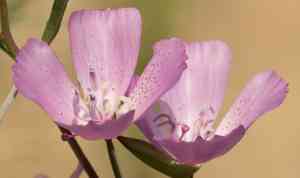
Dudley's clarkia (Clarkia dudleyana)
Also known as: Farewell to Spring, Santa Clara Red Ribbons
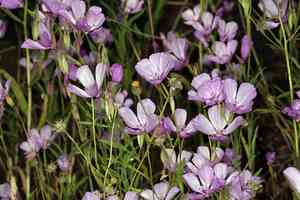
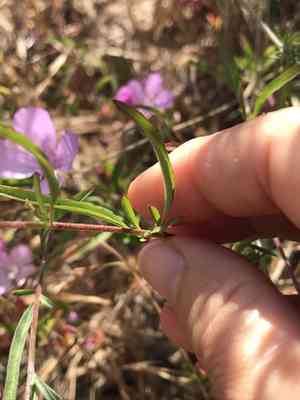
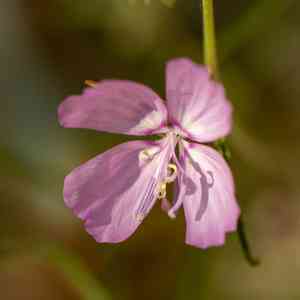
Dudley's clarkia showcases its charming pink to lavender flowers, often with a reddish base, amid the dry chaparral and woodlands of California. The elegant four-petaled blooms sit atop slender stems surrounded by narrow, lance-shaped leaves. This robust annual plant prospers in the well-drained soils typical of its native range, with a life cycle finely tuned to the seasonal rains and extended dry periods. Its ability to attract pollinators and regenerate after wildfires further supports its survival and proliferation in these challenging environments.
In This Article
Attributes of Dudley's clarkia
Lifespan
Annual
Plant Type
Herb
Plant Height
10-50 cm
Spread
N/A (Herbaceous plant)
Leaf Color
Green
Flower Size
2-4 cm
Flower Color
Pink, Lavender
Images of Dudley's clarkia
Quickly Identify Dudley's clarkia
1
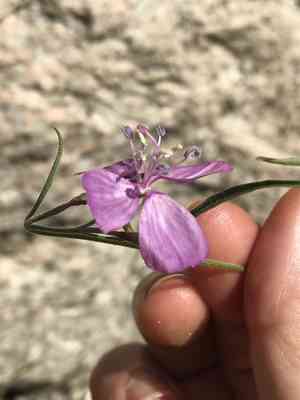
Clarkia dudleyana can be identified by its slender, erect stems and clusters of vividly colored flowers. The petals are usually pink or lavender, sometimes with a deeper hue towards the base, and each flower has four petals and four sepals.
Scientific Classification of Dudley's clarkia
Phylum
Vascular plants
Class
Dicotyledons
Order
Myrtales
Family
Evening primrose
Genus
Clarkia
Species
Dudley's clarkia
Planting and Growing of Dudley's clarkia
Care Difficulty
Moderate
Watering Schedule
Every 3 days
Sunlight Requirements
Full sun
Sunshine Duration
4-8 hours
Ideal Temperature
60-75℉
Soil Type
Potting Mix, Peat Mix
Soil pH
6.5-7.5
Fertilizer Type
Balanced
Pruning Season
Spring, Summer
Pruning Area
Branches, Leaves
Pruning Frequency
2 times a year
Repotting Season
Spring
Pot Type
Plastic, Ceramic
 How to Water Dudley's clarkia?
Ensure that the soil is evenly moist but not waterlogged. Water Clarkia dudleyana with about 250 milliliters each time, allowing it to penetrate deeply into the soil to encourage root growth. It's crucial to avoid letting the plant sit in standing water.
What are the symptoms of an underwatered Dudley's clarkia?
›
What should I do if my Dudley's clarkia is not getting enough water?
›
What are the symptoms of an overwatered Dudley's clarkia?
›
How to save an overwatered Dudley's clarkia?
›
 What Are the Sunlight Requirements for Dudley's clarkia?
Clarkia dudleyana ideally needs full to partial sun exposure. Full sun exposure significantly contributes to robust vegetative growth and vibrant flowers, defining its ornamental appeal.
What is the ideal light intensity for Clarkia dudleyana?
›
What solutions provide ideal lighting for Clarkia dudleyana?
›
What benefits arise from ideal lighting conditions for Clarkia dudleyana?
›
 What Is the Ideal Temperature Range for Dudley's clarkia?
Clarkia dudleyana thrives best in moderate climates where temperatures remain within the range of 60°F to 75°F. This range ensures optimal metabolic processes and healthy growth patterns.
 What Soil is Best for Dudley's clarkia?
Clarkia dudleyana thrives in well-draining soils, which prevent root rot and ensure healthy growth. Proper drainage allows excess water to escape, providing the roots with the right balance of moisture and oxygen. The plant benefits from a nutrient-rich soil that supports its vibrant blooms. Adding organic matter can enhance the soil's fertility, promoting robust flowering and foliage development. A soil pH between 6.5 and 7.5 is ideal for Clarkia dudleyana, as it allows optimal nutrient uptake. Maintaining this pH range helps the plant to access essential nutrients efficiently.
 How to Fertilize Dudley's clarkia?
For Clarkia dudleyana, it is crucial to apply fertilizers cautiously. Utilize a half-strength balanced liquid fertilizer for liquid applications or a slow-release fertilizer for solid usage. Avoid over-fertilizing, as this can harm the plant's roots. The recommended amount is typically about 1/2 teaspoon per gallon for liquid feeds every month, ensuring not to overwhelm the plant with nutrients.
 How to Prune Dudley's clarkia?
To prune Clarkia dudleyana, start by sterilizing your pruning shears to prevent disease transmission. Identify dead or wilting stems and cut them back to the base. Look for crossing branches and thin out excess growth to improve airflow. Trim back about one-third of the plant's height to promote denser foliage and more prolific flowering. Make clean cuts at a 45-degree angle just above a leaf node to encourage new, healthy growth. Deadheading is crucial for Clarkia dudleyana if you want continual flowering. As soon as blooms start to fade, cut them off at the base of the flower stalk. This prevents seed development, redirecting the plant's energy toward producing new flowers rather than seed heads. Regular deadheading keeps your plant looking tidy and thriving in its blooming phase longer.
More About Pruning Techniques→
 How to Propagate Dudley's clarkia plant?
1
Sow seeds in a seed tray filled with a high-quality seed-starting mix. Lightly cover seeds with soil and keep consistently moist. Maintain temperatures around 70°F for optimal germination.
2
Select healthy, disease-free stems for cuttings. Use a sharp knife to cut a 4-6 inch section just below a node. Remove leaves from the lower half of the cutting.
3
Dip the cut end of the cutting in rooting hormone and plant it in a pot with well-draining soil. Keep in a warm, humid environment with indirect sunlight to encourage root development.
 How to Repot Dudley's clarkia plant?
1
Clarkia dudleyana shows it's time to repot when you notice reduced flowering or visible roots emerging from the bottom drainage holes. These signs suggest that the plant has outgrown its current pot and needs more space to thrive. Ideally, repot in early spring or autumn to avoid stress during peak growth periods.
2
Choose a pot that's one size larger than the current one with ample drainage holes. A slightly larger pot ensures the roots have space to grow, enhancing nutrient and water absorption. Drainage holes are crucial to prevent water stagnation, which can lead to root rot.
3
Opt for a well-draining sandy mix, which provides excellent aeration and prevents roots from sitting in water. This type of soil mimics the plant's natural habitat and promotes healthy growth by allowing excess water to escape, reducing the risk of fungal infections.



