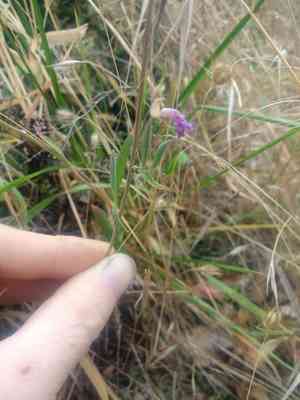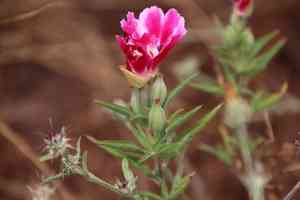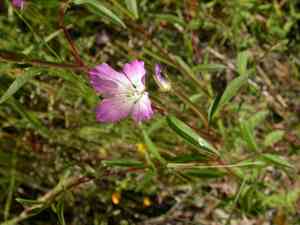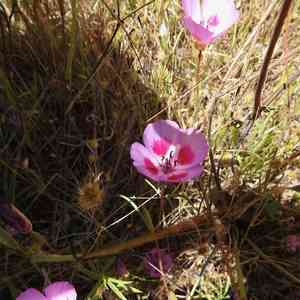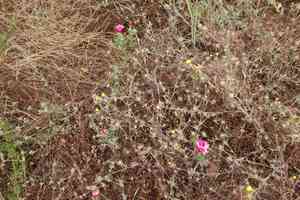
Farewell to spring(Clarkia amoena)

Farewell to spring (Clarkia amoena)

Also known as: Farewell to Spring, Godetia

The plant in question is likely the farewell to spring (*Clarkia amoena*). This species is indigenous to western North America and thrives in mountainous areas as well as coastal bluffs. It gets its name because it flowers from late spring until early summer. The plant produces a capsule-like fruit that dries up and eventually splits open to disperse its seeds.

Attributes of Farewell to spring

Lifespan
Annual, Biennial, Perennial
Plant Type
Herb
Plant Height
15 cm to 1 m
Spread
25 cm to 30 cm
Leaf Color
Green Gray
Flower Size
3 cm to 5 cm
Flower Color
Pink White Purple Red

ForwardPlant - Identify plants with a snap

Identify and diagnose plants, get toxicity alerts, and explore safety guides for all types of fungi.

Try for Free

Images of Farewell to spring

Farewell to spring(Clarkia amoena)

Quickly Identify Farewell to spring

1
Clarkia amoena can be identified by its cup-shaped, brightly colored flowers which come in hues of pink, purple, red, and white. The leaves are lance-shaped and arranged alternately along the stem.

Scientific Classification of Farewell to spring

Phylum
Vascular plants
Class
Dicotyledons
Order
Myrtales
Family
Evening primrose
Genus
Clarkia
Species
Farewell to spring

Planting and Growing of Farewell to spring

Care Difficulty
Easy
Watering Schedule
Every 4 days
Sunlight Requirements
Full sun
Sunshine Duration
4-8 hours
Ideal Temperature
60-70℉
Soil Type
Potting Mix, Peat Mix
Soil pH
6.5-7.5
Fertilizer Type
Balanced
Pruning Season
Spring, Summer
Pruning Area
Branches, Leaves
Pruning Frequency
2 times a year
Repotting Season
Spring
Pot Type
Plastic, Ceramic

water icon How to Water Farewell to spring?

Clarkia amoena, better known as the Godetia, thrives best with a careful balance of moisture. Aim to water about 250 milliliters each time. Water this plant until it evenly saturates the soil but ensures no pooling or standing water. The soil should feel moist to the touch but not soggy.
What are the symptoms of an underwatered Farewell to spring?
What should I do if my Farewell to spring is not getting enough water?
What are the symptoms of an overwatered Farewell to spring?
How to save an overwatered Farewell to spring?
More About Watering Techniques

sunlight icon What Are the Sunlight Requirements for Farewell to spring?

Sunlight Requirements: Full sun, Partial sun
Duration of light: 6-8 hours daily
Clarkia amoena favors environments with both full and partial sun. Adequate sunlight gives the plant energy for photosynthesis, leading to healthy growth and vibrant blooms.
How much sunlight does Clarkia amoena need?
What solutions are available for ideal lighting?
What are the benefits of ideal lighting for Clarkia amoena?
More About Sunlight Requirements Techniques

temperature icon What Is the Ideal Temperature Range for Farewell to spring?

Ideal Temperature: 60 ~ 70℉
The ideal temperature range for Clarkia amoena, also known as the 'Farewell to Spring,' is between 60°F and 70°F. This range allows the plant to thrive, maintaining optimal growth and vibrant flowering. Temperatures within this range support physiological processes like photosynthesis and nutrient uptake, ensuring the plant's health and vigor.

soil icon What Soil is Best for Farewell to spring?

Soil type: Sandy soil, Loam
Soil PH: 6.5 ~ 7.5
Clarkia amoena prefers well-drained soil to prevent root rot. Adequate drainage ensures that excess water can easily escape, fostering healthy growth and preventing soil-borne diseases. This plant thrives in moderately fertile soil. Providing balanced nutrients without over-fertilizing ensures robust blooms and promotes natural growth cycles. Clarkia amoena favors slightly acidic to neutral pH levels, specifically between 6.5 and 7.5. This range optimizes nutrient availability and uptake, leading to vibrant and healthy flowers. More About Soil

fertilize icon How to Fertilize Farewell to spring?

Fertilizer type: Balanced
Clarkia amoena benefits from a balanced fertilization approach that includes both liquid and slow-release fertilizers. Use fertilizers with an NPK ratio of 10-10-10 or 5-10-5. For liquid fertilizers, apply approximately 1 tablespoon per gallon of water. For slow-release fertilizers, sprinkle 2 teaspoons per container, depending on the plant size. More About Fertilizing Techniques

prune icon How to Prune Farewell to spring?

Pruning Time: Spring, Summer
To prune Clarkia amoena, start by removing spent flowers as soon as they fade. Use clean, sharp scissors or garden shears to cut back any dead or unwanted stems. Focus on creating a balanced shape by cutting back excessively long branches to encourage a bushier form. It's best to make cuts just above a leaf node to stimulate new growth. Pinch back the growing tips of young plants when they reach about 6 inches in height. Use your fingers or scissors to remove the top inch of the stem. This method encourages lateral stems to develop, leading to a fuller plant with more potential flowering sites. More About Pruning Techniques

propagate icon How to Propagate Farewell to spring plant?

Propagate Time: Spring,Late spring,Early spring
1
Begin by filling seed trays with potting soil and evenly distribute Clarkia amoena seeds over the surface. Cover them lightly with a thin layer of soil.
2
After sowing, water the seeds gently to moisten the soil without displacing the seeds. Regular watering is crucial but avoid waterlogging.
3
Once seedlings develop a few true leaves, they can be carefully transplanted to larger pots or garden beds, ensuring they have ample space to grow.
More About Propagating Techniques

repot icon How to Repot Farewell to spring plant?

Repotting frequency: Once every two years
1
Clarkia amoena should be repotted when its roots start crowding the container, which is often indicated by roots growing out of the drainage holes or circling at the pot's bottom. Early spring is the ideal time as it allows the plant to recover during the growing season.
2
Select a pot that is one size larger than the current one, with few inches more in diameter. Ensure the pot has sufficient drainage holes to prevent waterlogging, which can cause root rot. A pot with a wider base helps balance the plant as it grows taller.
3
Choose a well-draining potting mix with added organic matter. The ideal soil mix should contain equal parts of loamy soil, peat, and perlite to ensure sufficient aeration and moisture retention without becoming waterlogged.

ForwardPlant - Identify plants with a snap

Find the best spots for them to optimize their health, simply using your phone.

Try for Free

Toxicity of Farewell to spring

Is Farewell to spring toxic to humans?

Farewell to spring possesses moderate toxicity, typically inducing significant discomfort without causing enduring harm. Its leaves and stems harbor irritating compounds that can result in nausea, vomiting, and diarrhea when ingested. If symptoms persist or become severe, they may lead to serious complications, such as pronounced dehydration. It is important to store this plant away from children and individuals with cognitive impairments. Young children are particularly susceptible to experiencing more intense symptoms, which may ultimately result in dehydration.

Identify toxic plants for your safety

Learn which plants are harmful to you and your pets, and make informed choices for a safer home!

Try for Free
WARNING
The judgment on toxicity and danger is for reference only. We DO NOT GUARANTEE any accuracy of such judgment. Therefore, you SHALL NOT rely on such judgment. It is IMPORTANT TO SEEK PROFESSIONAL ADVICE in advance when necessary.
More About Toxic Techniques