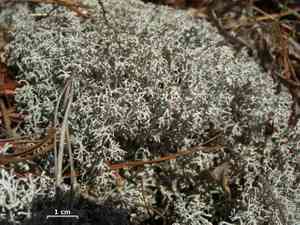
Reindeer lichen (Cladonia rangiferina)
Also known as: Grey reindeer lichen, Deer moss
Reindeer lichen, primarily from the genus *Cladonia*, stands out due to its intricate, bushy form that mimics tiny trees. It flourishes in cold, boreal, and arctic environments, forming widespread, dense mats on the ground. Typically thriving in open, sunlit areas with nutrient-poor soils, it is highly sensitive to air quality, making its presence an indicator of a clean environment.
In This Article
Attributes of Reindeer lichen
Lifespan
Perennial
Plant Height
4 inches
Spread
0.13 inches
Leaf Color
Gray-green
Flower Size
Not applicable (lichen does not produce flowers)
Flower Color
Not applicable (lichen does not produce flowers)
Images of Reindeer lichen
Quickly Identify Reindeer lichen
1
To identify Cladonia rangiferina, look for densely branched, bushy, and gray-green fronds that form mat-like structures on the ground. It tends to have a spongy texture and can absorb a significant amount of water.
Scientific Classification of Reindeer lichen
Phylum
Sac fungi
Class
Lecanoromycetes
Order
Lecanorales
Family
Cladoniaceae
Genus
Cup lichen
Species
Reindeer lichen
Planting and Growing of Reindeer lichen
Care Difficulty
Hard
Watering Schedule
Every 2 days
Sunlight Requirements
Partial sun
Sunshine Duration
6-10 hours
Ideal Temperature
32-59℉
Soil Type
Potting Mix, Peat Mix
Soil pH
3.5-5.5
Fertilizer Type
Balanced
Pruning Season
Spring, Summer
Pruning Area
Leaves, Branches
Pruning Frequency
2 times a year
Repotting Season
Spring
Pot Type
Plastic, Ceramic
 How to Water Reindeer lichen?
Cladonia rangiferina requires minimal watering due to its ability to thrive in dry conditions. Aim for about 50 ml per watering session, enough to make the substrate slightly moist without causing standing water. This ensures the lichen retains its necessary moisture without risking root rot.
What are the symptoms of an underwatered Reindeer lichen?
›
What should I do if my Reindeer lichen is not getting enough water?
›
What are the symptoms of an overwatered Reindeer lichen?
›
How to save an overwatered Reindeer lichen?
›
 What Are the Sunlight Requirements for Reindeer lichen?
Cladonia rangiferina ideally requires partial to full sun exposure for 4-6 hours daily. This lighting condition supports efficient photosynthesis, contributing to its thriving growth and robust health.
Optimal Sun Exposure
›
Solution for Ideal Light
›
Effect of Proper Lighting
›
 What Is the Ideal Temperature Range for Reindeer lichen?
Cladonia rangiferina, also known as reindeer lichen, thrives in cooler climates. The ideal temperature for this lichen ranges between 32°F and 59°F. This range supports optimal growth and allows the lichen to obtain essential moisture without excessive evaporation. Maintaining temperatures within this zone ensures that the metabolic processes of the lichen remain uninterrupted, promoting healthy development.
 What Soil is Best for Reindeer lichen?
Cladonia rangiferina thrives in environments where the soil retains adequate moisture without becoming waterlogged. This balance is essential to prevent root rot while ensuring the plant has enough hydration to sustain its growth. The plant prefers low-nutrient environments typically found in its natural habitats. Soils should not be rich in nitrogen or phosphorous; instead, they should mirror the mineral-deficient settings like forest floors. Being a lichen commonly found in acidic soils, Cladonia rangiferina benefits from a low pH environment, supporting its symbiotic relationship with algae and fungi for optimal growth.
 How to Fertilize Reindeer lichen?
Cladonia rangiferina, commonly known as reindeer lichen, generally does not require fertilization. In fact, it thrives in nutrient-poor environments. Fertilizing this lichen can often be detrimental rather than beneficial, as its natural habitat's low-nutrient state is what supports its growth best.
 How to Prune Reindeer lichen?
Take care not to over-prune Cladonia rangiferina, as excessive removal can impede growth and health. Be mindful of the lichen's environment; ensure it remains in a space that allows plenty of air circulation and indirect light after pruning. Avoid handling the lichen too much, as its structure can be easily damaged, impacting its overall health.
 How to Propagate Reindeer lichen plant?
1
Select a healthy patch of Cladonia rangiferina, focusing on a vigorously growing section with a robust structure for successful propagation.
2
Use your knife or scissors to gently separate a small section of the lichen, ensuring that its base and any root-like structures are intact.
3
Place the divided section onto suitable substrate such as a well-drained sandy or rocky soil, pressing it lightly to stabilize it.
 How to Repot Reindeer lichen plant?
1
Cladonia rangiferina typically signals the need for repotting when growth becomes stunted or the existing substrate appears compacted and depleted. Another indication is when you notice the mounting spot becoming overly congested, impeding optimal light exposure. The best time to repot is during spring, as it allows the plant to recover during the active growing season.
2
Select a shallow, broad container that provides ample surface area for growth, promoting healthy exposure to light and air circulation. This type of pot aids in emulating its natural rocky, open habitats, supporting the spread and health of the lichen without causing retained moisture issues.
3
A well-draining sandy soil mix is ideal for Cladonia rangiferina. Such soil mimics the plant's natural environment, preventing excess moisture retention which can lead to rot. It supports stable anchoring while providing excellent drain-off, necessary for its optimal growth.

