Rock rose (Cistus)(Cistus)

Rock rose (Cistus) (Cistus)

Also known as: Shrubby rock-rose

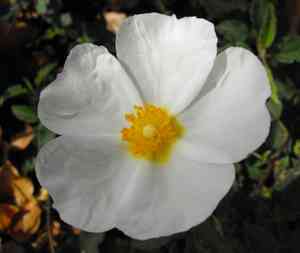
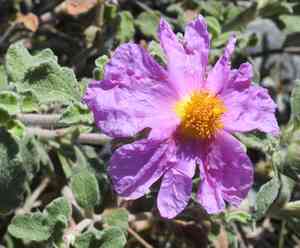
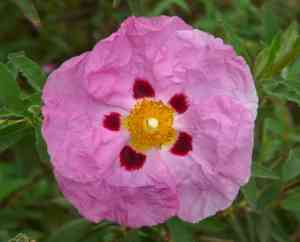
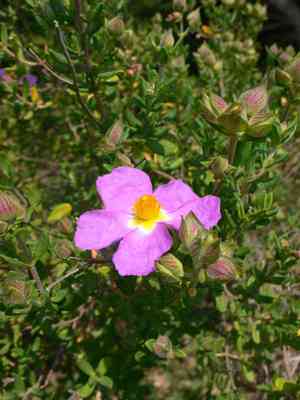
Rock roses are hardy perennial shrubs known for their vibrant, five-petaled flowers, which come in shades of white, pink, and yellow. Their leaves are typically evergreen, opposite, and have a somewhat rough texture. This genus includes around 20 different species.

**Habitat**:
- **Climate**: Best suited to Mediterranean climates, which feature hot, dry summers and mild, rainy winters.
- **Soil**: Prefer well-drained, rocky or sandy soils with low to moderate fertility.
- **Light**: Require full sun for optimal growth.

Rock roses are commonly found in dry, rocky terrains and coastal regions throughout the Mediterranean, where they play a crucial role in soil stabilization and providing nectar for pollinators.

Attributes of Rock rose (Cistus)

Lifespan
Perennial
Plant Height
80 cm
Spread
1.5 m
Leaf Color
Green, sometimes with a silver or grayish hue
Flower Size
5 - 10 centimeters
Flower Color
White, pink, sometimes with a yellow center

ForwardPlant - Identify plants with a snap

Identify and diagnose plants, get toxicity alerts, and explore safety guides for all types of fungi.

Try for Free

Images of Rock rose (Cistus)

Rock rose (Cistus)(Cistus)

Quickly Identify Rock rose (Cistus)

1
Cistus plants can be identified by their crinkly, papery flowers, which are usually white or pink, and their aromatic, evergreen leaves. The flowers often have a yellow center.

Scientific Classification of Rock rose (Cistus)

Phylum
Tracheophyta
Class
Magnoliopsida
Order
Malvales
Family
Cistaceae
Genus
Cistus

Planting and Growing of Rock rose (Cistus)

Care Difficulty
Moderate
Watering Schedule
Every 2 days
Sunlight Requirements
Full sun
Sunshine Duration
4-8 hours
Ideal Temperature
59-77℉
Soil Type
Potting Mix, Peat Mix
Soil pH
6.5-8
Fertilizer Type
Balanced
Pruning Season
Spring, Summer
Pruning Area
Branches, Leaves
Pruning Frequency
2 times a year
Repotting Season
Spring
Pot Type
Ceramic, Plastic

water icon How to Water Rock rose (Cistus)?

Cistus plants thrive in well-draining soil and prefer moderate watering. Water deeply but infrequently, ensuring the soil is completely soaked and then allowed to dry out between waterings to mimic their natural Mediterranean habitat.
What are the symptoms of an underwatered Rock rose (Cistus)?
What should I do if my Rock rose (Cistus) is not getting enough water?
What are the symptoms of an overwatered Rock rose (Cistus)?
How to save an overwatered Rock rose (Cistus)?

sunlight icon What Are the Sunlight Requirements for Rock rose (Cistus)?

Sunlight Requirements: Full sun, Partial sun
Duration of light: 6-8 hours
Cistus benefits from full to partial sun, ideally enjoying 6-8 hours of sunshine. This enriches its metabolic processes, leading to vigorous growth and prolific blooming.
What is the best light condition for Cistus?
How can I ensure my Cistus gets ideal sunlight?
What benefits does optimal sunlight provide for Cistus?

temperature icon What Is the Ideal Temperature Range for Rock rose (Cistus)?

Ideal Temperature: 59 ~ 77℉
Cistus plants ideally thrive in temperatures ranging from 59°F to 77°F. This temperature range is typically found in Mediterranean climates, where these hardy plants are native. Maintaining this temperature range ensures optimal growth, blooming, and longevity of Cistus.

soil icon What Soil is Best for Rock rose (Cistus)?

Soil type: Sandy soil, Loam, Calcareous soil, Sandy loam
Soil PH: 6.5 ~ 8
Cistus thrives in well-draining soils that prevent waterlogging. The root system benefits from the rapid drainage as it reduces root rot risks, essential for their optimal growth. Mulching can enhance this property by improving moisture regulation. While Cistus can adapt to low-fertility soils, moderately fertile soil enhances flowering and growth. Providing a balanced organic matter content promotes healthy foliage and abundant blossoms, enhancing the aesthetic and ecological value of the plant. Cistus generally tolerates low organic matter as it mimics its native Mediterranean conditions. Low organic content aids in mimicking arid conditions, which is beneficial for the plant's structural integrity and resistance to certain soil-borne diseases.

fertilize icon How to Fertilize Rock rose (Cistus)?

Fertilizer type: Balanced
Cistus, commonly known as rockrose, prefers lean soil conditions, which means this plant doesn't require heavy fertilization. Use a light hand when applying fertilizer; typically, a quarter to half the recommended dose on the package is sufficient. Heavy fertilizer use can actually harm the plant.

prune icon How to Prune Rock rose (Cistus)?

Pruning Time: Spring, Summer
Once your Cistus has finished its blooming period, you can snip off the spent flowers. This not only tidies up the plant but also channels its energy into producing new growth and more flowers in the coming season. To maintain a pleasing shape, trim back any overly long shoots to just above a leaf node. This encourages new, bushier growth, making the plant more compact and attractive.

propagate icon How to Propagate Rock rose (Cistus) plant?

Propagate Time: Spring, Late spring, Early spring
1
To propagate Cistus using cuttings, choose healthy stems and cut them to about 4-6 inches long. Remove the leaves from the lower half and dip the cut end in rooting hormone to stimulate root growth.
2
If propagating by seed, sow fresh Cistus seeds in seed trays with a mixture of perlite and peat. Provide consistent moisture and indirect sunlight, as this facilitates germination which can take several weeks.
3
For layering, select low-growing branches that can be bent to the soil. Create a small wound on the stem, cover it with soil, and secure it with a rock or pin. Roots will develop in 6-8 weeks.

repot icon How to Repot Rock rose (Cistus) plant?

Repotting frequency: Every 2-3 years
1
Repotting Cistus is ideal when you notice roots emerging from the drainage holes or if growth has slowed significantly. Usually, this happens every 2-3 years. Spring and early summer are perfect for repotting as the plant will have optimum growing conditions to recover and thrive.
2
Select a pot that is one size larger than the current container. Ensure it has good drainage to prevent water logging, which Cistus is particularly sensitive to. A terracotta pot is often a great choice as it allows breathability and encourages faster evaporation of excess water.
3
Opt for a well-draining sandy mix to mimic its natural Mediterranean habitat. This soil type allows Cistus roots to receive necessary oxygen and reduces the risk of root rot. A mix with a bit of gravel boosts drainage further, preventing any water from pooling around the roots.

ForwardPlant - Identify plants with a snap

Find the best spots for them to optimize their health, simply using your phone.

Try for Free