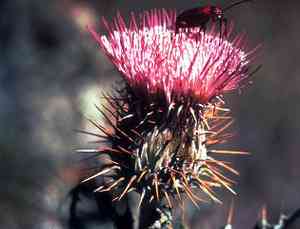
Yellow-spine thistle (Cirsium ochrocentrum)
Also known as: Yellowspine Thistle
The yellow-spine thistle (Cirsium ochrocentrum) is a notable perennial that flourishes in dry environments. Typically growing up to 1.5 meters (about 5 feet) tall, it features deeply lobed, spiny leaves along its stems and is crowned with striking purple to pinkish flower heads. Its formidable spines and drought tolerance allow it to thrive in its native habitats, which include grasslands, prairies, and shrublands across the western and central United States. This hardy plant prefers well-drained soils, making it a resilient fixture in arid and semi-arid regions.
In This Article
Attributes of Yellow-spine thistle
Lifespan
Biennial
Plant Type
Herb
Plant Height
2 to 4 feet
Spread
1 to 2 feet
Leaf Color
Green
Flower Size
1 to 2 inches
Flower Color
Yellow to pale yellow
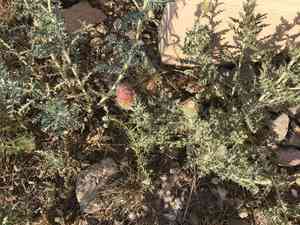
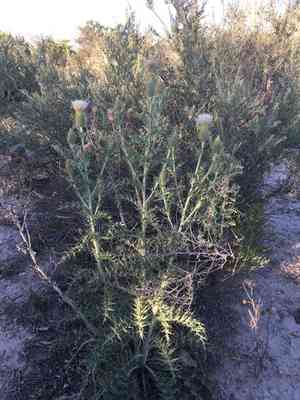
Images of Yellow-spine thistle
Quickly Identify Yellow-spine thistle
1
Look for its spiny leaves and yellow to pale yellow flower heads. It typically grows in grasslands and open environments.
Scientific Classification of Yellow-spine thistle
Phylum
Vascular plants
Class
Dicotyledons
Order
Asterales
Family
Daisy
Genus
Thistles
Species
Yellow-spine thistle
Planting and Growing of Yellow-spine thistle
Care Difficulty
Moderate
Watering Schedule
Every day
Sunlight Requirements
Full sun
Sunshine Duration
6-10 hours
Ideal Temperature
65-75℉
Soil Type
Potting Mix, Peat Mix
Soil pH
6.5-7.5
Fertilizer Type
Balanced
Pruning Season
Spring, Summer
Pruning Area
Branches, Leaves
Pruning Frequency
2 times a year
Repotting Season
Spring
Pot Type
Plastic, Terracotta
 How to Water Yellow-spine thistle?
Cirsium ochrocentrum, also known as yellowspine thistle, requires moderate watering. Approximately 250 ml per session ensures its roots receive adequate moisture without drowning them. It's vital to balance hydration to match its semi-arid native habitats, ensuring the soil is moistened evenly.
What are the symptoms of an underwatered Yellow-spine thistle?
›
What should I do if my Yellow-spine thistle is not getting enough water?
›
What are the symptoms of an overwatered Yellow-spine thistle?
›
How to save an overwatered Yellow-spine thistle?
›
 What Are the Sunlight Requirements for Yellow-spine thistle?
Cirsium ochrocentrum benefits from full sun exposure, offering vibrant blooms and strong structural development. Proper light helps in enriching its foliage and enhancing its flowering potential.
What is the ideal light intensity for Cirsium ochrocentrum?
›
What solutions are there to achieve ideal lighting for Cirsium ochrocentrum?
›
What benefits does Cirsium ochrocentrum gain from ideal lighting?
›
 What Is the Ideal Temperature Range for Yellow-spine thistle?
Cirsium ochrocentrum, commonly known as the Yellowspine thistle, thrives best between 65°F and 75°F. This range ensures optimal growth and flowering, allowing for robust development and resilience against common pests and diseases.
 What Soil is Best for Yellow-spine thistle?
Cirsium ochrocentrum thrives in well-drained soil, ensuring that water does not accumulate and cause root rot. Providing a porous soil composition helps the plant flourish. While not overly demanding, Cirsium ochrocentrum benefits from soil enriched with organic material, which fosters healthy growth and vibrant foliage. This plant can adapt to slight variations in soil texture, but a sandy loam composition generally provides the best support for its root structure.
 How to Fertilize Yellow-spine thistle?
Cirsium ochrocentrum, commonly known as yellowspine thistle, thrives best with moderate fertilizer amounts. Use a balanced liquid fertilizer diluted to half strength, around 1 teaspoon per gallon of water. For slow-release fertilizer, apply sparingly, approximately 1-2 tablespoons per plant, ensuring it's evenly distributed around the root zone to avoid concentration in one spot.
 How to Prune Yellow-spine thistle?
Use sharp and clean pruning shears to ensure smooth cuts on Cirsium ochrocentrum. This minimizes the risk of disease and ensures that the plant heals quickly. Begin by cutting away any dead or damaged stems. This prevents the spread of disease and allows the plant to focus its energy on healthy growth. When trimming to maintain a desirable shape, focus on outer growth and cut just above a leaf node. This encourages a fuller and more aesthetically pleasing appearance.
More About Pruning Techniques→
 How to Propagate Yellow-spine thistle plant?
1
Start by filling the seed tray with a well-draining seed-starting mix. Ensure that the mix is evenly spread and lightly pressed down to eliminate air pockets. This provides a stable environment for seed placement.
2
Sow the Cirsium ochrocentrum seeds thinly and evenly over the prepared seed tray. Cover them lightly with a thin layer of the seed-starting mix. This helps maintain adequate moisture and temperature levels for germination.
3
Water the tray carefully using a watering can with a fine rose to ensure even moisture. Keep the seed tray in a warm location with indirect light until germination. Consistent moisture is key during the germination phase.
 How to Repot Yellow-spine thistle plant?
1
You should consider repotting Cirsium ochrocentrum when you notice it's outgrowing its current pot or the soil is no longer draining well. Typically, the best time to do this is during the early spring or autumn when the plant is not actively flowering. This ensures minimal stress and allows the plant to establish itself in its new environment before the next growth phase.
2
When choosing a pot for Cirsium ochrocentrum, opt for one that is just slightly larger than the current pot. This prevents waterlogging by ensuring adequate drainage and provides enough room for root expansion. A pot made of breathable material like terracotta is ideal as it allows excess moisture to evaporate, maintaining a balanced root environment.
3
Select a soil that is well-draining and sandy to mimic the plant's natural habitat. A sandy soil mix will facilitate excellent drainage, preventing root rot and ensuring that the plant does not sit in excess moisture. This type of soil is also typically low in nutrients, which suits the needs of Cirsium ochrocentrum perfectly, preventing excessive foliage growth at the expense of blooms.
Learn More About Yellow-spine thistle Diseases
Anthracnose
Bacterial Leaf Spot
Bacterial Wilt
Chemical Injury
Crown Gall
Cyst Nematode
Damping-off
Downy Mildew
Drought Stress
Fusarium Wilt
Gray Mold
Leaf Spot
Mosaic
Nutrient Deficiency
Nutrient Toxicity
Powdery Mildew
Root Rot
Root-knot Nematode
Rusts
Sooty Mold
Spider Mites
Temperature Stress
Thrips Damage
White Mold


