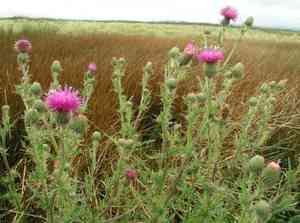
Suisun thistle (Cirsium hydrophilum)
Also known as: Suisun Thistle
Suisun thistle is a perennial herb preferring wet habitats, such as riverbanks and marshes. It features spiny, lobed leaves and distinctive, fluffy purple flower heads suited for pollination by insects. This thistle adapts to saturated soils with its deep root system, which also enables it to survive seasonal flooding.
In This Article
Attributes of Suisun thistle
Lifespan
Perennial
Plant Type
Herb
Plant Height
50 to 150 cm
Spread
20 to 60 cm
Leaf Color
Green
Flower Size
2 to 4 cm
Flower Color
Purple, Pink
Images of Suisun thistle
Quickly Identify Suisun thistle
1
Cirsium hydrophilum can be identified by its spiny leaves and stems, which are typically covered in fine hairs. The plant produces a purple or pink flower head with a distinct spiny base. It grows in wet, marshy areas, which can aid in identification.
Scientific Classification of Suisun thistle
Phylum
Vascular plants
Class
Dicotyledons
Order
Asterales
Family
Daisy
Genus
Thistles
Species
Suisun thistle
Planting and Growing of Suisun thistle
Care Difficulty
Moderate
Watering Schedule
Every 3 days
Sunlight Requirements
Full sun
Sunshine Duration
10-12 hours
Ideal Temperature
60-75℉
Soil Type
Potting Mix, Peat Mix
Soil pH
6.5-7.5
Fertilizer Type
Balanced
Pruning Season
Spring, Summer
Pruning Area
Branches, Leaves
Pruning Frequency
2 times a year
Repotting Season
Spring
Pot Type
Plastic, Ceramic
 How to Water Suisun thistle?
For Cirsium hydrophilum, water around 1000 milliliters or until the soil feels moist but not oversaturated. The plant prefers a steady supply of moisture to thrive, as it is typically found in wetland environments. Ensure that the water reaches the root zone but drains well to prevent waterlogging.
What are the symptoms of an underwatered Suisun thistle?
›
What should I do if my Suisun thistle is not getting enough water?
›
What are the symptoms of an overwatered Suisun thistle?
›
How to save an overwatered Suisun thistle?
›
 What Are the Sunlight Requirements for Suisun thistle?
Cirsium hydrophilum thrives best in conditions providing full sun to partial sun. This exposure encourages robust growth and maximizes blooming potential, creating a vibrant display.
What type of lighting does it prefer?
›
How can you ensure it gets ideal lighting?
›
What benefits come from optimal lighting conditions?
›
 What Is the Ideal Temperature Range for Suisun thistle?
Cirsium hydrophilum thrives best at temperatures between 60°F and 75°F. This range provides optimal conditions for photosynthesis and overall growth. Ensuring the temperatures remain within this range can promote healthy foliage and flower development.
 What Soil is Best for Suisun thistle?
Cirsium hydrophilum thrives in well-drained soils, preventing waterlogging that can cause root rot. This condition is favorable as it ensures that the roots receive enough air and nutrients for robust growth. Despite needing good drainage, Cirsium hydrophilum requires soil that retains moisture well. This balance allows the plant to access water in dry spells without drowning the roots, supporting lush growth and longevity. The plant favors soils rich in nutrients, which supply essential minerals and organic matter essential for vigorous growth. Fertile soil promotes a more vibrant leaf and blossom color, enhancing the plant's aesthetic appeal.
 How to Fertilize Suisun thistle?
Cirsium hydrophilum, commonly known as marsh thistle, thrives in nutrient-rich environments. When fertilizing, one should aim for a balanced approach. Liquid fertilizers can be applied at a concentration of 1:4 (1 part fertilizer to 4 parts water), ensuring the soil is moist but not waterlogged. For slow-release fertilizers, apply 50 grams per square meter, distributing the granules evenly across the surface.
 How to Prune Suisun thistle?
Start by examining the plant for dead or diseased stems, identifiable by their discolored appearance. Use clean, sharp pruning shears to cut these stems back to the base, ensuring no stubs are left. Next, selectively thin out any overcrowded areas by removing some stems from the base which facilitates better air circulation and light penetration. Finally, trim back any excessively long or unruly growth to maintain a balanced shape, cutting stems at a 45-degree angle just above a leaf node.
More About Pruning Techniques→
 How to Propagate Suisun thistle plant?
1
Begin by filling seed trays with moist, well-drained potting mix. Sow the seeds evenly across the surface and cover them lightly with soil. Place the trays in a warm, bright location, ensuring they are kept moist but not waterlogged.
2
Gently dig up the plant and shake off excess soil to expose the root system. Use a sharp knife or shears to divide the root clump into sections, ensuring each new section has roots and some foliage attached. Immediately transplant the divisions into prepared soil.
3
Select healthy, mature roots and cut them into segments approximately 2-3 inches long. Bury the cuttings horizontally just below the soil surface in pots with moist potting mix, and maintain a warm temperature to encourage growth.
 How to Repot Suisun thistle plant?
1
Cirsium hydrophilum shows its need for repotting when root systems crowd through the drainage holes, or when growth seems stunted despite optimal care. Ideally, repot during active growth seasons like Spring or early Summer, allowing roots to establish before dormancy.
2
Select a pot with good drainage, slightly larger than the current one. A pot with drainage holes prevents waterlogging, which could otherwise lead to root rot. Choose materials like terracotta for breathability and stability, ensuring healthy root development.
3
Opt for a rich, well-draining soil mix. Incorporate organic matter to ensure nutrient-rich content. The soil should retain some moisture while allowing excess water to escape, balancing hydration with air circulation for root health.
Learn More About Suisun thistle Diseases
Anthracnose
Bacterial Leaf Spot
Bacterial Wilt
Crown Gall
Cyst Nematode
Damping-off
Downy Mildew
Drought Stress
Fusarium Wilt
Gray Mold
Leaf Curl
Leaf Spot
Mosaic
Nutrient Deficiency
Nutrient Toxicity
Powdery Mildew
Root Rot
Root-knot Nematode
Rusts
Sooty Mold
Spider Mites
Temperature Stress
Thrips Damage
White Mold



