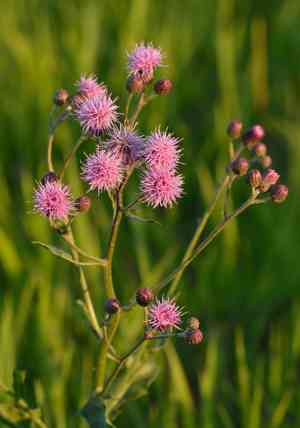
Creeping thistle (Cirsium arvense)
Also known as: Field thistle
Creeping thistle (Cirsium arvense) is a highly invasive weed that propagates through horizontal underground roots, sometimes extending over 5 meters. If not managed, it can create serious agricultural challenges. While its seeds provide food for various birds and pest insects, creeping thistle is broadly regarded as a noxious weed, even within its native regions.
In This Article
Attributes of Creeping thistle
Lifespan
Perennial
Plant Type
Herb
Plant Height
1.5 m
Spread
1 m
Leaf Color
Green
Flower Size
1 cm to 2 cm
Flower Color
Purple Pink
Images of Creeping thistle
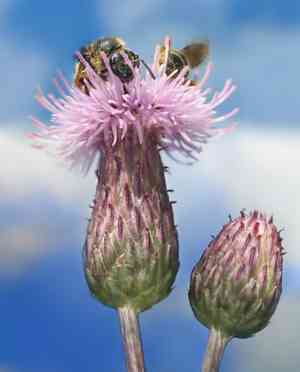
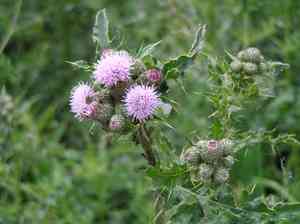
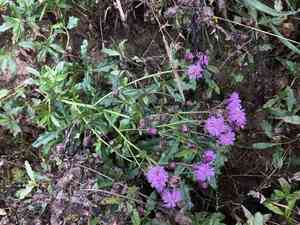
Quickly Identify Creeping thistle
1
Upright growth reaching 6 feet (1.8 meters), with grooved stems and spiny leaves.
2
Purple-pink flowers on female plants emitting fragrance, surrounded by tomentose bracts.
3
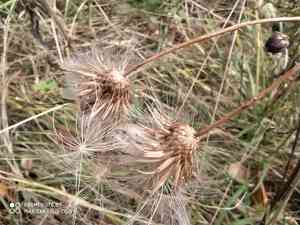
Diminutive dry achenes with feathery white to light brown pappus for wind dispersal.
4
Dark green, deeply lobed leaves measuring 2-6 inches (5-15 cm); tomentose underside, very prickly.
5
Slender stem with distinct grooves, 0.1-0.2 inches (0.25-0.5 cm) in diameter; occasional fine hairs.
Scientific Classification of Creeping thistle
Phylum
Vascular plants
Class
Dicotyledons
Order
Asters bellflowers fanflowers and allies
Family
Daisy
Genus
Thistles
Species
Creeping thistle
Planting and Growing of Creeping thistle
Care Difficulty
Hard
Watering Schedule
Every 3 days
Sunlight Requirements
Full sun
Sunshine Duration
6-8 hours
Ideal Temperature
60-77℉
Soil Type
Potting Mix, Peat Mix
Soil pH
5.8-7.5
Fertilizer Type
Balanced
Pruning Season
Spring, Summer
Pruning Area
Branches, Leaves
Pruning Frequency
2 times a year
Repotting Season
Spring
Pot Type
Plastic, Ceramic
 How to Water Creeping thistle?
Cirsium arvense, commonly known as creeping thistle, thrives on moderate watering. The key principle is to ensure that the soil is consistently moist without becoming waterlogged. Each watering session should provide approximately 250 milliliters, ensuring that the moisture reaches a depth of several inches but does not leave standing water.
What are the symptoms of an underwatered Creeping thistle?
›
What should I do if my Creeping thistle is not getting enough water?
›
What are the symptoms of an overwatered Creeping thistle?
›
How to save an overwatered Creeping thistle?
›
 What Are the Sunlight Requirements for Creeping thistle?
Cirsium arvense thrives in full to partial sun, benefiting from daily sun exposure of 6-8 hours. Adequate light supports robust growth and an optimal flowering phase.
Necessary Sunlight Hours
›
Solutions to Achieve Ideal Lighting
›
Benefits of Ideal Lighting
›
 What Is the Ideal Temperature Range for Creeping thistle?
The ideal temperature range for growing Cirsium arvense, commonly known as Canada thistle, is between 60°F and 77°F. These temperatures provide a conducive environment for optimal growth and development, ensuring that the plant's physiological processes function efficiently. In this range, photosynthesis, respiration, and nutrient uptake occur at the highest rates, leading to healthy foliage and vibrant blooms.
 What Soil is Best for Creeping thistle?
Cirsium arvense thrives in nutrient-rich soils, which provide essential minerals and nutrients that support robust growth. This requirement ensures efficient photosynthesis, leading to vigorous foliage and flowering. This plant demands well-drained soil to prevent waterlogging. Adequate drainage ensures that roots receive necessary oxygen, minimizing the risk of root rot and promoting healthy root development. Soils with good moisture-retentive properties help maintain consistent hydration levels for Cirsium arvense. Regular moisture access supports steady growth, enhances overall vigor, and fortifies the plant against drought stress.
 How to Fertilize Creeping thistle?
For Cirsium arvense, the amount of fertilizer should be carefully balanced to promote robust growth without promoting excessive weed-like behavior. A typical approach is to apply a 10-10-10 NPK fertilizer at a rate of 0.5 pounds per 100 square feet. Adjust based on soil conditions and plant response.
 How to Prune Creeping thistle?
Start by identifying the new shoots and buds on the Cirsium arvense. These parts tend to grow rapidly and may become too dense, overshadowing other plants. Prune these parts to manage density and encourage healthier growth patterns. Always use clean and sharp pruning tools to make clean cuts. This prevents infection and ensures smoother, faster healing of the plant tissue. Sterilize your tools before pruning to avoid spreading diseases. Prioritize removing parts of the plant that look damaged or diseased. This not only improves the plant's appearance but also its overall health, as it will focus its energy on producing new, healthy growth rather than trying to repair dead or infected tissue.
 How to Propagate Creeping thistle plant?
1
Collect mature seeds from the Cirsium arvense by identifying seed heads that are dry and fluffy. Clean the seeds by removing any debris or chaff before sowing them in a seed tray filled with potting mix.
2
To propagate using root cuttings, select healthy plants and carefully dig around the roots to extract a section without causing harm to the plant. Cut sections of the roots, each about 2-3 inches long, for planting.
3
For seeds, sow them shallowly in trays. For root cuttings, plant them vertically in pots with their growing ends upwards. Water thoroughly after planting to ensure the medium is moist but not waterlogged.
 How to Repot Creeping thistle plant?
1
Cirsium arvense, commonly known as the creeping thistle, should be repotted when you notice stunted growth, root-bound issues, or excessively dry soil. These are signals indicating that the roots require more space to obtain nutrients efficiently. Spring or autumn are ideal seasons for repotting since the plant can recover well with moderate temperatures.
2
When selecting a pot for Cirsium arvense, choose a container that is one or two sizes larger than the current one, with ample drainage holes. A pot like this encourages the free flow of excess water, preventing root rot and ensuring healthy growth. Clay or ceramic pots are excellent choices for their breathability.
3
Opt for a well-draining loamy soil mix, enriched with organic matter, to offer optimal aeration and nutrient-rich medium for Cirsium arvense. Such soil allows for proper root development, minimizes waterlogging, and closely mimics the plant's natural habitat, promoting robust growth and resilience.
Learn More About Creeping thistle Diseases
Anthracnose
Bacterial Leaf Spot
Bacterial Soft Rot
Bacterial Wilt
Chemical Injury
Crown Gall
Cyst Nematode
Damping-off
Downy Mildew
Drought Stress
Fusarium Wilt
Gray Mold
Leaf Spot
Mosaic
Nutrient Deficiency
Nutrient Toxicity
Powdery Mildew
Root Rot
Root-knot Nematode
Rusts
Sooty Mold
Spider Mites
Temperature Stress
Thrips Damage
White Mold



