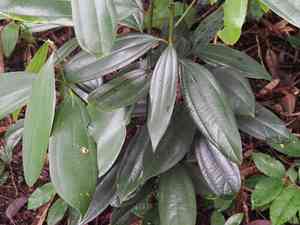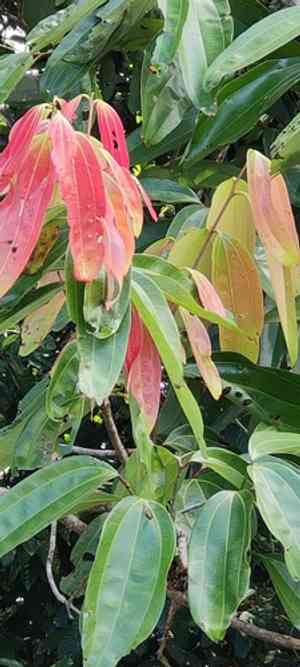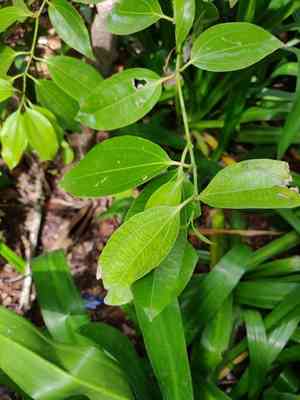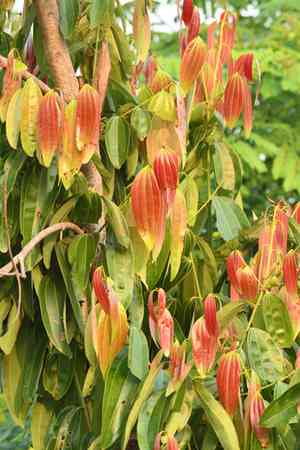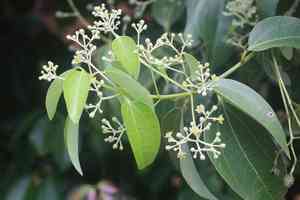
True cinnamon tree(Cinnamomum verum)

True cinnamon tree (Cinnamomum verum)

Also known as: Cinnamon, Ceylon cinnamon

The true cinnamon tree (Cinnamomum verum), also known as Ceylon cinnamon, is an evergreen tree that typically reaches heights of 10-15 meters. Originating from Sri Lanka and southern India, this tree produces high-quality cinnamon, highly valued in culinary arts. The tree's small, purple fruits are consumed by birds, aiding in seed dispersal across various regions. It flowers between spring and summer, subsequently producing single-seeded fruits. In some non-native locations, it has exhibited invasive tendencies.

Attributes of True cinnamon tree

Lifespan
Perennial
Plant Type
Tree
Plant Height
10 m to 15 m
Spread
4.5 m to 9 m
Leaf Color
Green Bronze
Flower Size
3 mm to 6 mm
Flower Color
White Yellow Green

PlantJoy - Identify plants with a snap

Identify and diagnose plants, get toxicity alerts, and explore safety guides for all types of fungi.

Try for Free

Images of True cinnamon tree

True cinnamon tree(Cinnamomum verum)

Quickly Identify True cinnamon tree

1
Distinct white flowers in panicle inflorescences with unpleasant scent.
2
Ovoid drupe fruit transitioning from green to dark purple with cinnamon aroma.
3
Large lanceolate leaves with 3 parallel yellow veins, vibrant green color.
4
Slender aromatic stem with pale brown color, inner reddish-brown bark.
5
Robust trunk with valuable aromatic bark, peeling in layers, up to 30 feet tall.

Scientific Classification of True cinnamon tree

Phylum
Vascular plants
Class
Dicotyledons
Order
Laurales
Family
Laurel
Genus
Cinnamons
Species
True cinnamon tree

Planting and Growing of True cinnamon tree

Care Difficulty
Moderate
Watering Schedule
Every 4 days
Sunlight Requirements
Partial sun
Sunshine Duration
4-8 hours
Ideal Temperature
70-90℉
Soil Type
Potting Mix, Peat Mix
Soil pH
6.5-7.5
Fertilizer Type
Balanced
Pruning Season
Spring, Summer
Pruning Area
Branches, Leaves
Pruning Frequency
2 times a year
Repotting Season
Spring
Pot Type
Plastic, Ceramic

water icon How to Water True cinnamon tree?

For Cinnamomum verum, each watering session should be thorough but not excessive, with around 200 milliliters being ideal. Ensure the soil is moist but not soggy, allowing water to seep into deeper soil layers to reach the roots effectively.
What are the symptoms of an underwatered True cinnamon tree?
What should I do if my True cinnamon tree is not getting enough water?
What are the symptoms of an overwatered True cinnamon tree?
How to save an overwatered True cinnamon tree?
More About Watering Techniques

sunlight icon What Are the Sunlight Requirements for True cinnamon tree?

Sunlight Requirements: Partial sun
Duration of light: 4 to 6 hours
Cinnamomum verum thrives in partial sun conditions, preferring 4 to 6 hours of sunlight per day. Ideal lighting promotes vigorous growth, stronger stems, and robust leaf coloration, enhancing its overall vitality.
How much sunlight does Cinnamomum verum need?
What are the solutions to achieve ideal light conditions?
What are the benefits of ideal light conditions?
More About Sunlight Requirements Techniques

temperature icon What Is the Ideal Temperature Range for True cinnamon tree?

Ideal Temperature: 70 ~ 90℉
Cinnamomum verum thrives best in temperatures ranging from 70°F to 90°F. This range provides the plant with optimal conditions for metabolic activities, ensuring vigorous growth and better resistance against diseases. Maintaining this temperature not only supports photosynthesis but also aids in healthy leaf development.

soil icon What Soil is Best for True cinnamon tree?

Soil type: Loam, Sandy loam, Acidic soil
Soil PH: 6.5 ~ 7.5
Cinnamomum verum thrives in well-draining soil that prevents water logging, which can lead to root rot. This condition ensures that oxygen reaches the roots, promoting healthy growth and resistance against diseases. This plant requires a nutrient-rich medium that includes organic matter to support its robust growth. High nutrient levels provide essential minerals, enabling better foliage development and stronger aromatic properties. The soil should be able to retain moisture without becoming soggy. This balance ensures the plant remains hydrated, especially in dry periods, while preventing over-saturation that could harm the root system. More About Soil

fertilize icon How to Fertilize True cinnamon tree?

Fertilizer type: Balanced
Cinnamomum verum, commonly known as true cinnamon, benefits from moderate fertilization. Use a balanced liquid fertilizer diluted to half the recommended strength. For granular fertilizers, apply 1-2 tablespoons per plant, depending on its size and age.

prune icon How to Prune True cinnamon tree?

Pruning Time: Spring, Summer, Autumn
Start by identifying any dead or unhealthy branches, as well as any that are overgrown and crossing each other. These branches should be your primary targets for pruning to allow better airflow and light penetration into the plant. Trim the plant back by one-third to ensure it doesn't become too bushy. Cut 1/4 inch above a bud that faces outward to promote a natural, open shape. Always make cuts at a 45-degree angle to encourage proper healing. After pruning, disinfect your tools with a mixture of water and bleach. This prevents the spread of any diseases or pests to other plants. Proper cleaning of tools extends their lifespan and ensures plant health. More About Pruning Techniques

propagate icon How to Propagate True cinnamon tree plant?

Propagate Time: Spring,Late spring,Summer
1
When propagating via seeds, it's imperative to soak the seeds in warm water for 24 hours before planting. This method helps in breaking the seed dormancy and promotes successful germination.
2
For cutting propagation, choose healthy stems and cut them at a 45-degree angle. Remove any leaves from the lower half of the cutting to focus the plant’s energy on root formation.
3
When using layering, select a healthy lower branch and bend it to the soil. Cover the midsection with soil and secure it. Roots should form at the contact point within several weeks.
More About Propagating Techniques

repot icon How to Repot True cinnamon tree plant?

Repotting frequency: Every 2-3 years
1
Cinnamomum verum, commonly known as true cinnamon, needs repotting when roots outgrow the current pot, visible through drainage holes, or when growth appears stunted. Spring or early summer is ideal as the plant actively grows, allowing it to recover quickly from repotting stress.
2
Select a pot slightly larger than the current one, ideally 1-2 inches wider in diameter. It ensures ample room for root expansion without causing water retention issues that can lead to root rot. Ensure the pot has drainage holes to facilitate excess water outflow.
3
Opt for well-draining sandy loam rich in organic matter. This type of soil supports proper root aeration and allows excess water to drain away, preventing waterlogged conditions detrimental to Cinnamomum verum's roots, thus ensuring healthy growth and establishment post-repotting.

PlantJoy - Identify plants with a snap

Find the best spots for them to optimize their health, simply using your phone.

Try for Free

Toxicity of True cinnamon tree

Is True cinnamon tree toxic to humans?

The true cinnamon tree exhibits a mild toxicity level for humans, mainly through ingestion. The entire plant contains coumarin, which, when ingested in large amounts, may result in various health complications. Symptoms of poisoning associated with the true cinnamon tree can include headaches, liver damage, and dizziness. In extreme cases, excessive consumption can lead to liver failure. Given that the whole plant is toxic, it is crucial to exercise caution to prevent inadvertent ingestion, particularly since the true cinnamon tree is frequently utilized in cooking. Awareness of the potential dangers of consuming excessive quantities of true cinnamon tree is essential, and moderation is advised to avoid any negative health effects.

Is True cinnamon tree toxic to cat?

The true cinnamon tree presents a minor risk to feline health, as every part of the plant contains toxic substances. Cats might consume it inadvertently, which may result in signs of physical distress. The mild toxicity is attributed to the presence of coumarin within the plant. Therefore, cat owners should remain alert, making sure that the true cinnamon tree is out of reach of cats, and if ingestion is suspected, prompt veterinary assistance is essential.

Is True cinnamon tree toxic to dog?

The true cinnamon tree presents a low toxicity hazard to dogs. Canines might unintentionally consume various parts of the true cinnamon tree, which can result in possible poisoning. The entire plant is regarded as toxic, and ingestion may lead to symptoms like gastrointestinal distress, vomiting, diarrhea, or more serious reactions based on the quantity ingested. The toxicity is largely due to the presence of coumarin in the true cinnamon tree. Should a dog show any indications of poisoning after consuming true cinnamon tree, it is crucial to seek prompt veterinary assistance to guarantee appropriate treatment and symptom management.

Identify toxic plants for your safety

Learn which plants are harmful to you and your pets, and make informed choices for a safer home!

Try for Free
WARNING
The judgment on toxicity and danger is for reference only. We DO NOT GUARANTEE any accuracy of such judgment. Therefore, you SHALL NOT rely on such judgment. It is IMPORTANT TO SEEK PROFESSIONAL ADVICE in advance when necessary.
More About Toxic Techniques