
Bush chinquapin (Chrysolepis sempervirens)
Also known as: Golden chinquapin, Sierra chinquapin
The bush chinquapin is an evergreen shrub known for its tough, leathery leaves with spiny edges. This hardy plant, covered in rich green foliage, produces noticeable golden-brown nuts within spiky husks. It thrives in mountainous regions, anchoring itself firmly in rocky soils. Its resilience enables it to survive and prosper in challenging, harsh environments.
In This Article
Attributes of Bush chinquapin
Lifespan
Perennial
Plant Type
Tree
Plant Height
1.8 m to 3.5 m
Spread
1-3 meters
Leaf Color
Dark green (upper side), golden (under side)
Flower Size
1-1.5 cm
Flower Color
Yellowish
Images of Bush chinquapin
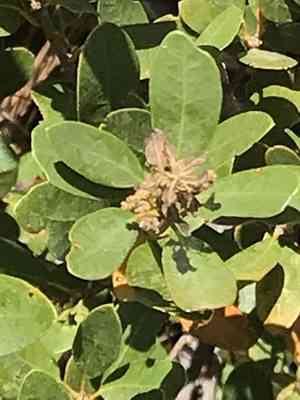
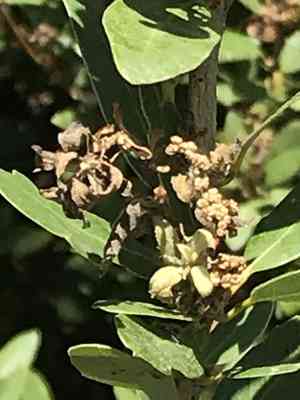
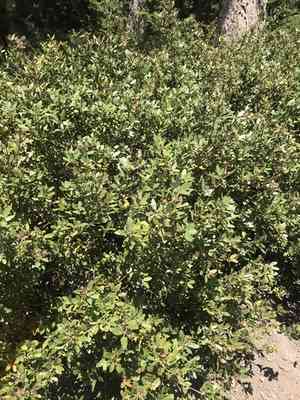
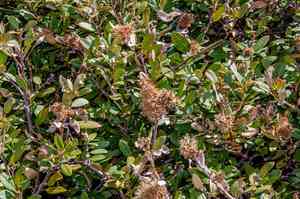
Quickly Identify Bush chinquapin
1
This plant features leathery, oblong leaves with golden, hairy undersides. The leaves are evergreen, and the plant produces small, yellowish flowers and spiny burs that contain edible nuts.
Scientific Classification of Bush chinquapin
Phylum
Vascular plants
Class
Dicotyledons
Order
Fagales
Family
Beech
Genus
Chinquapins
Species
Bush chinquapin
Planting and Growing of Bush chinquapin
Care Difficulty
Moderate
Watering Schedule
Every 2 days
Sunlight Requirements
Full sun
Sunshine Duration
6-10 hours
Ideal Temperature
50-70℉
Soil Type
Potting Mix, Peat Mix
Soil pH
6.5-7.5
Fertilizer Type
Balanced
Pruning Season
Spring, Summer
Pruning Area
Branches, Leaves
Pruning Frequency
2 times a year
Repotting Season
Spring
Pot Type
Plastic, Ceramic
 How to Water Bush chinquapin?
For Chrysolepis sempervirens, the watering should be sufficient to thoroughly moisten the soil but not so much that water accumulates in the saucer or on the soil surface. This usually equates to approximately 1000 ml of water per session, taking into account the size of the plant and pot. The main goal is to reach the plant's deep root system.
What are the symptoms of an underwatered Bush chinquapin?
›
What should I do if my Bush chinquapin is not getting enough water?
›
What are the symptoms of an overwatered Bush chinquapin?
›
How to save an overwatered Bush chinquapin?
›
 What Are the Sunlight Requirements for Bush chinquapin?
Chrysolepis sempervirens flourishes under full to partial sun. Such lighting ensures optimal photosynthesis, supporting lush foliage, hardy growth, and resistance to environmental stresses.
What is the optimal lighting condition?
›
How to achieve the ideal lighting?
›
What benefits come with ideal lighting?
›
 What Is the Ideal Temperature Range for Bush chinquapin?
Chrysolepis sempervirens thrives best within a temperature range of 50°F to 70°F. This range is optimal for photosynthesis and growth, ensuring the plant remains healthy and vigorous. Staying within these limits helps to prevent stress and potential damage to the plant.
 What Soil is Best for Bush chinquapin?
Chrysolepis sempervirens thrives in well-drained soil, which prevents root rot by allowing excess moisture to drain away. This encourages healthy root development and robust growth. To support its lush foliage and overall vigor, Chrysolepis sempervirens requires a nutrient-rich soil composition. Ample organic matter boosts nutrient availability, propelling strong plant development. While drainage is crucial, moderate moisture retention ensures that Chrysolepis sempervirens receives adequate hydration between watering sessions, especially important in warm climates.
 How to Fertilize Bush chinquapin?
Chrysolepis sempervirens requires a moderate amount of fertilizer to thrive. For liquid fertilizers, use a diluted solution at half the recommended strength. Apply about 200 ml per plant. For slow-release granules, apply roughly 50 grams evenly around the base of the shrub, ensuring it covers the soil without touching the trunk.
 How to Prune Bush chinquapin?
Begin by sterilizing your pruning tools to prevent disease. Look for any branches that are dead, diseased, or damaged and prune these first. Use sharp shears to make clean cuts. Once the plant's structure is clear, reduce its size by cutting back branches to a healthy bud. Ensure that you do not remove more than one-third of the plant to avoid stressing it. Finally, clear away all debris from the base of the plant to maintain cleanliness and limit pest attractions. To maintain the desired shape of Chrysolepis sempervirens, focus on maintaining a natural, rounded contour. Trim the outer tips of the foliage lightly and uniformly. This not only enhances aesthetics but also encourages the plant to grow compactly and robustly throughout the growing season. Always step back and assess the plant from different angles to ensure you’re achieving a balanced shape.
More About Pruning Techniques→
 How to Propagate Bush chinquapin plant?
1
Choose a healthy and mature Chrysolepis sempervirens plant to take cuttings or harvest seeds from. A vigorous mother plant will ensure successful propagation.
2
Cut 5-6 inch sections from the tip of a healthy branch. Remove the leaves from the lower half and dip the cut end in rooting hormone to encourage root development.
3
Fill the seed tray with well-draining soil mix and spread the Chrysolepis sempervirens seeds evenly. Cover lightly with soil and water gently to initiate germination.
 How to Repot Bush chinquapin plant?
1
Repotting is best done when Chrysolepis sempervirens shows signs of being root bound, such as roots growing out of drainage holes, or a compacted and less free-draining soil. Spring is ideal when growth resumes, allowing the plant to recover and establish in its new pot.
2
Select a pot that is one size larger than the current one to give the roots space to grow, but not overly large as this can lead to water retention issues. A pot with ample drainage is essential, ensuring excess water can flow freely and prevent root rot.
3
Use a well-draining gritty soil mix to replicate the plant's natural habitat. This mix encourages air circulation around the roots and prevents waterlogging. A soil with good grit content promotes faster drainage and prevents overwatering, crucial for healthy growth.



