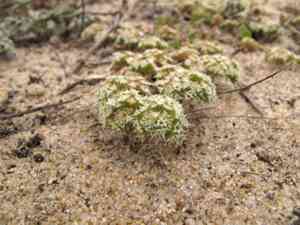
Monterey spineflower (Chorizanthe pungens)
Also known as: Monterey spineflower
Monterey spineflower is a spiny herb flourishing in sandy coastal areas, particularly in the Monterey Bay region. This plant features a low-lying rosette of leaves, with stems that produce small, tubular flowers in pink or white hues, encased by sharp bracts for a burr-like look. Adapted to dry, harsh environments, its deep roots help it efficiently absorb water, ensuring its persistence in native dunes and coastal bluffs.
In This Article
Attributes of Monterey spineflower
Lifespan
Annual
Plant Type
Herb
Plant Height
1-2 inches
Spread
Not applicable
Leaf Color
Green
Flower Size
Less than 1 inch
Flower Color
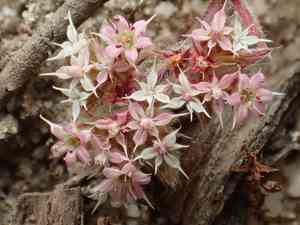
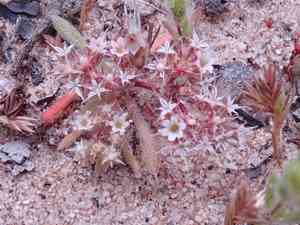
White to pinkish
Images of Monterey spineflower

Quickly Identify Monterey spineflower
1
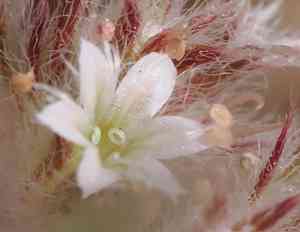
This plant can be identified by its small, spine-tipped bracts and white to pinkish flowers. Typically, the flowers are arranged in clusters and each flower has a tubular shape.
Scientific Classification of Monterey spineflower
Phylum
Vascular plants
Class
Dicotyledons
Order
Caryophyllales
Family
Buckwheat
Genus
Spineflowers
Species
Monterey spineflower
Planting and Growing of Monterey spineflower
Care Difficulty
Hard
Watering Schedule
Every 2 days
Sunlight Requirements
Full sun
Sunshine Duration
8-12 hours
Ideal Temperature
60-75℉
Soil Type
Potting Mix, Peat Mix
Soil pH
6.5-7.5
Fertilizer Type
Balanced
Pruning Season
Spring, Summer
Pruning Area
Branches, Leaves
Pruning Frequency
2 times a year
Repotting Season
Spring
Pot Type
Plastic, Ceramic
 How to Water Monterey spineflower?
Chorizanthe pungens requires moderate watering. Aim to provide approximately 200 milliliters each session. This ensures the soil is adequately moist without becoming waterlogged. Water until the soil surface is evenly moist, allowing the liquid to penetrate deeply to reach the roots. Maintain caution by not drenching the soil entirely, as this plant prefers well-drained conditions.
What are the symptoms of an underwatered Monterey spineflower?
›
What should I do if my Monterey spineflower is not getting enough water?
›
What are the symptoms of an overwatered Monterey spineflower?
›
How to save an overwatered Monterey spineflower?
›
 What Are the Sunlight Requirements for Monterey spineflower?
Chorizanthe pungens flourishes in environments offering full sun to partial shade, where it can receive consistent light. This range supports vibrant blooms and healthy foliage throughout growth cycles.
What is the ideal amount of light for Chorizanthe pungens?
›
How can you ensure Chorizanthe pungens receives ideal light?
›
What are the benefits of ideal light for Chorizanthe pungens?
›
 What Is the Ideal Temperature Range for Monterey spineflower?
The ideal temperature range for cultivating Chorizanthe pungens is between 60°F and 75°F. This range provides optimal conditions for growth and flowering, ensuring the plant can perform its physiological processes effectively. Maintaining this range helps in achieving lush foliage and vibrant blooms.
 What Soil is Best for Monterey spineflower?
Chorizanthe pungens thrives in well-drained soil that prevents water from stagnating. This is crucial as it avoids root rot, ensuring a healthy plant growth. This plant naturally adapts to nutrient-poor soil, typically found in its native habitats. This reduces the need for fertilization, making it ideal for low-maintenance gardening. The optimal pH range of 6.5 to 7.5 helps in maintaining balanced nutrient availability and supports the plant's overall growth cycle.
 How to Fertilize Monterey spineflower?
For Chorizanthe pungens, the amount of fertilizer should be moderate. When using liquid fertilizers, dilute it to half the recommended strength to avoid over-fertilization. Solid fertilizers should be applied sparingly, ensuring that you use no more than 1 tablespoon per square foot for slow-release pellets.
 How to Prune Monterey spineflower?
Use sharp, clean pruning shears to trim back any dead or damaged branches. Focus on thinning out the plant to allow better airflow, which helps prevent disease. Remove any spent flowers to encourage more blooms and keep the plant looking tidy and well-maintained.
More About Pruning Techniques→
 How to Propagate Monterey spineflower plant?
1
Fill the seed tray with a seed-starting mix, ensuring it is well-draining to prevent waterlogging. Moisten the medium evenly before sowing the seeds.
2
Evenly distribute Chorizanthe pungens seeds over the prepared seed tray and cover them lightly with the soil mix, using just enough to protect them from being exposed.
3
Gently water the seeds with a fine mist to avoid disturbing them. Cover the tray with a humidity dome to maintain constant humidity levels, crucial for germination.
 How to Repot Monterey spineflower plant?
1
Chorizanthe pungens should be repotted when growth becomes stunted, roots protrude from the drainage holes, or the plant appears overcrowded. These are clear signals it's time to give your plant more room to flourish.
2
Choose a pot that is one or two sizes larger than the current one. A pot with good drainage is essential to prevent waterlogging, which can lead to root rot. This ensures the roots have space to grow while maintaining adequate ventilation.
3
Opt for well-draining soil, ideally a sandy mix. This type of soil mimics its natural habitat, supporting healthy root development and preventing water retention issues that could harm your Chorizanthe pungens.
Learn More About Monterey spineflower Diseases
Anthracnose
Bacterial Leaf Spot
Bacterial Soft Rot
Bacterial Wilt
Chemical Injury
Crown Gall
Cyst Nematode
Damping-off
Downy Mildew
Drought Stress
Fusarium Wilt
Gray Mold
Leaf Spot
Mosaic
Nutrient Deficiency
Nutrient Toxicity
Powdery Mildew
Root Rot
Root-knot Nematode
Rusts
Sooty Mold
Spider Mites
Temperature Stress
Thrips Damage
White Mold



